Route changes, relabelling and the rush between sort bays
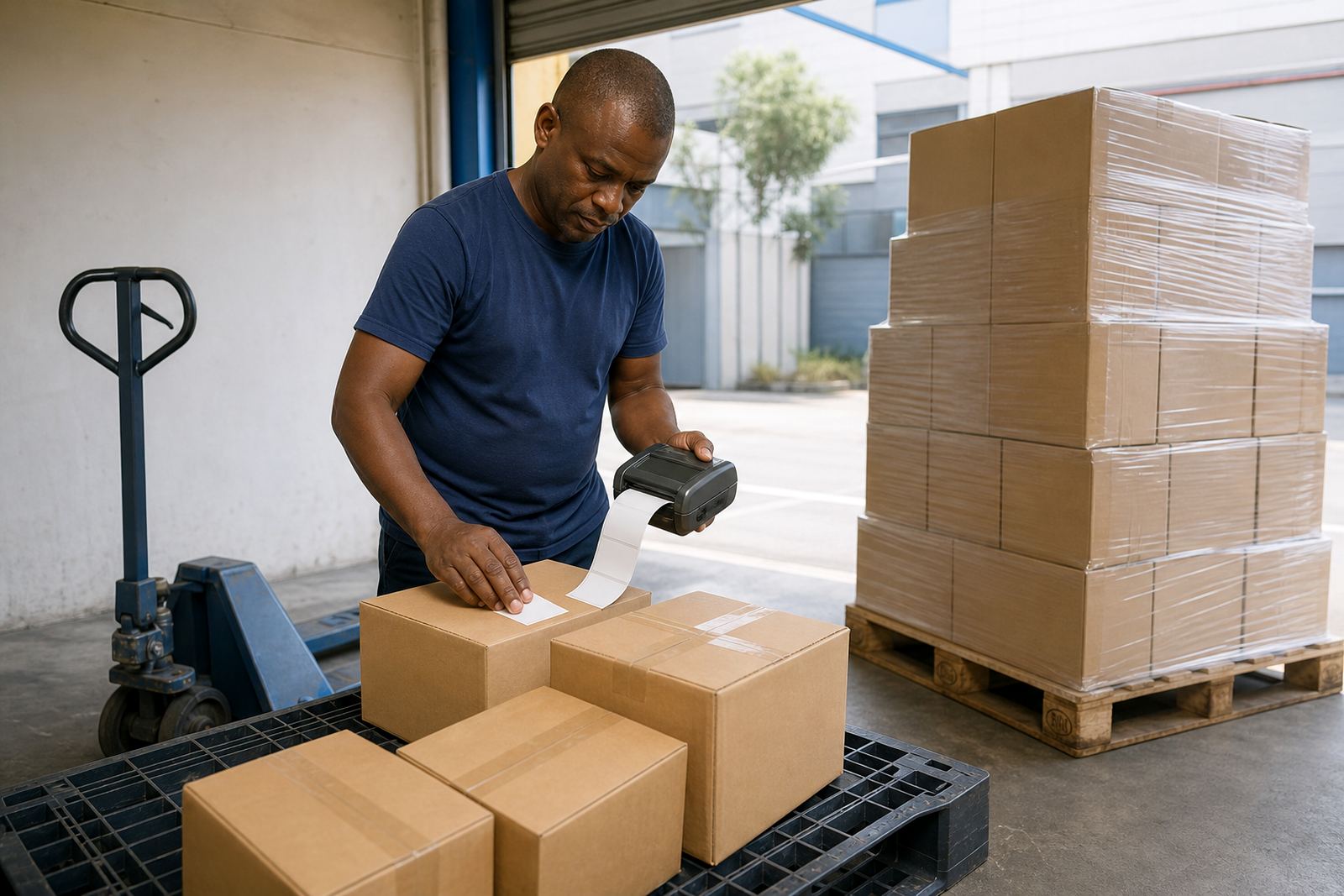
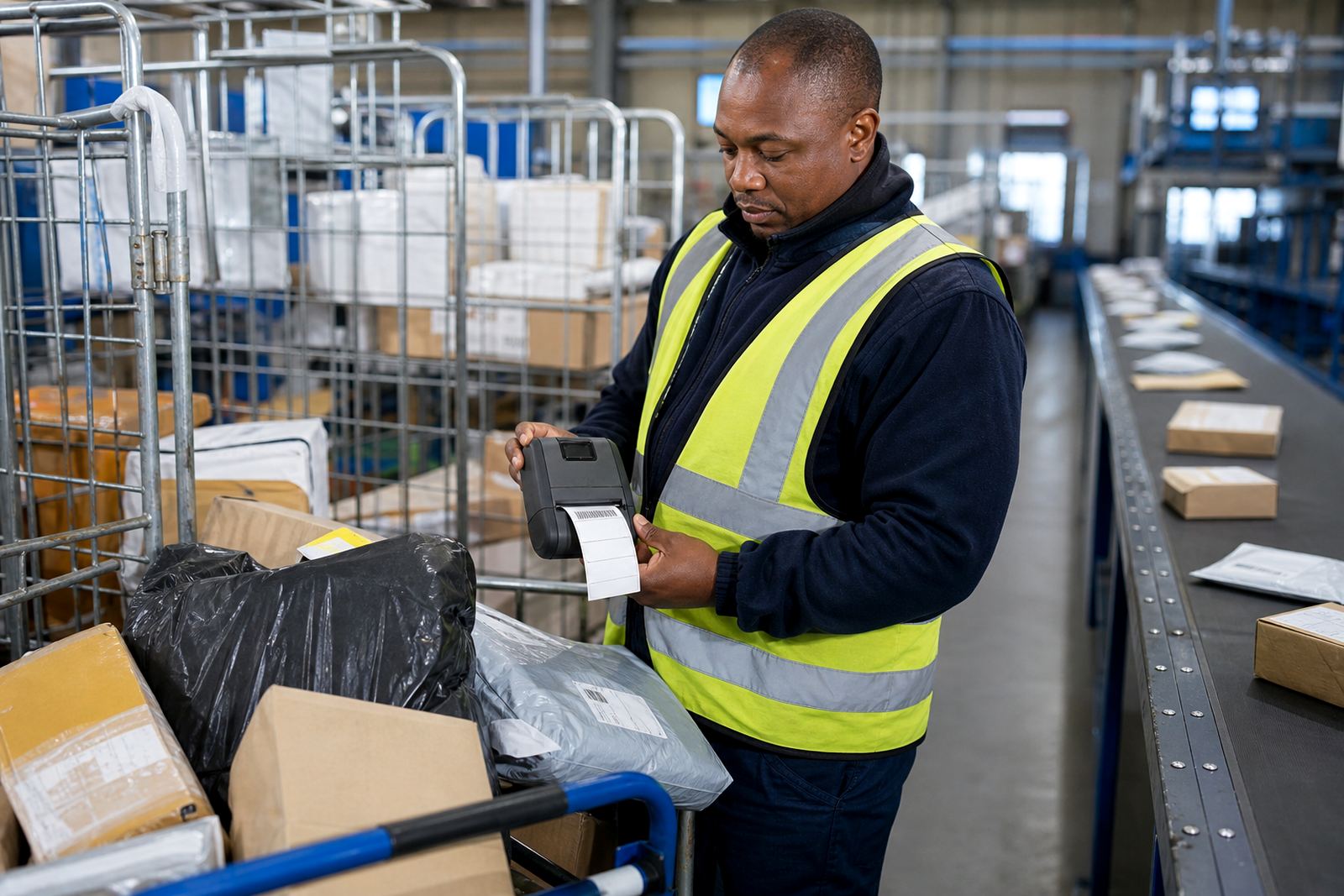
Courier work changes through the day. A parcel may move from one run to another, a barcode may need reprinting after a damaged scan panel, or a return label may have to be added at the counter. In those moments a mobile label printer saves steps because the label is printed where the parcel is being handled, not at a fixed station at the far end of the floor.
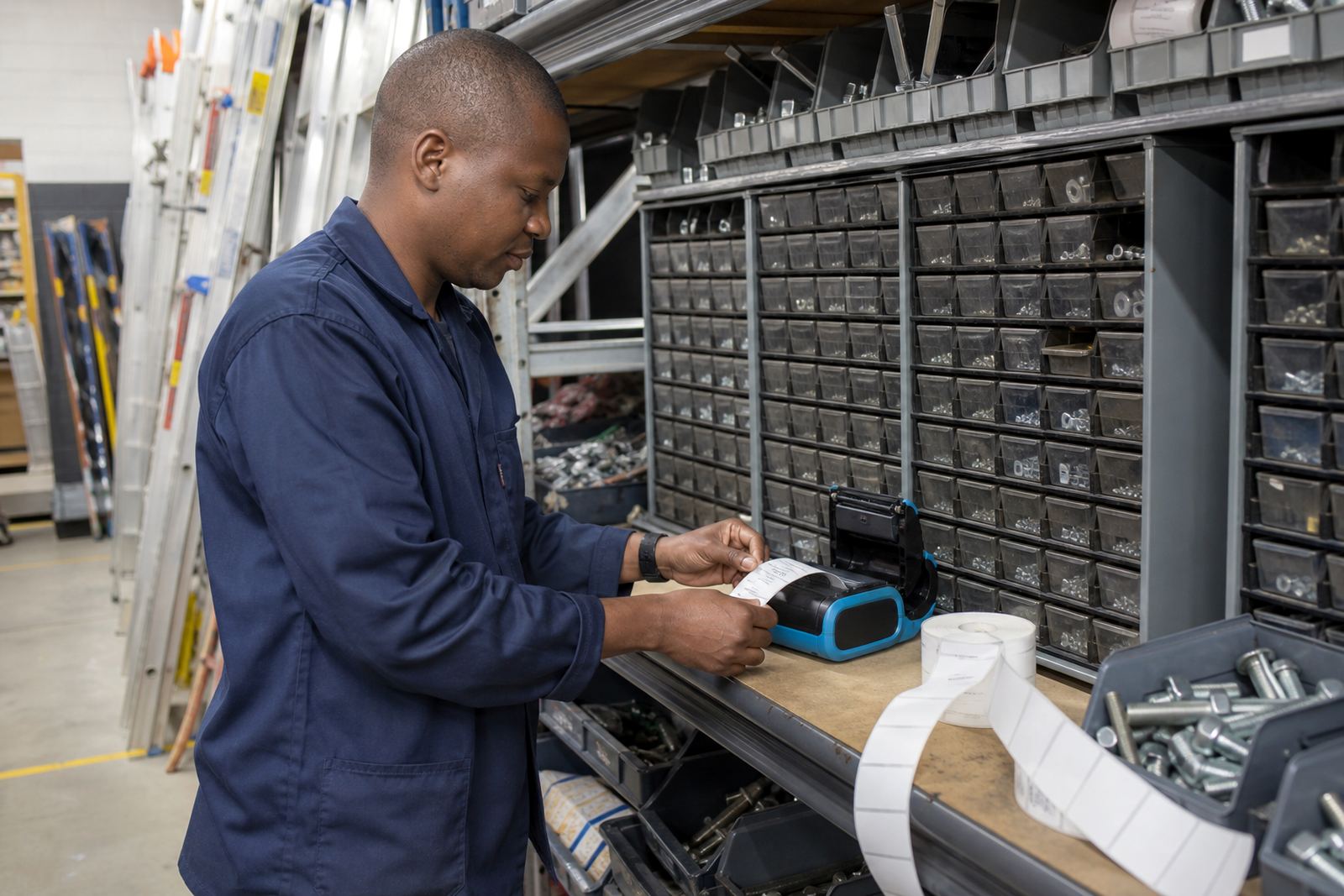
For depots, the useful setup is usually a compact printer that fits on a trolley or belt clip and pairs by Bluetooth or Wi-Fi with a handheld device, tablet or depot terminal. Print width matters too. Many courier labels sit in the 50 mm to 104 mm range, with clear barcode and QR code printing for scan-ready parcel work. Direct thermal printing suits labels with a short working life, while thermal transfer works better where the label must last longer and cope with rough handling.
A depot kit that can move with the parcel flow
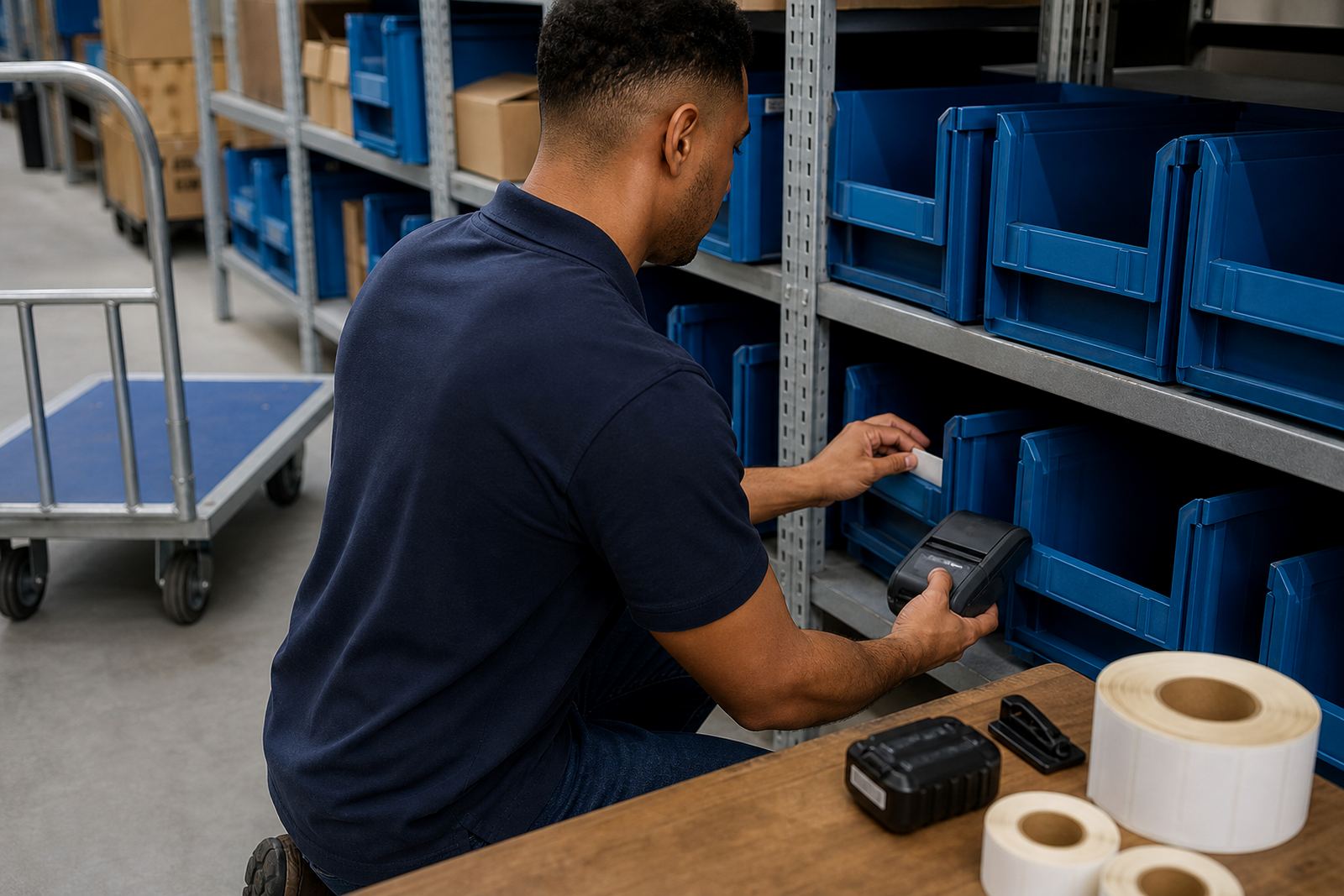
The equipment set depends on how the floor is run, but courier depots often need more than the printer itself. Batteries, belt clips, label rolls, spare power packs and a carrying method all matter when staff move between receiving, sorting, cage loading and dispatch. A unit that looks fine on a counter can be awkward if it is too heavy, too wide, or difficult to clip onto workwear during peak handling.
- Mobile thermal label printer for route labels, address labels and exception labels
- Direct thermal rolls for short-use courier labels
- Thermal transfer rolls for labels that must stay legible longer
- Battery pack and charger for shift-based use
- Belt clip or carry clip for hands-free movement
- Cleaning card or swab for printhead cleaning
In depots with mixed duties, one team may need quick relabelling at intake while another handles dispatch markings near the loading area. That is where battery life and easy roll changes matter just as much as print speed.
Layout choices that keep labels near the work
Label printing works best when it sits close to the point where parcels are handled. A courier depot in Montague Gardens or Midrand may use one setup at receiving, another near exception handling, and a third close to dispatch. That reduces walking and helps staff print the right label before the parcel moves to the next stage.
Mounting, charging and network pairing should be planned around how people actually move. If the printer is shared, the depot needs a clear charging point, a spare battery routine and label stock stored in a dry place. In coastal areas like Cape Town, humidity can affect label rolls and adhesive performance, so storage and carton opening habits need a little care.
It also helps to keep the printer close to the device it pairs with. Bluetooth is useful for mobile work, while Wi-Fi suits larger depots where the printer stays on the local network and serves a fixed zone. Either way, label calibration should be checked when roll sizes change, otherwise the print can drift and waste stock.
Common mistakes that slow a courier floor
The first mistake is buying a printer that cannot handle the label width used for the depot’s parcel system. The second is choosing a battery that gives out before the shift ends, which leaves staff sharing equipment and waiting for a charge. A third problem is ignoring printhead cleaning, because adhesive dust and label residue can blur bars and weaken scan quality.
- Using the wrong label type for the job, then blaming the scanner
- Skipping printhead cleaning until the print fades or streaks
- Mixing label sizes without recalibrating the printer
- Leaving batteries to drain fully on a regular basis
- Forgetting to test Bluetooth pairing after device changes
- Storing rolls in hot, damp or dusty rooms
Courier sites also run into trouble when staff are not shown how to clear label jams properly. A small snag can become a long pause if the roll path is not seated correctly, or if the cover is forced closed. Operator training is worth doing properly because it cuts down on avoidable wear and damaged labels.
Budget bands that suit different depot sizes
Budget depends on whether the depot needs one mobile unit for exception handling or a set of printers across several bays. A simple mobile printer bundle for light courier work may fall into the lower Rand band, while a fuller package with spare batteries, belt clips, label rolls and setup assistance costs more. Thermal transfer models, larger media support and added accessories also raise the total.
For planning purposes, it helps to think in layers. The printer is only one part. You also need the label stock, the battery plan, the pairing method and the ongoing maintenance that keeps the print legible. A depot that handles high parcel movement may spend more upfront if it wants fewer stoppages and less label waste across the month.
- Entry-level mobile printer setups for light relabelling and route changes
- Mid-range depot kits with spare battery and multiple rolls
- Heavier-duty packages with setup, calibration and servicing
- Accessory add-ons such as clips, chargers and replacement batteries
Setup, repairs and training on an active depot floor
Go-Printer supports courier depots with on-site setup, Bluetooth pairing, Wi-Fi setup, label calibration, printhead cleaning, battery testing, battery replacement, belt clip repair, print quality fixes, label jam clearing, operator training and preventive servicing. That matters when the work has to fit around live sorting, dispatch pressure and the handover between day and night shifts.
Our base is in Montague Gardens, Cape Town, and we work with courier depots across Cape Town, Johannesburg, Durban, Pretoria and Gqeberha. When your team needs mobile label printers, direct thermal or thermal transfer rolls, or support for a printer that skips scans or wastes labels, send a note through our contact form to begin the conversation.
For depots that already know their label sizes and route patterns, the next step is usually a practical check on printer fit, battery use and roll stock. That keeps the floor moving without asking staff to work around awkward equipment.