Depot conditions that shaped the brief
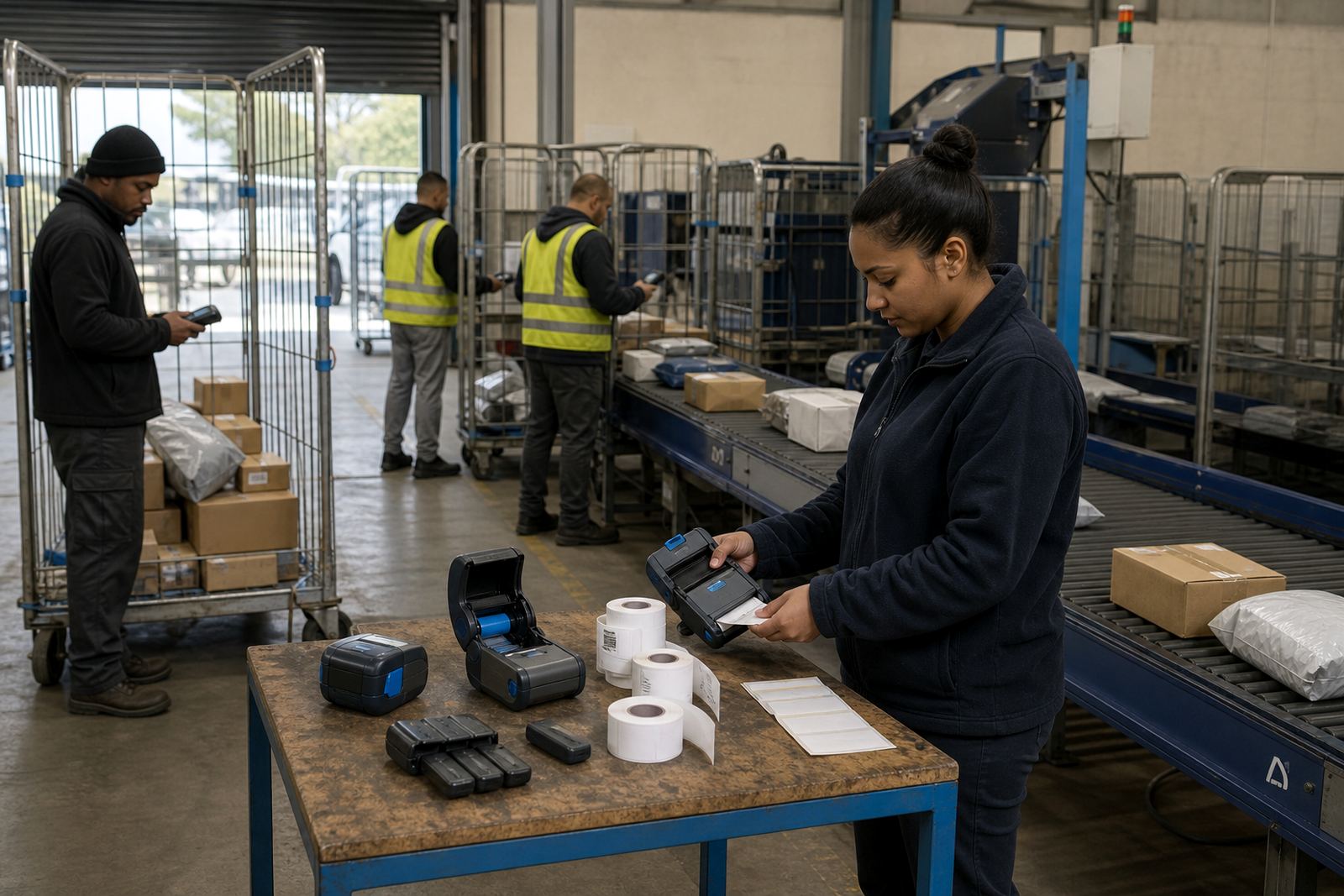
The site handles parcels, return labels and stock relabelling, so the printing kit had to move between intake, sorting and dispatch without fuss. The team wanted compact units that could clip to a belt or sit in a trolley tray, with clear barcode and QR output and enough battery life to cover a shift without constant charging.
Floor space was tight, handlers worked around stacked cages and mixed cartons, and labels had to stay legible on fast moving cartons and plastic wraps. The depot also needed a practical split between direct thermal printing for short-life labels and thermal transfer printing for labels that must stay readable for longer periods or in tougher handling conditions.
- Portable printers sized for hand carried use and belt carry.
- Direct thermal and thermal transfer options matched to label life.
- Bluetooth pairing for mobile devices and Wi-Fi setup for shared print points.
- Label widths set for parcel IDs, stock tags and location labels.
What we supplied for the rollout
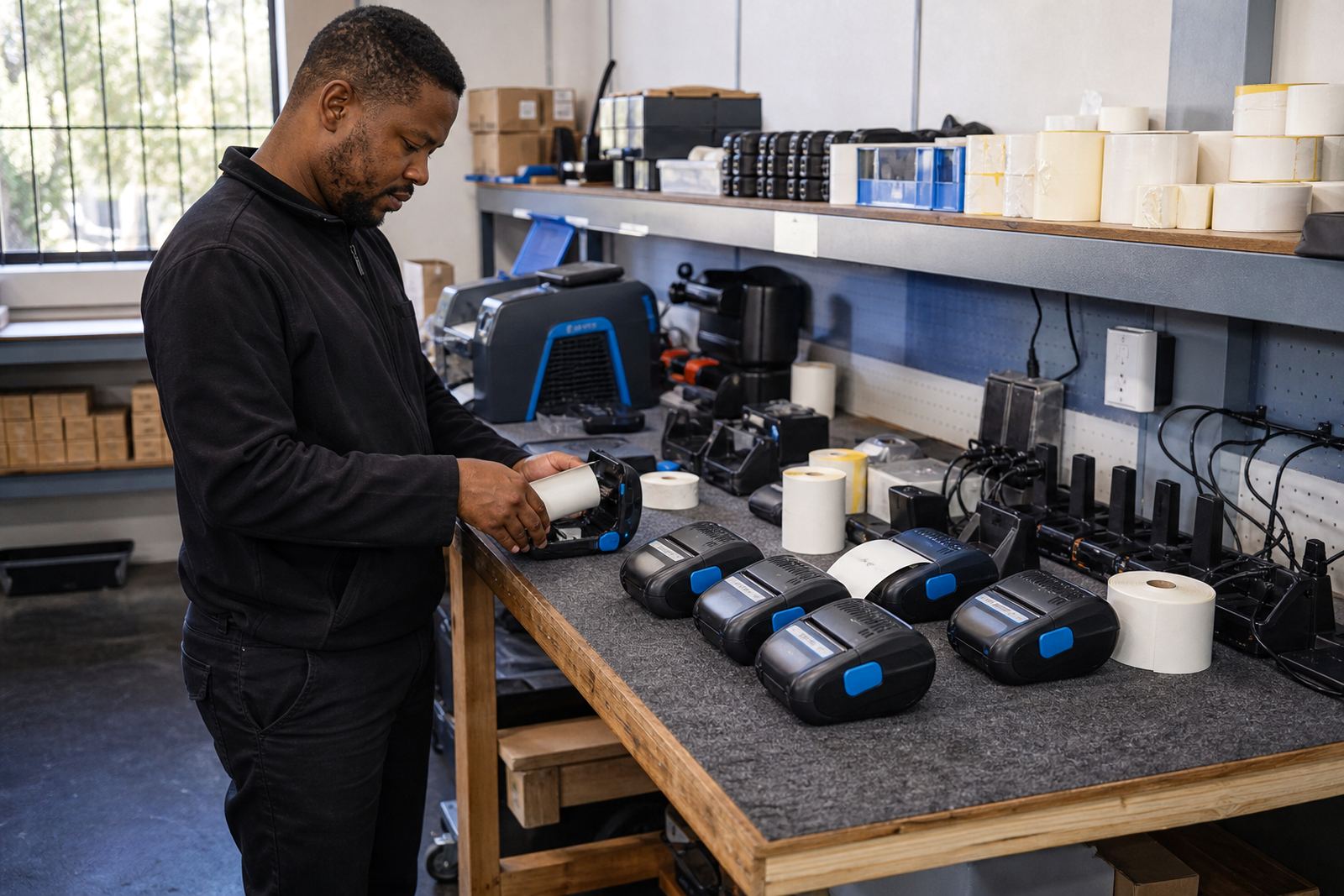
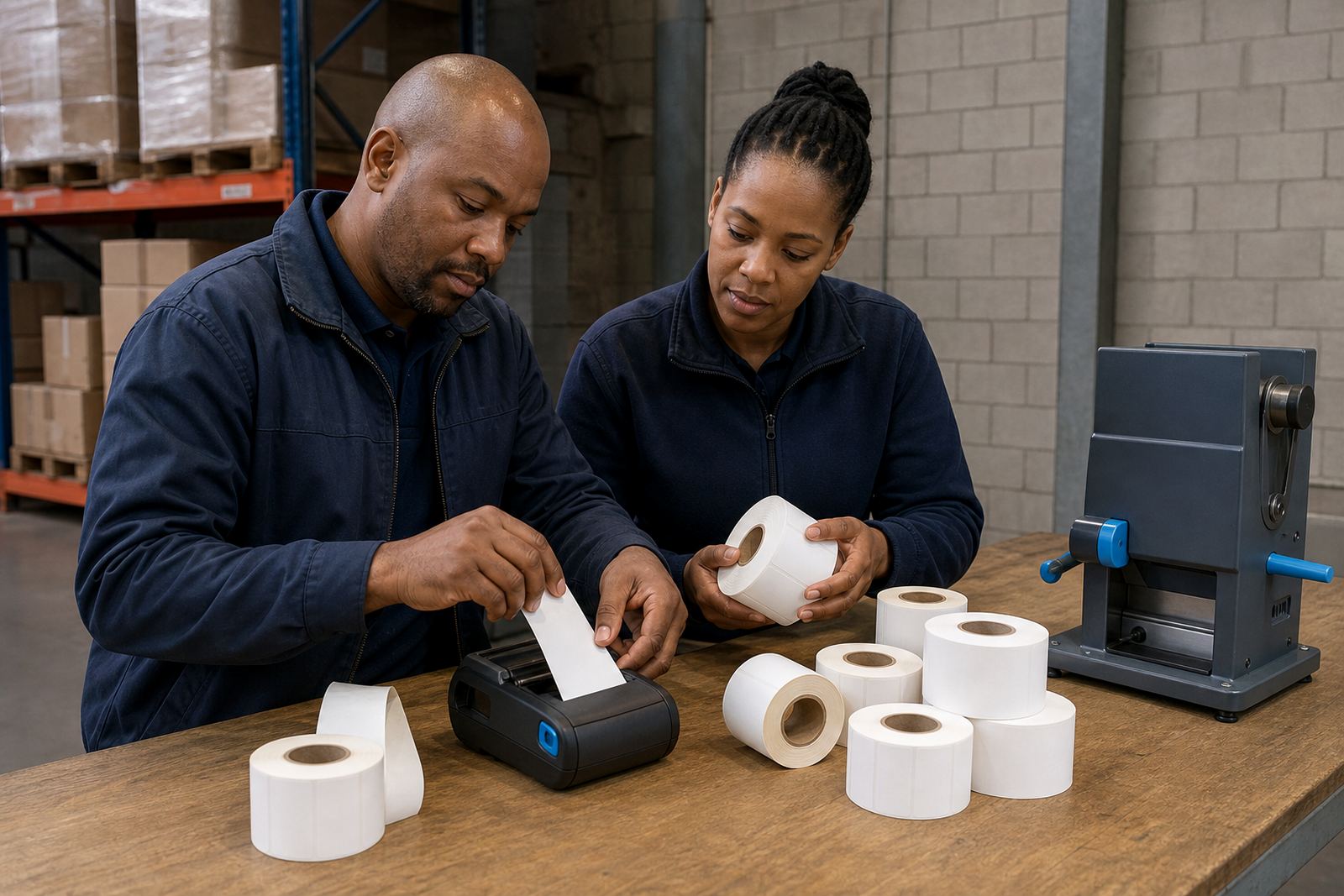
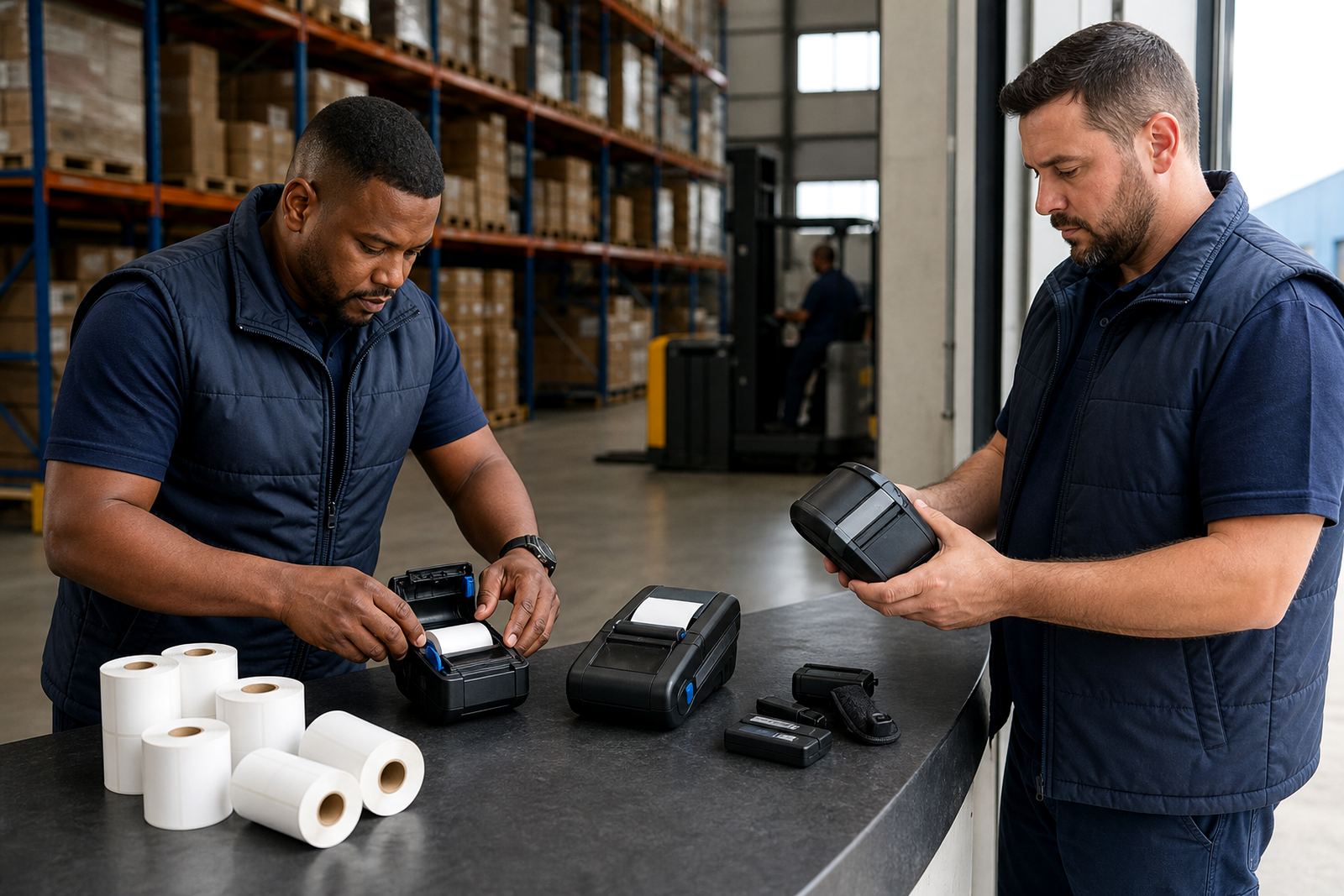
We supplied thermal mobile label printers with a print width suited to the depot’s main parcel labels, plus battery packs, belt clips and rolls for both direct thermal and thermal transfer work. The label stock covered common courier sizes as well as smaller internal labels for shelf marks and relabelling tasks.
During setup, each printer was checked for label feed alignment, darkness settings, barcode readability and QR clarity. We also cleaned the printheads, checked rollers for debris and set up the pairing process so the devices could be used cleanly with the depot’s handheld workflow. Where a printer was meant for a fixed point in the depot, Wi-Fi setup was completed and tested against the local print route.
- Printer calibration for label width and feed position.
- Battery testing and replacement where runtime had dropped off.
- Label jam clearing and print quality fixes.
- Printhead cleaning to reduce streaking and faded edges.
A three week rollout with on-site tuning
Week one focused on site review, label samples and deciding which jobs belonged to direct thermal and which needed thermal transfer stock. We set up the first printers, paired the handheld devices and adjusted label calibration where the media path needed a smaller correction. Week two covered operator training, battery checks and a live test run through intake and despatch.
By week three we were back on site for fine tuning and preventive servicing. That included belt clip repair on a heavily used unit, a second round of printhead cleaning and a review of labels that were catching on worn edges inside the feed path. The depot ended the rollout with a clearer print routine and fewer interruptions when the queue picked up.
- Week 1: review, stock selection and first setup.
- Week 2: training, pairing and live handling checks.
- Week 3: servicing, repairs and final calibration.
What changed on the floor
The depot’s team could move with the parcels instead of running labels back and forth to a single spot. That cut down the little bottlenecks that happen when one station gets overloaded and a second station is waiting for print access. It also made relabelling easier when cartons were opened, split or sent back through the system.
Barcode scans were cleaner because the output stayed consistent across the main stock labels and the shorter parcel tags. QR codes also held their shape better after the print settings were standardised. In practical terms, staff spent less time sorting out faded text, misfeeds and labels that were too wide for the intended carton face.
For a courier operation in Cape Town, the value sat in ordinary things done properly: a steady label size, a reliable battery, Bluetooth that paired without confusion and printheads kept clean before the streaks started. That is where mobile labelling earns its keep, especially when the depot is handling mixed parcel sizes and relabelling work in the same shift.
Support carried through after installation
The project did not stop at setup. We kept the printers checked for battery health, feed consistency and label wear, and we left the depot with a maintenance routine that the team could follow without special tools. That included simple cleaning steps for the printhead, a quick look at the platen path and a habit of checking label rolls before the shift gets busy.
When the depot needs extra stock or a new label width, the same approach applies to the supply side. We keep the printer, battery and label conversation together so the kit fits the work rather than forcing the work around the kit. For courier handling, that matters more than polished language or large promises.
- Preventive servicing for mobile units in daily use.
- Battery replacement when charge holding drops away.
- Operator training for daily label loading and cleaning.
- On-site repairs across Cape Town and other major centres.
What we would rework on a similar depot job
We would start with the label samples, not the box counts. Once the label sizes are real, the printer choice is easier to settle and the depot avoids carrying stock that does not fit the carton faces or internal shelves. We would also keep the first pairing session on site, because mobile printers work best when the people using them see the setup in the same room as the parcels.
For a relabelling depot, the simplest wins are usually the most useful. Clean printheads, a steady battery routine and clear separation between direct thermal and thermal transfer jobs keep the line moving. That is the purpose of a rollout like this, and it is the part we would take into the next one with only minor changes.
Key facts
| Project type | Portable label printing rollout for a parcel handling and relabelling depot |
|---|---|
| Location | Paarden Eiland, Cape Town |
| Printer types | Thermal mobile label printers for direct thermal and thermal transfer work |
| Connectivity | Bluetooth pairing and Wi-Fi setup |
| Label capability | Common courier labels plus smaller internal stock labels |
| Services included | On-site setup, calibration, training, repairs and preventive servicing |