What the Somerset West floor needed
The site was moving labels between fixed stations and handheld checks, which slowed down carton control and made misprints more likely near dispatch. The team wanted mobile printing for shelving checks, pallet ID and outbound cartons, with labels that stayed legible in a warehouse that sees dust, warm afternoons and the odd damp patch after the sea air rolls in from the Helderberg side.
The brief was practical: print barcodes and QR codes on demand, use a printer that could move with the operator, and keep the label stock straightforward enough for warehouse and courier work. The client also needed help with Bluetooth pairing, Wi-Fi setup, battery testing, and a clear process for printhead cleaning because small faults were already causing waste.
The equipment mix we put in place
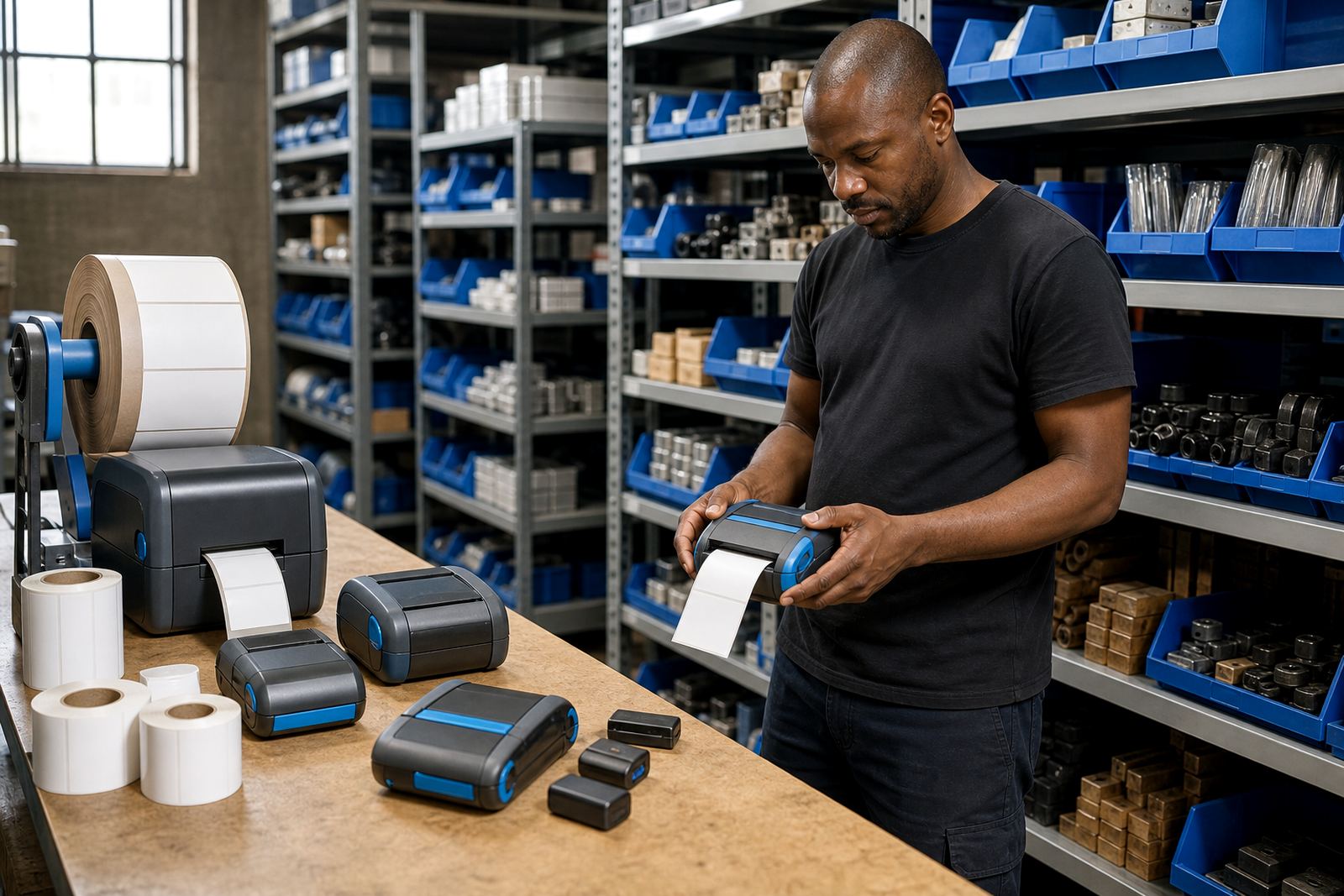
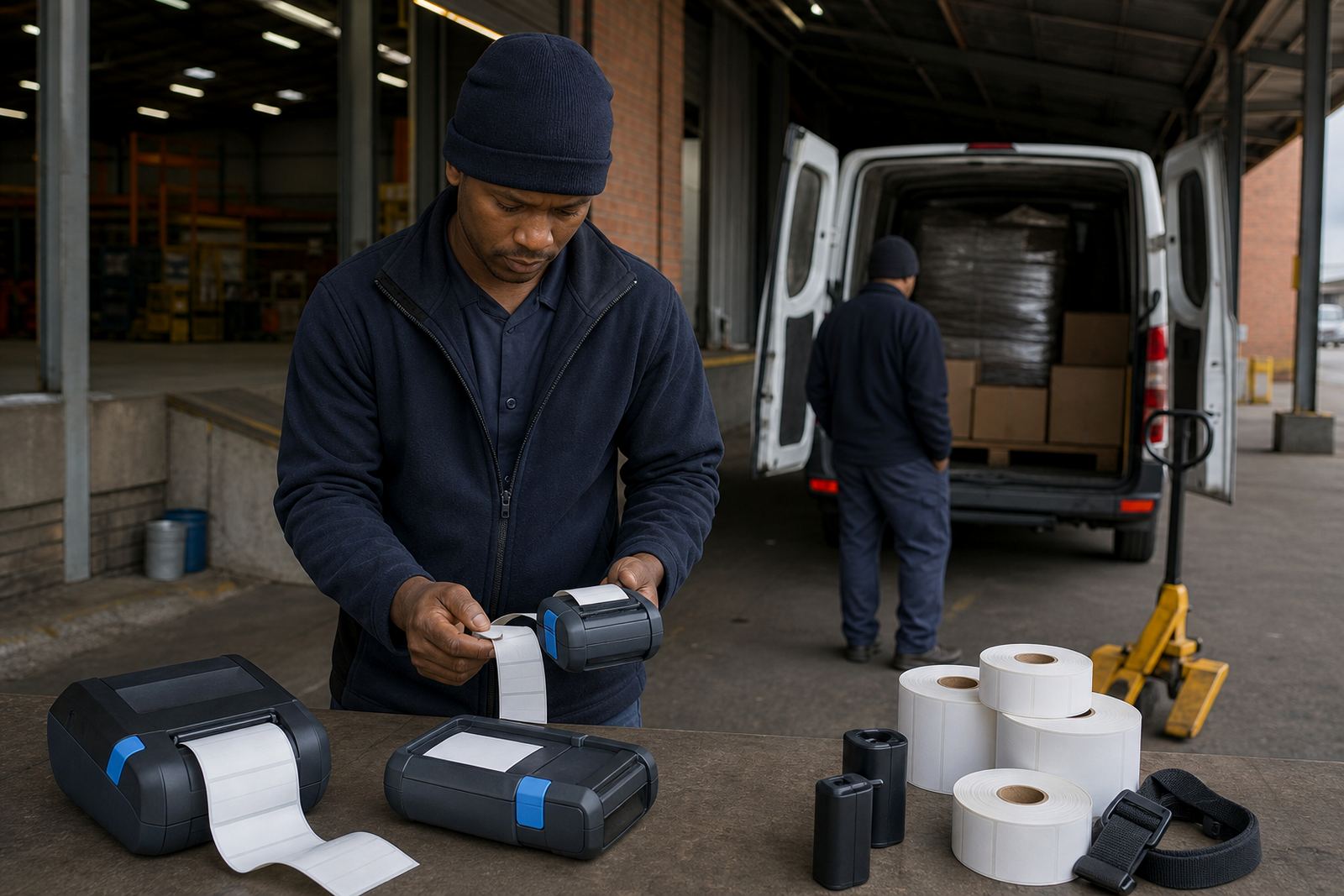
We supplied thermal mobile label printers suited to 4-inch class label work, with direct thermal units for short-life dispatch labels and thermal transfer units where abrasion and handling called for a tougher mark. That split mattered because some labels only needed to survive the trip to a loading bay, while others had to remain readable on bins and racking for longer periods.
- Direct thermal for fast carton and courier labels
- Thermal transfer for longer-wear warehouse identification
- Label rolls in common sizes for stock bins, shelves and parcels
- Batteries checked for holding charge through a full shift pattern
- Belt clips fitted where operators moved between aisles and pack lines
We matched the label widths to the printer settings and the available face area on cartons and tubs. That reduced edge clipping, cut reprints and made the barcode area easier to scan at handover points.
Pairing, calibration and the first labels out
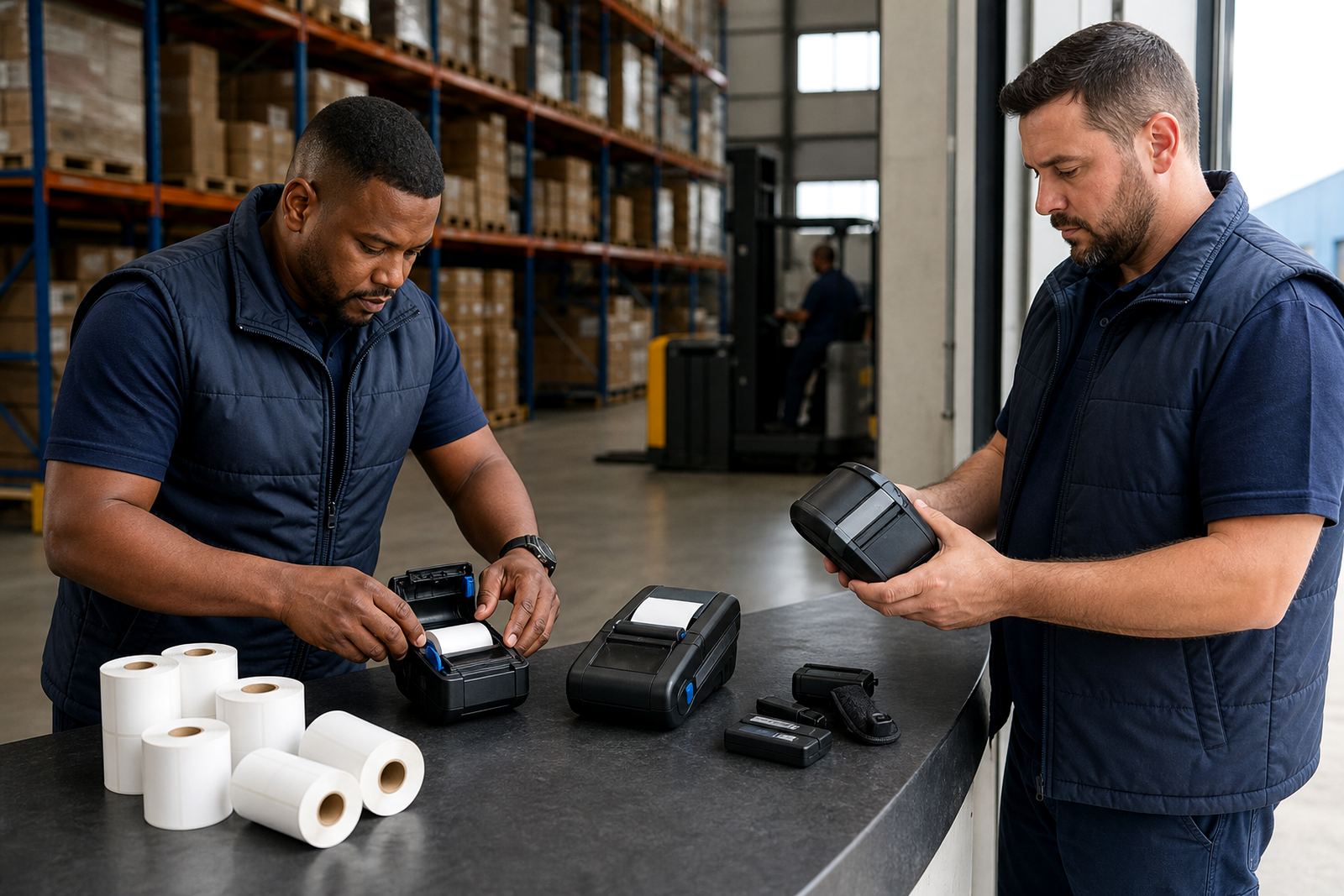
The rollout took place over two weeks, with setup planned around the site’s working pattern. We paired printers to handheld devices over Bluetooth, checked the Wi-Fi path where the team needed network printing, and calibrated each unit to the exact roll format being used. That meant the first labels were not fighting offset, dark bars or blank top margins.
Print quality fixes were handled on the spot, including darkness setting adjustments, label gap checks and test runs with standard and denser barcode layouts. QR codes printed cleanly once the media feed was set properly, and the operators could see the difference without having to wrestle with the settings every morning.
- Bluetooth pairing for mobile use around the store floor
- Wi-Fi setup for shared print points and admin stations
- Label calibration to the correct width and gap
- Barcode and QR print tests across the main label sizes
- Printhead cleaning shown as part of the handover
Repairs and field support in the middle of live work
The site could not stop for a long fault hunt, so we also handled the problem items that surfaced during rollout. One printer had a tired battery, another had a sticky latch around the media path, and a few units needed belt clip repair after being knocked against cages and pallet edges. None of that was unusual for a busy fulfilment floor, but it had to be dealt with cleanly.
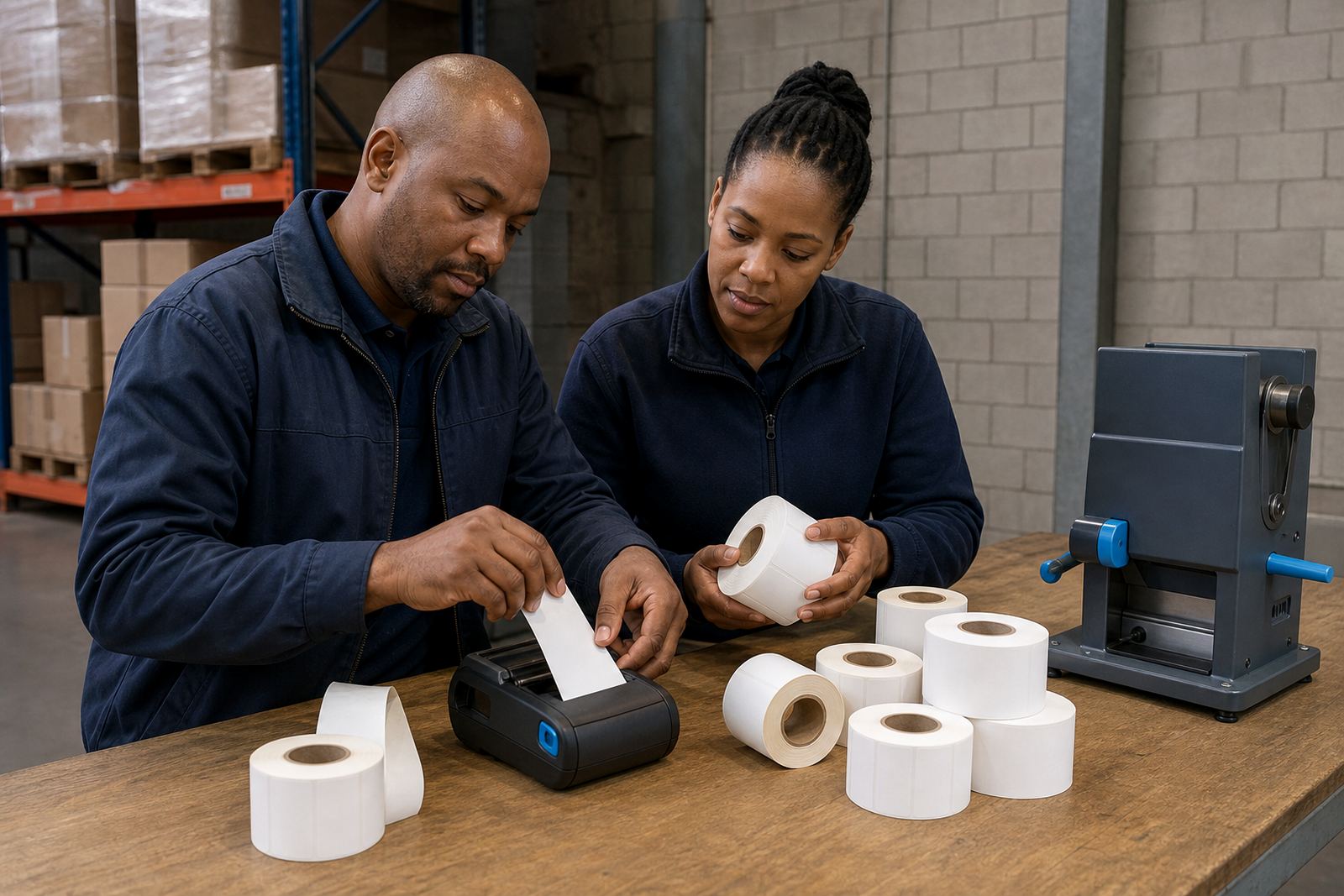
Kagiso Ngwenya handled the field work with support from Siyabonga Adonis on the technical side, while Leanne Hlongwane kept the label stock matched to the printer mix. That saved the site from running with the wrong roll format or setting up a device with a battery that looked fine but dropped off under use. The operator team also got a short training session on clearing label jams without forcing the cover, which is where most small damage starts.
What changed once the system settled
By the time the rollout ended, the team had a cleaner print routine at goods-in, packing and dispatch. Labels were being produced closer to the work, which reduced walking back to a central point for every correction. The warehouse also had fewer false scans, because the print density and label sizing were matched properly to the scanners and the package faces.
The result was not about flashy kit, it was about removing the small delays that stack up over a week. Zinhle van Wyk worked through the operator training with the floor leads, and the team now has a clearer habit around printhead cleaning, battery charging and keeping spare rolls in the right places. That is the part that tends to hold a rollout together after the first few busy days.
- Cleaner labels at the point of use
- Fewer reprints from misfeed and offset
- Better battery management across the mobile units
- More consistent barcode and QR readability
The next similar rollout we would handle the same way
For a site like Somerset West, we would keep the rollout tight and practical: confirm the label sizes against the cartons and storage bins, separate short-life direct thermal work from tougher thermal transfer duties, and train the operators on cleaning, feeding and pairing before the floor gets busy. That mix keeps the printers useful rather than clever for the sake of it.
We would also keep spare rolls, backup batteries and a simple servicing plan in place from the start. Mandla Mthethwa and the Montague Gardens team have seen how quickly a warehouse can slip back into patchwork habits if the supplies and settings are left loose, so the follow-through matters as much as the first install. It is a straightforward job when the kit, labels and people are lined up properly.
Key facts
| Project | Somerset West Warehouse |
|---|---|
| Site type | Regional storage and order fulfilment |
| Location | Somerset West, Western Cape |
| Printer types | Direct thermal and thermal transfer mobile label printers |
| Label work | Barcodes, QR codes, carton and stock labels |
| Services | On-site setup, pairing, calibration, training and repairs |