A depot floor with movement, not a fixed print point
The client is a wholesale depot in Brackenfell handling goods that move fast through receiving, pick faces and despatch lanes. Their team needed handheld printers that could travel with the stock flow, print on site, and keep labels legible on cartons, totes and shelf edges without hauling goods back to a stationary counter.
The brief centred on mobile label printing for daily warehouse use. We also had to work around mixed label sizes, staff rotation and the need for clear scanning on barcodes and QR codes. The depot wanted a practical setup that could be used by different operators with less fiddling at the point of use.
- Mobile label printers for receiving, replenishment and despatch
- Direct thermal and thermal transfer options for different label duties
- Label rolls matched to common warehouse and stockroom sizes
- Bluetooth and Wi-Fi pairing for short range and networked use
What had to fit the brief in the first round
The main constraint was space and movement. The printers had to be light enough for belt carry or handheld use, yet sturdy enough for repeated shifts between the goods-in area and the packing tables. Battery life mattered too, because the units had to last through a working stretch without being parked at a charger after every few labels.
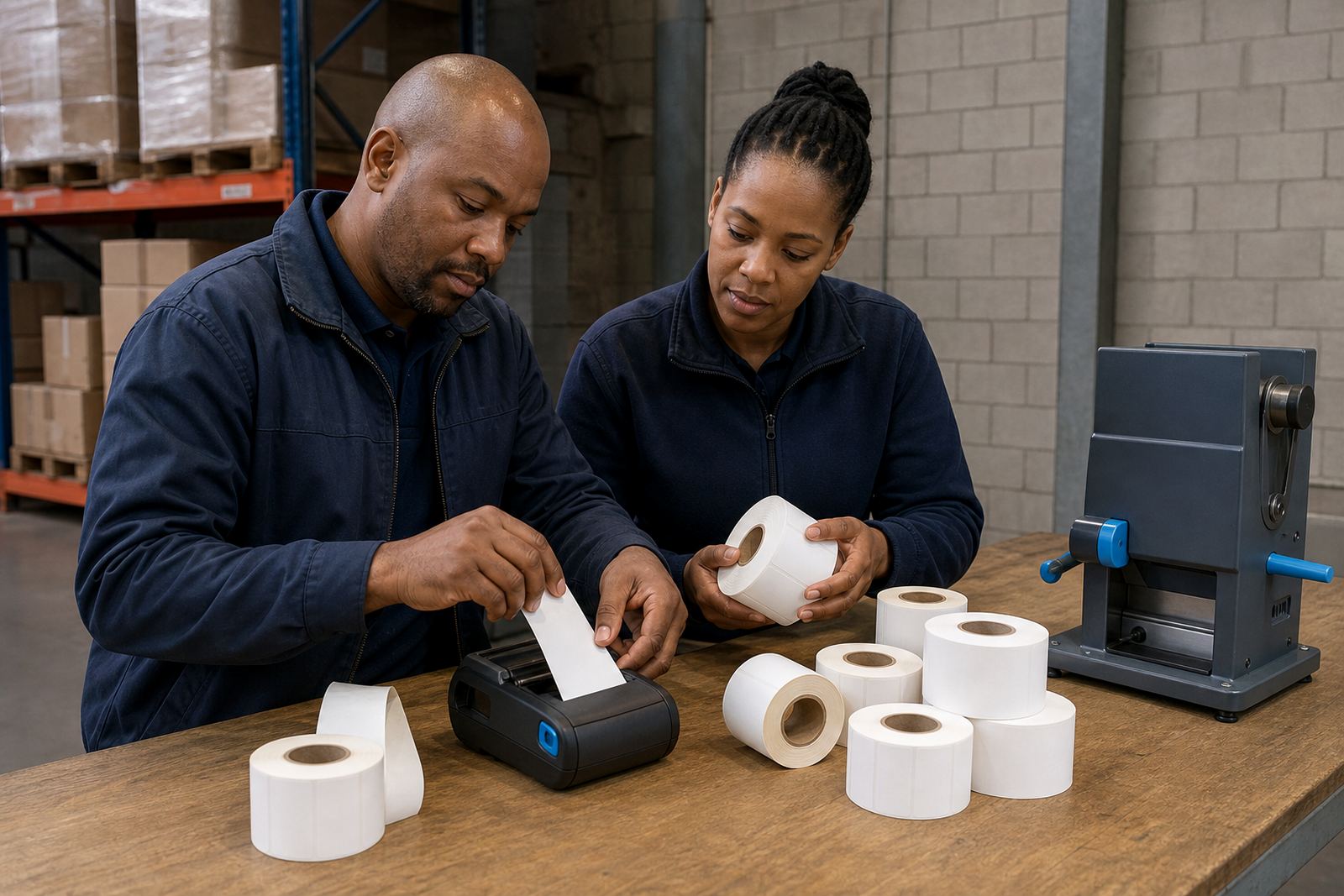
We also had to separate the print jobs by use case. Direct thermal suits short-life labels for internal movement and fast turnover stock, while thermal transfer suits labels that need extra resistance to handling and storage. That distinction shaped the consumables and the operator training, so the right label was used for the right job.
- Battery testing and battery replacement where needed
- Belt clip repair for carry use and daily movement
- Print quality fixes for faded edges and light barcodes
- Printhead cleaning to reduce lines, gaps and patchy output
Equipment and consumables set up for warehouse use
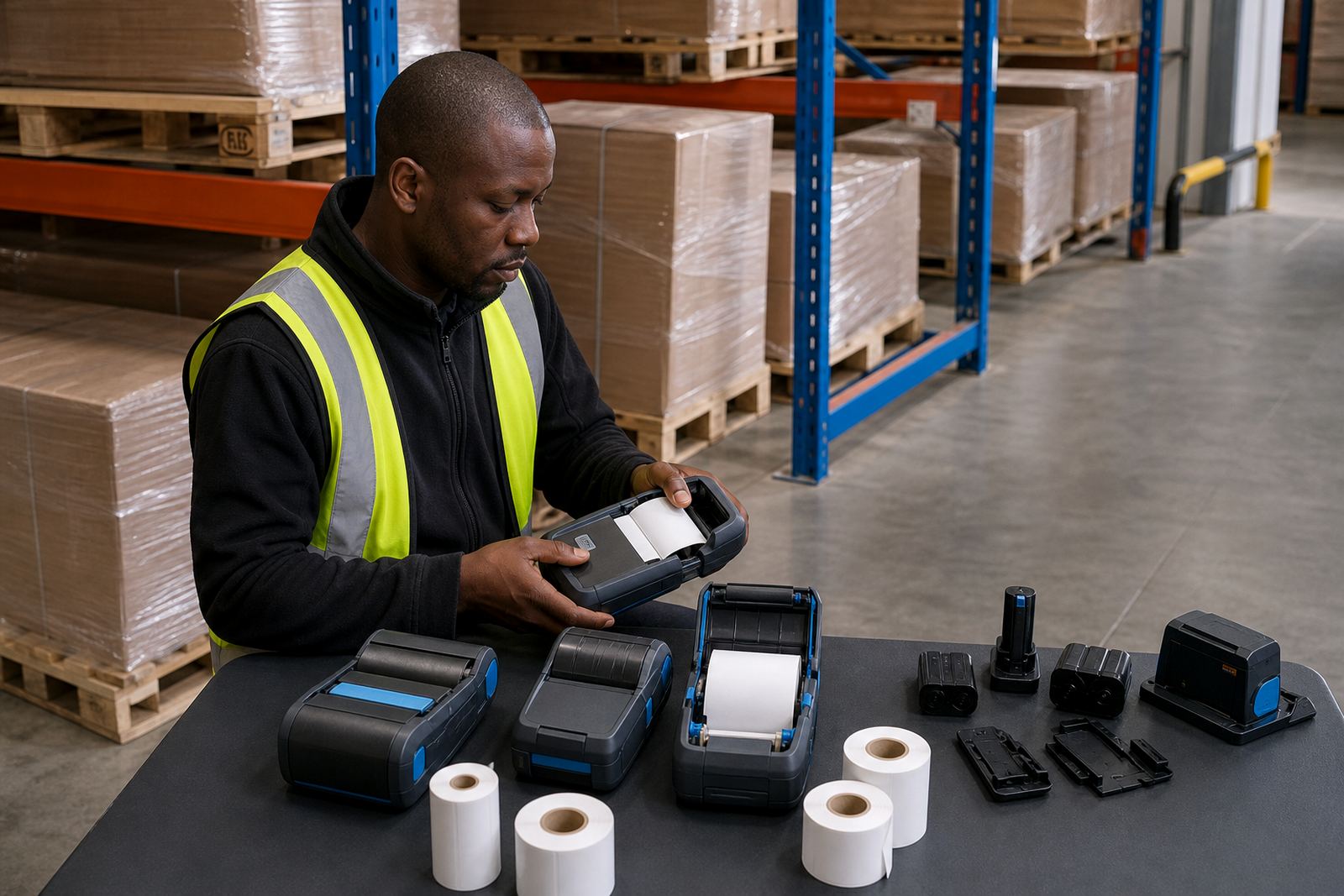
We supplied and configured thermal mobile label printers with clear pairing steps for Bluetooth and Wi-Fi. The print width was matched to the labels used on cartons, shelves and dispatch containers, so the print area sat neatly inside the label without wasting space. Calibration was checked so the feed lined up properly, with no drifting print on the first few labels and no waste from repeated test pulls.
Our label supplies covered direct thermal rolls for shorter life jobs and thermal transfer rolls for stock that had to hold up better in handling or warmer storage. For a depot near the coast, clean storage matters as well, because humidity can affect label edges and backing paper if rolls are left open for too long. We kept the setup practical, not fussy, with the aim of making the same unit useful across different bays.
- Label sizes matched to cartons, bins and pallet tags
- Barcode and QR printing checked at the point of use
- Operator training on loading rolls and clearing simple jams
- Cleaning routine for the printhead and platen path
On-site setup across the depot bays
The installation covered receiving, replenishment and dispatch points, with each zone tested under real movement. The printers were paired, label stock was loaded and the team was shown how to switch between jobs without losing time at the bench. We checked the alignment on each unit, then ran sample labels through the scanners used by the depot.
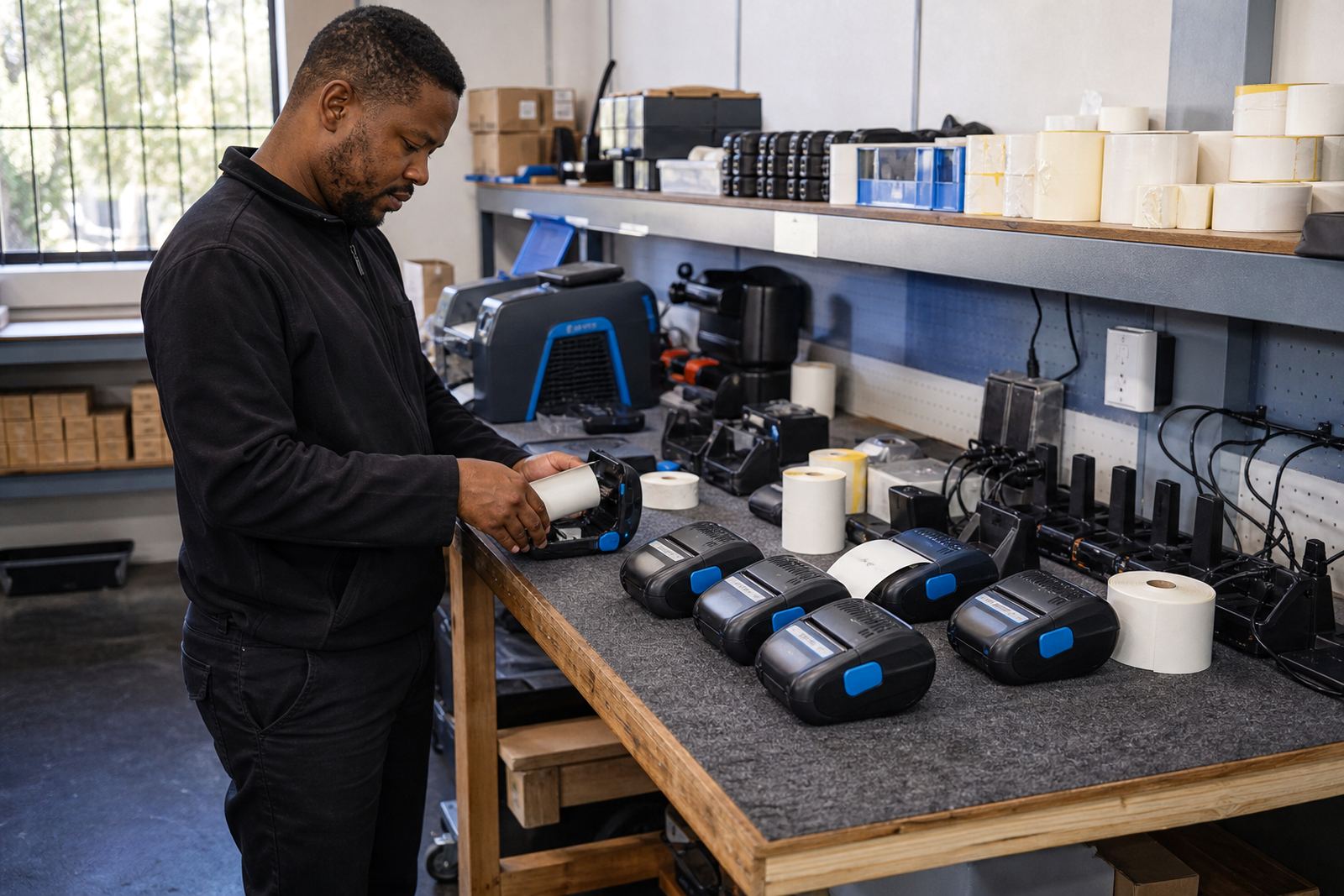
Field work also included belt clip repair and battery checks, since those small parts affect daily use more than people expect. A clip that slips or a battery that sags can interrupt the line just when the team is trying to move stock out the door. The setup was tuned so the devices could be carried comfortably while still staying ready for repeated label runs.
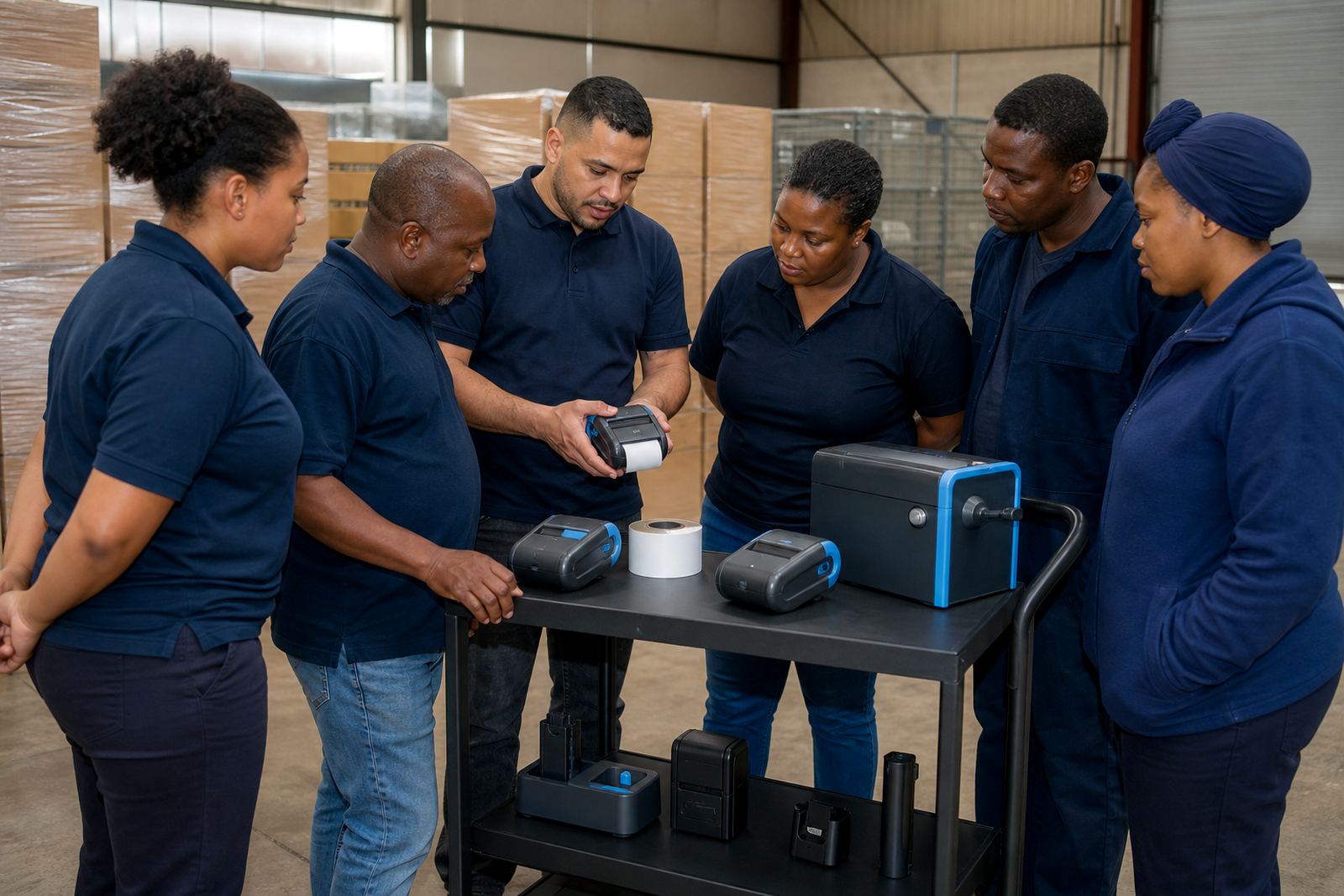
Training covered practical points like label roll direction, print darkness, feed calibration and how to spot the first signs of a dirty printhead. The operators were shown how to clear a label jam without dragging the liner through the mechanism, which helps the printer stay in service for longer.
Three weeks from site check to working lanes
The project ran over three weeks. The first week was spent on the depot walk-through, device selection and label mapping across the receiving and dispatch points. In the second week we carried out the on-site setup, paired the printers and sorted out the first round of calibration and print quality checks. The third week was used for operator handover, battery testing and final fine-tuning on the labels that were used most often.
By the end of that run, the depot had a clearer print workflow and less back-and-forth between the floor and the packing area. The staff could print labels at the point of movement, which kept cartons and totes labelled where they were being handled, not after the fact.
- Weeks 1 to 3 covered setup, checks and handover
- Barcode and QR output verified on the depot scanners
- Battery life and carry comfort checked during normal use
- Label feed consistency improved after calibration and cleaning
Results on the receiving and despatch side
The depot ended up with a mobile printing system suited to quick stock movement, not just bench work. Labels were easier to place at the right point in the process, and the team had a clearer split between short-life labels and tougher transfer-printed labels. That reduced confusion when different areas needed different label durability.
The practical gain was in the day-to-day routine. The printers stayed portable, the rolls were matched to the task, and the staff had a clearer process for cleaning, checking battery health and replacing worn belt clips. The print quality also held better once the head cleaning routine became part of the normal service pattern.
For a Brackenfell wholesale depot, that kind of setup keeps the label job moving with the goods. It is not about a fancy print station, it is about having the right device at the right point, with enough battery and a label format that scans cleanly the first time.
What we would tackle differently on a depot job like this
We would keep the same order of work: site walk-through, label mapping, print width match, then training after the first live labels are running. That sequence helped the team settle into the new process without guessing at the settings or wasting stock on test runs.
We would also repeat the split between direct thermal and thermal transfer from the start, because that choice affects the whole label supply line. When the right roll type is used in the right place, the printer behaves better, the barcode reads cleaner and the stockroom spends less time correcting bad labels.
- Start with the busiest bay and work outward
- Set one cleaning routine for all printers
- Keep spare batteries and clips in the depot
- Match label roll stock to the actual label duty
Key facts
| Project type | Mobile printing installation for receiving, replenishment and dispatch labelling |
|---|---|
| Location | Brackenfell wholesale depot, Cape Town metro |
| Printer formats | Mobile label printers for direct thermal and thermal transfer printing |
| Connectivity | Bluetooth pairing and Wi-Fi setup |
| Label use | Barcode labels, QR labels and warehouse item labels |
| Services used | On-site setup, label calibration, printhead cleaning, battery testing and operator training |