A warehouse brief built around movement, not a fixed point
The client runs a 3PL operation in Cape Town with fast-moving stock, mixed carton sizes and frequent label changes between inbound, put-away and outbound work. Their team needed mobile printers that could travel with supervisors and pickers, print clean barcode and QR labels, and stay dependable through long shifts. The brief also covered battery life, belt clips, label roll supply and repairs on site when equipment starts drifting out of alignment.
The warehouse asked for a practical setup rather than a complicated one. Labels had to print clearly at 50 mm, 75 mm and 100 mm widths, with direct thermal media for short-life dispatch labels and thermal transfer options for labels that need longer shelf life or better resistance to handling. We also had to account for Bluetooth pairing to handheld devices, Wi-Fi setup where print jobs moved across departments, and a cleaning routine that operators could manage without slowing the floor.
- Mobile printing for picking, receiving and dispatch
- Barcode and QR code labels for stock movement
- Direct thermal and thermal transfer label options
- Battery, clip and repair support for daily use
The layout and handling limits on the floor
Montague Gardens warehouses often mix narrow aisles, stacked pallets and quick handovers at the loading bays, so the printers had to be light enough for constant carrying and strong enough for warehouse handling. The client wanted a print width that suited parcel and shelf labels without wasting media, and they needed the team to load rolls without wasting time. In a space like this, a misfeed or poor print darkness can ripple through the rest of the shift.
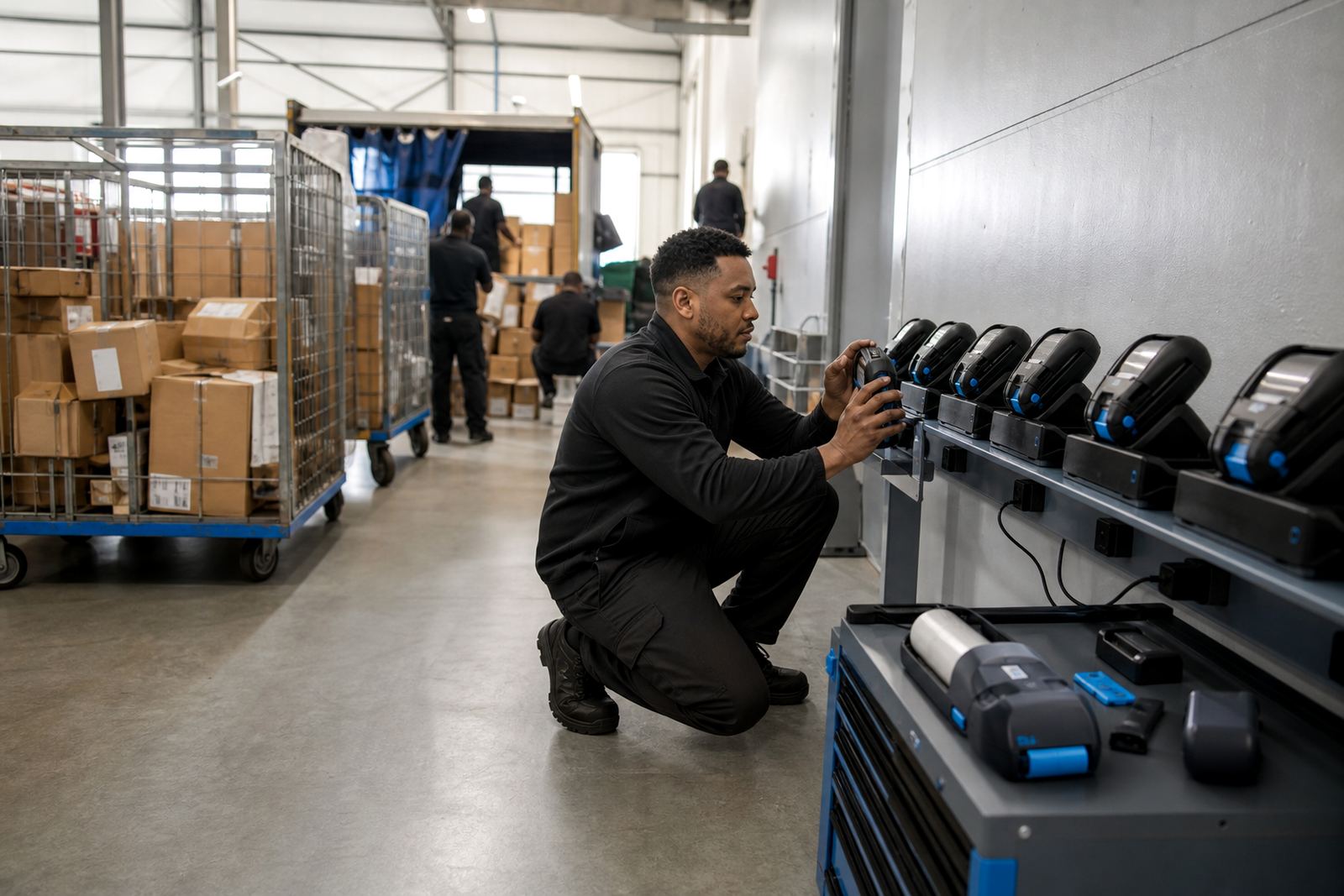
We checked how the printers would be used at packing stations, on trolleys and in the dispatch lane. That shaped the battery plan, because a mobile unit needs enough charge to move through a full working cycle without becoming a wall-bound machine. We also looked at clip wear, roll alignment and the kind of labels used for racking, cartons and courier handover slips. Small things matter when a warehouse prints hundreds of labels a day and can not afford repeated stops for cleaning or reloading.
What we supplied for the Cape Town rollout
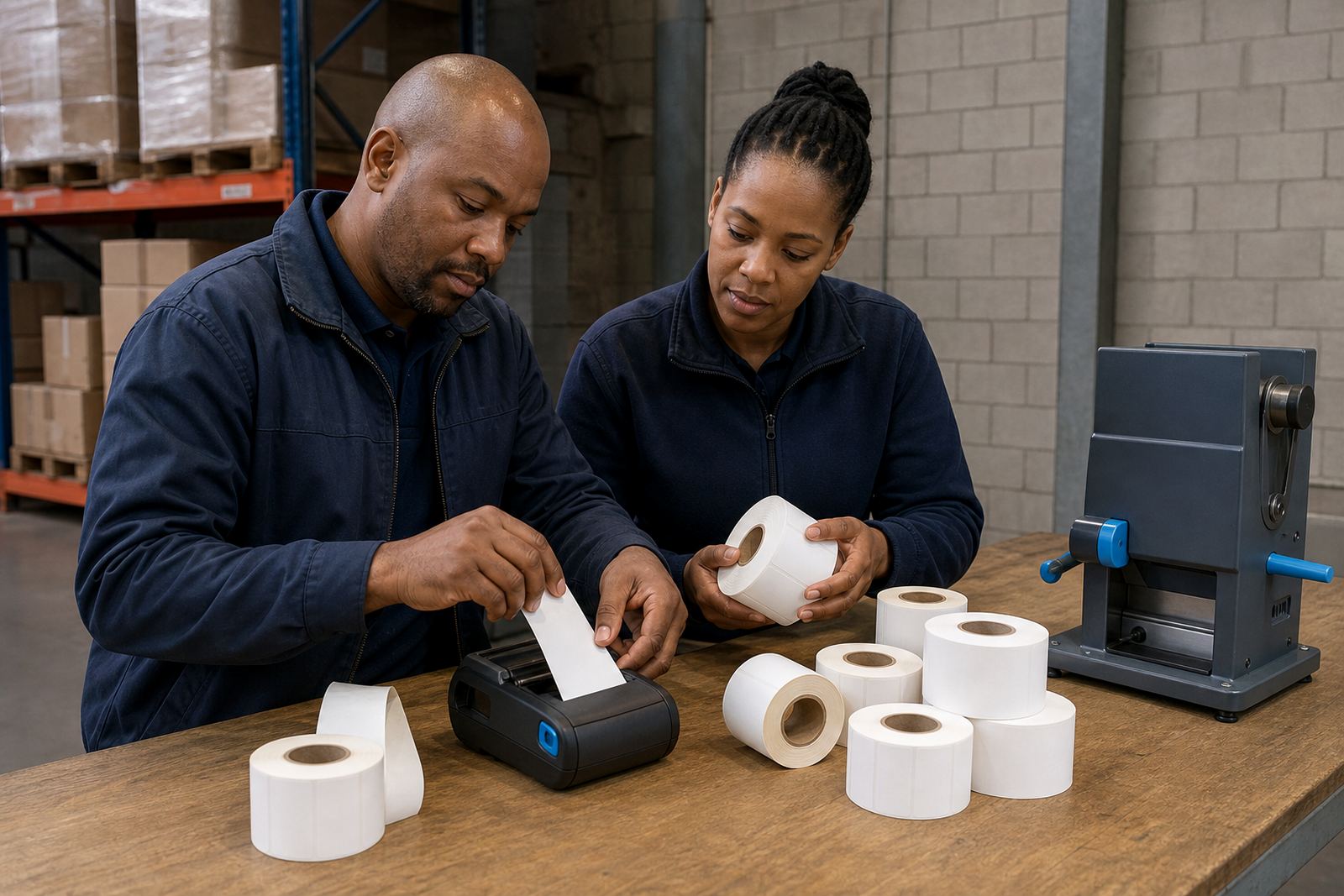
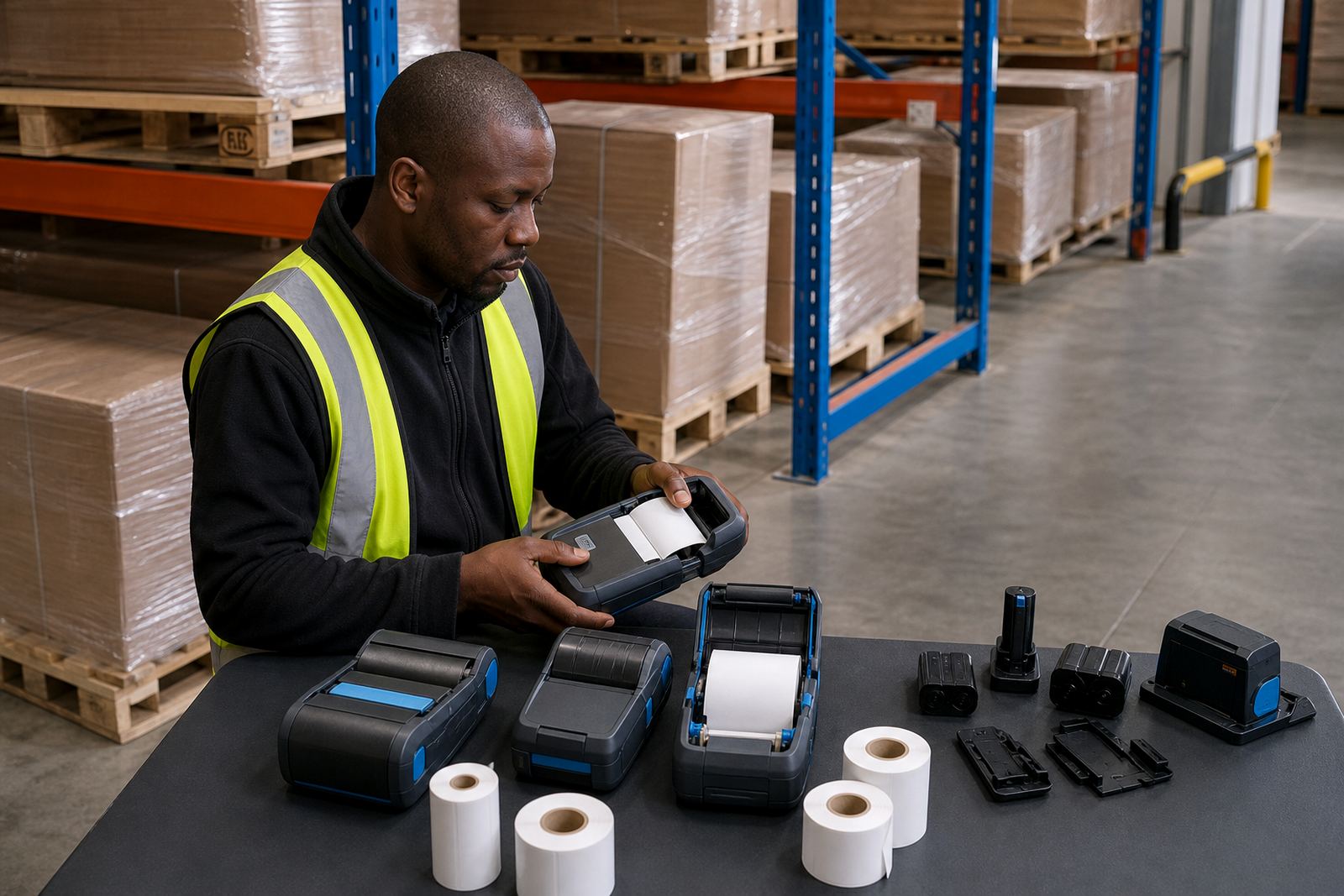
We delivered the mobile label printers, matched label rolls and the practical accessories needed to keep them in service. The printers were set up for direct thermal work where the client needed fast dispatch labels and for thermal transfer jobs where printed detail had to hold up better during handling. We calibrated label sizes, checked print density and tested barcode readability on the floor, not only at a counter.
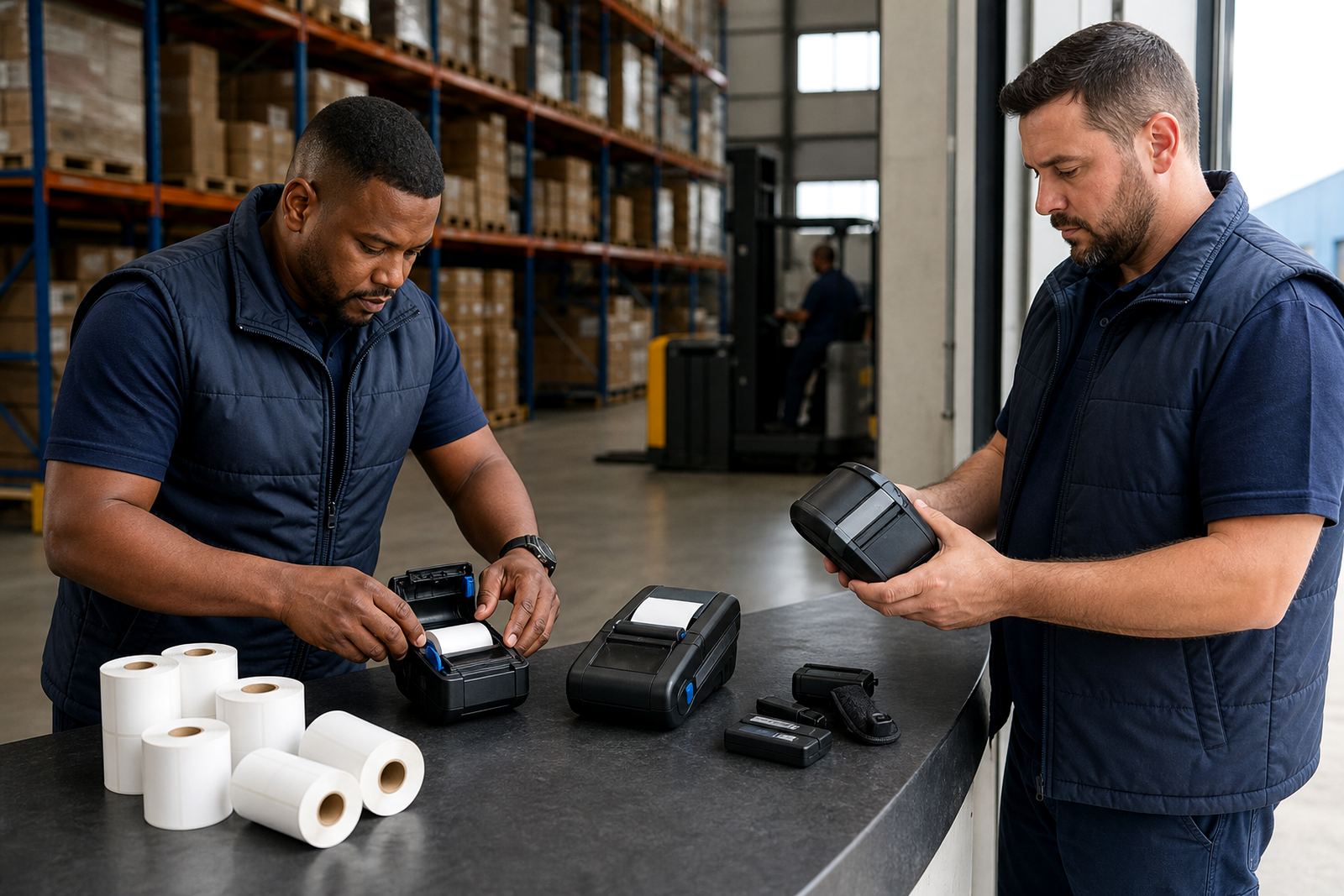
Our field service technician handled on-site setup in stages so the warehouse could keep moving while the equipment was brought online. Bluetooth pairing was set for handheld use, Wi-Fi setup was completed where stations shared jobs across the network, and the team was shown how to clear label jams before they became a larger delay. We also cleaned printheads, tested batteries, checked belt clips and made sure the operators could replace rolls without damaging the printer mechanism.
- Mobile label printers for stockroom and dispatch use
- Direct thermal label rolls for short-life labels
- Thermal transfer label rolls for tougher handling
- Batteries, belt clips and spare handling parts
- Printhead cleaning and label calibration on site
Three weeks from first visit to stable use
The project took three weeks. The first week covered the floor review, media sizing and printer setup. In the second week we handled installation, pairing and operator training with the people who would use the printers every day. The third week focused on print quality corrections, label feed checks and a final battery test across the busiest work areas.
That pace suited the warehouse because the rollout did not need a full shutdown. We moved station by station, then checked results at the end of each stage so the team had working units as the process unfolded. A few early adjustments were needed for label darkness and feed tension, which is normal in a warehouse where different staff members handle the same unit across a shift. The final setup left the client with a cleaner process for receiving, picking and dispatch, with fewer stalled prints and fewer wasted labels.
Training that matched the way the floor actually works
Operator training covered the points that cause the most trouble in a live warehouse: pairing, loading rolls, checking battery condition, reading error lights and cleaning the printhead before the image quality drops. We kept the training practical and tied to the real stations used by the team. The staff also learned how to tell the difference between a label issue and a printer issue, which saves time when stock is moving fast.
The training covered both print methods. Direct thermal was used for speed and convenience on the shorter-life labels, while thermal transfer was explained for labels that need more staying power and sharper retention under handling. That distinction matters in a 3PL environment where some labels are only needed for the day and others must survive storage, sorting and courier movement. We also showed the team how to recognise a weak battery before it creates stoppages, and how to keep belt clips firm enough for daily carry.
What the warehouse gained after the rollout
The warehouse ended up with a tighter mobile printing process and better control over label output in the busy parts of the floor. Barcodes scanned more cleanly, QR codes printed with less guesswork and the team spent less time sorting out feed issues. The client also had a clearer division between direct thermal labels and thermal transfer labels for tougher handling or longer storage. That reduced confusion at the packing benches and at dispatch.
We would use the same practical rhythm on a similar 3PL job in Cape Town or another city: check the labels first, match the print method to the task, set up the pairing carefully and train the people who carry the printers every day. On-site servicing matters in warehouse work because a good unit can still underperform if the printhead is dirty, the roll is wrong or the battery is tired. The useful part is keeping the equipment ready for the next shift, not only for the first test print.
- Cleaner barcode output at receiving and dispatch
- Fewer wasted labels from feed mistakes
- Better battery control during long shifts
- More confident use of mobile printers across the floor
Key facts
| Project type | Mobile printer supply and setup for a 3PL warehouse |
|---|---|
| Town | Montague Gardens, Cape Town |
| Print methods | Direct thermal and thermal transfer |
| Label widths | 50 mm, 75 mm and 100 mm |
| Connectivity | Bluetooth pairing and Wi-Fi setup |
| Support included | On-site setup, printhead cleaning, battery testing, operator training |