What the George team needed on the warehouse floor
The brief came from a regional logistics operation in George that was running busy dispatch, receiving and stock movement out of one site. Their labels had to hold up on cartons, shelves and plastic totes, while the handheld units had to pair cleanly with mobile devices used by pickers and supervisors. The team also wanted print quality checked on site, because light prints and cropped barcodes were causing avoidable rework at the packing benches.
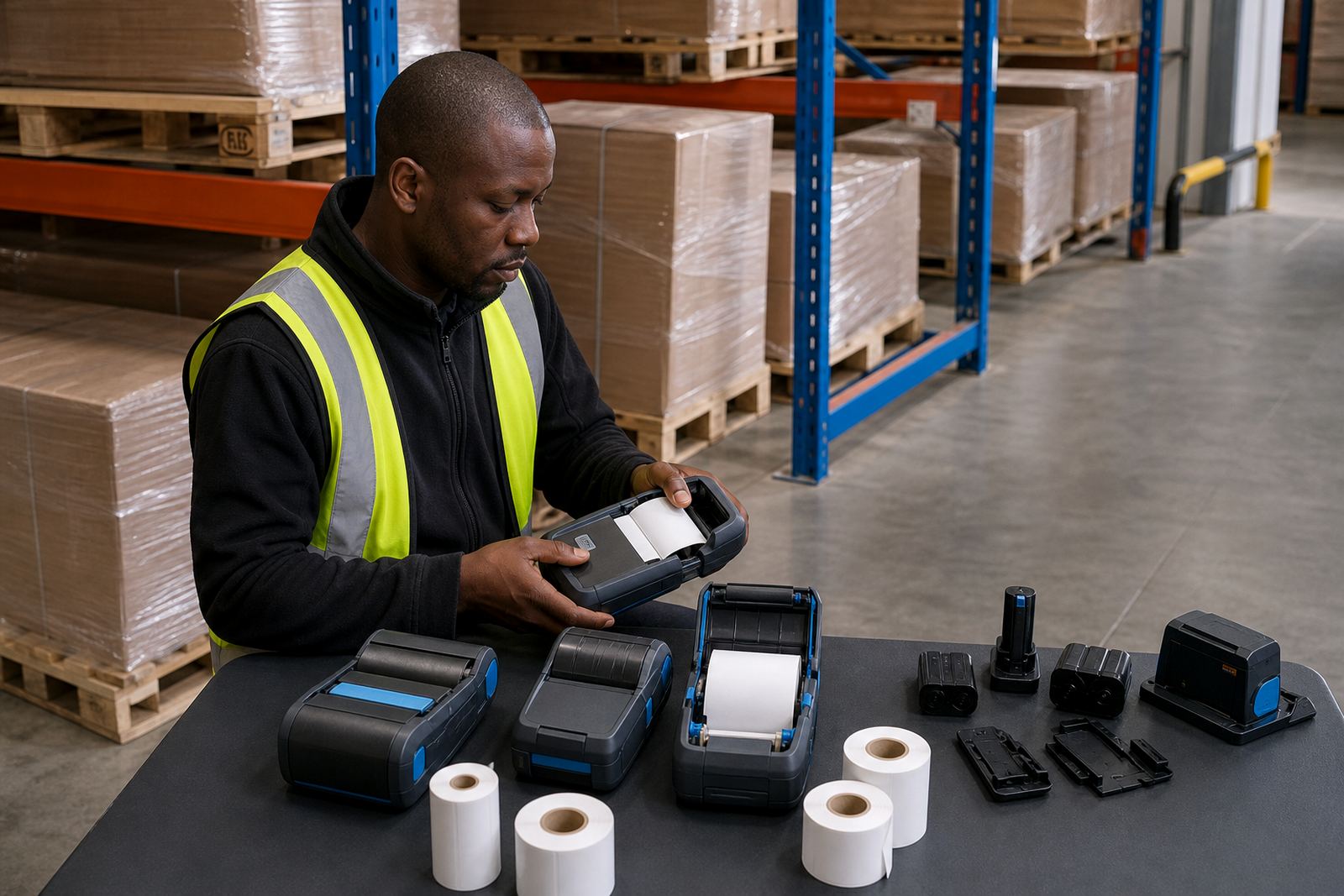
Their stockroom mixed fast-moving parcels with longer shelf labels, so one print size was never enough. They needed direct thermal rolls for short-life dispatch work and thermal transfer rolls for labels that had to stay legible for longer periods. Space was tight around the printers, and the crew needed belt clips and batteries that could cope with a full shift of moving between receiving, storage and loading bays.
- Mobile printers for barcode and QR label work
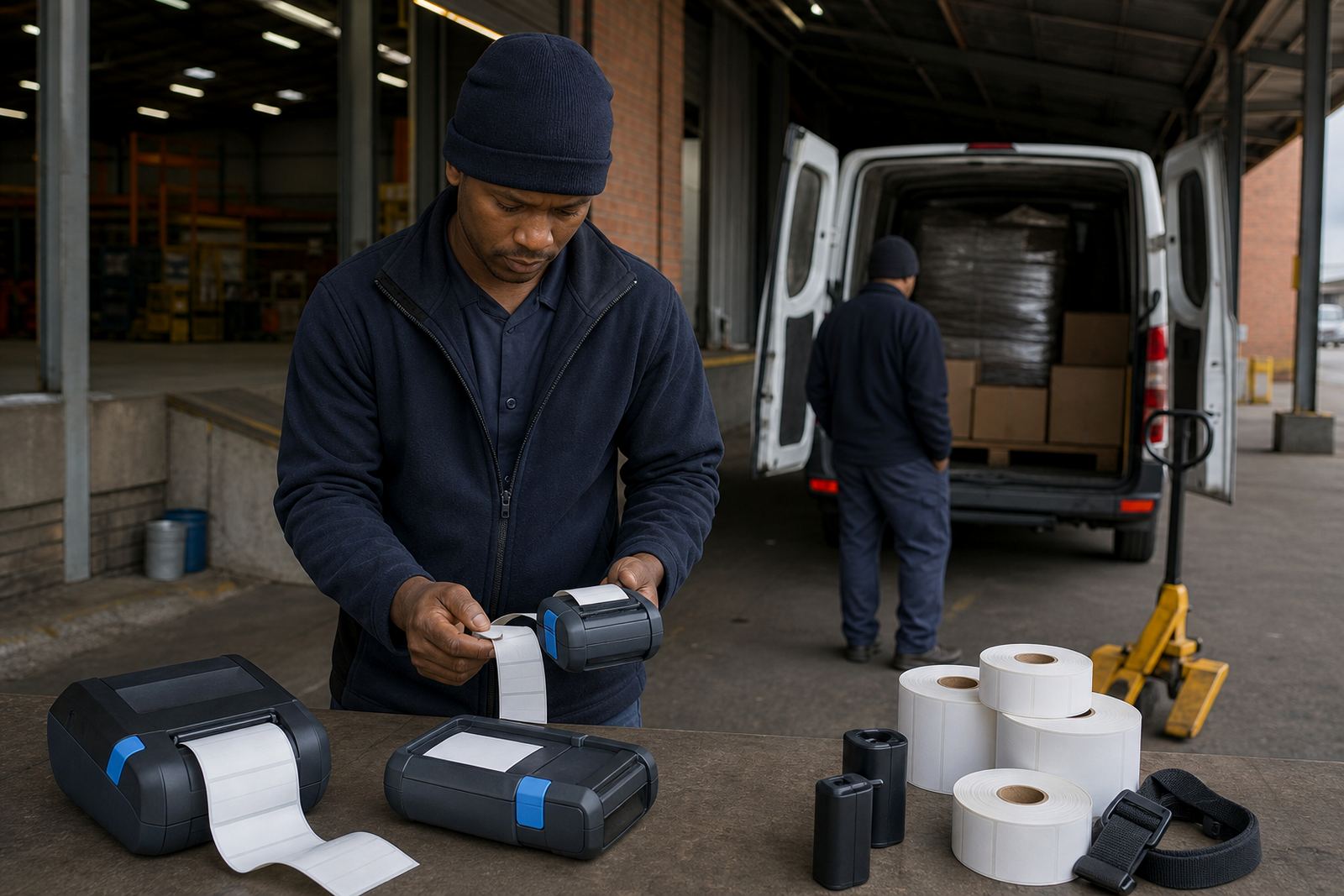
- Direct thermal rolls for carton and dispatch labels with limited life
- Thermal transfer rolls for ID labels built to last longer
- Battery and clip support for handheld field use
How we mapped the print job before fitting anything
The first step was to match the printer setup to the labels already in circulation. We checked print width, the size of the labels used on cartons and shelf edges, and the data fields that had to fit on each print line. That included item codes, line names, batch references and scannable barcodes. Where QR codes were used, we made sure the print density stayed crisp enough for handheld scanners and courier handsets.
Bluetooth pairing was set up for the mobile units used by the floor team, and Wi-Fi was configured where the site wanted printers to sit on the local network rather than move from device to device. We also looked at battery life under work conditions, since a printer that fades halfway through the shift can slow down the whole bay. The team preferred a simple cleaning routine too, so we showed them how to clean the printhead and remove dust before it turned into faded lines or patchy bars.
- Print width matched to each label format
- Bluetooth pairing checked with floor devices
- Wi-Fi setup completed for network use
- Printhead cleaning shown as part of handover
The on-site setup in George over three weeks
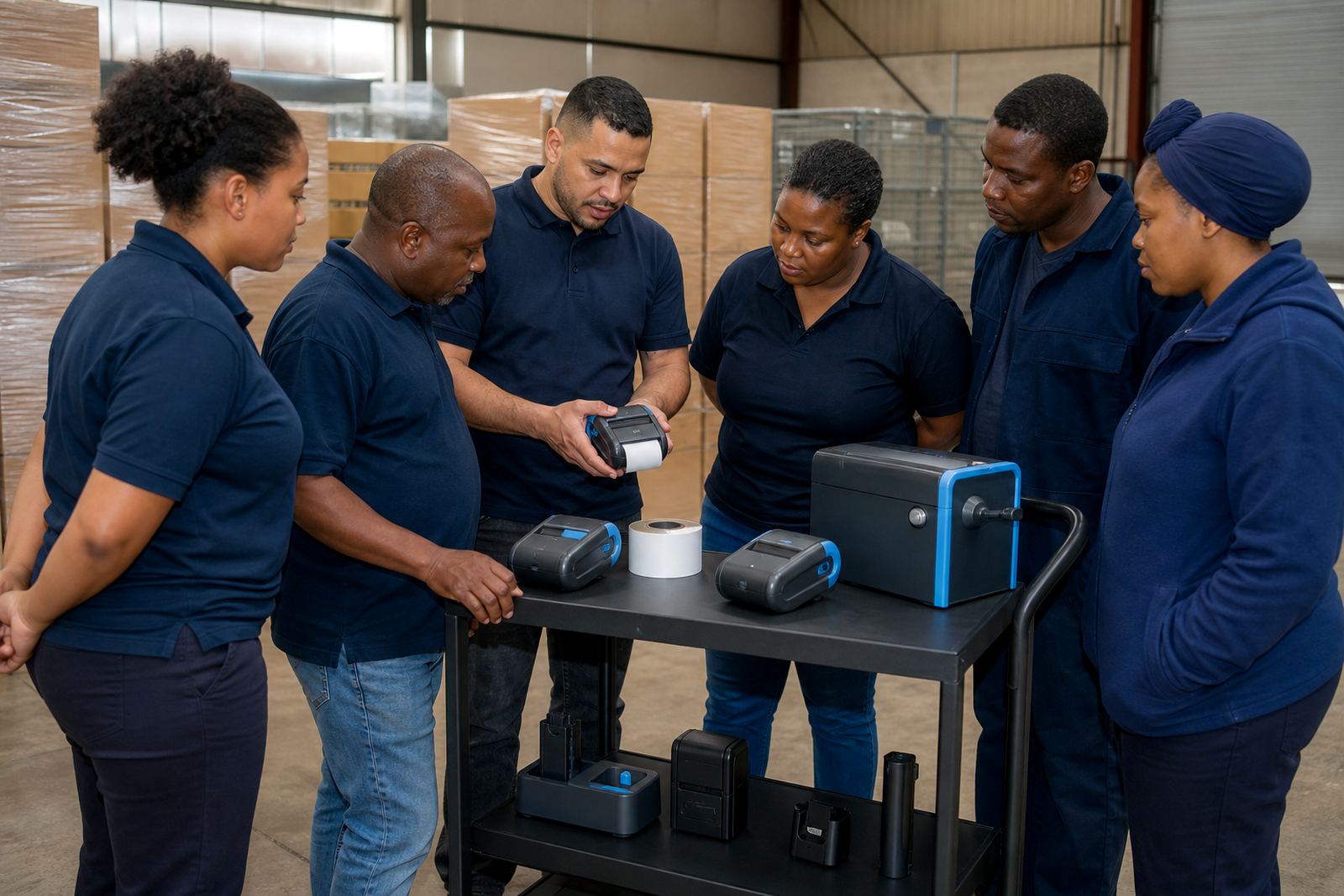
Week one was for delivery, unpacking and checking the units against the label schedule. Week two covered mounting, pairing and calibration at the bench points where labels were printed most often, with extra attention on the packing line and dispatch area. Week three was used for print quality testing, battery testing and a short round of operator training. That last step mattered, because the best hardware still gives poor results if the operator feeds the wrong label size or leaves adhesive dust inside the mechanism.
Kagiso handled the field setup and label calibration while Zinhle worked with the operators on everyday use. The team went through label loading, print alignment, battery replacement steps and what to watch for when a roll starts sticking or skipping. We also cleared a few early jams and checked the belt clips on the units that had been moving around the warehouse on a daily basis. The George site wanted practical fixes, not long explanations, so we kept the handover tied to real work at the packing benches.
- Three weeks from delivery to stable floor use
- Calibration done at the main print points
- Operator training tied to actual stockroom tasks
- Battery replacement steps covered on site
Print quality fixes that mattered in daily use
Once the printers were in circulation, the main issues were the usual ones for a logistics floor: labels feeding slightly off centre, faded patches from dust on the printhead and a few barcode lines that were too light for quick scanning. We adjusted the label guides, cleaned the printheads and rechecked the darkness settings on the units that were under-printing. The result was a cleaner mark on both simple text labels and the denser barcode labels used for picking.
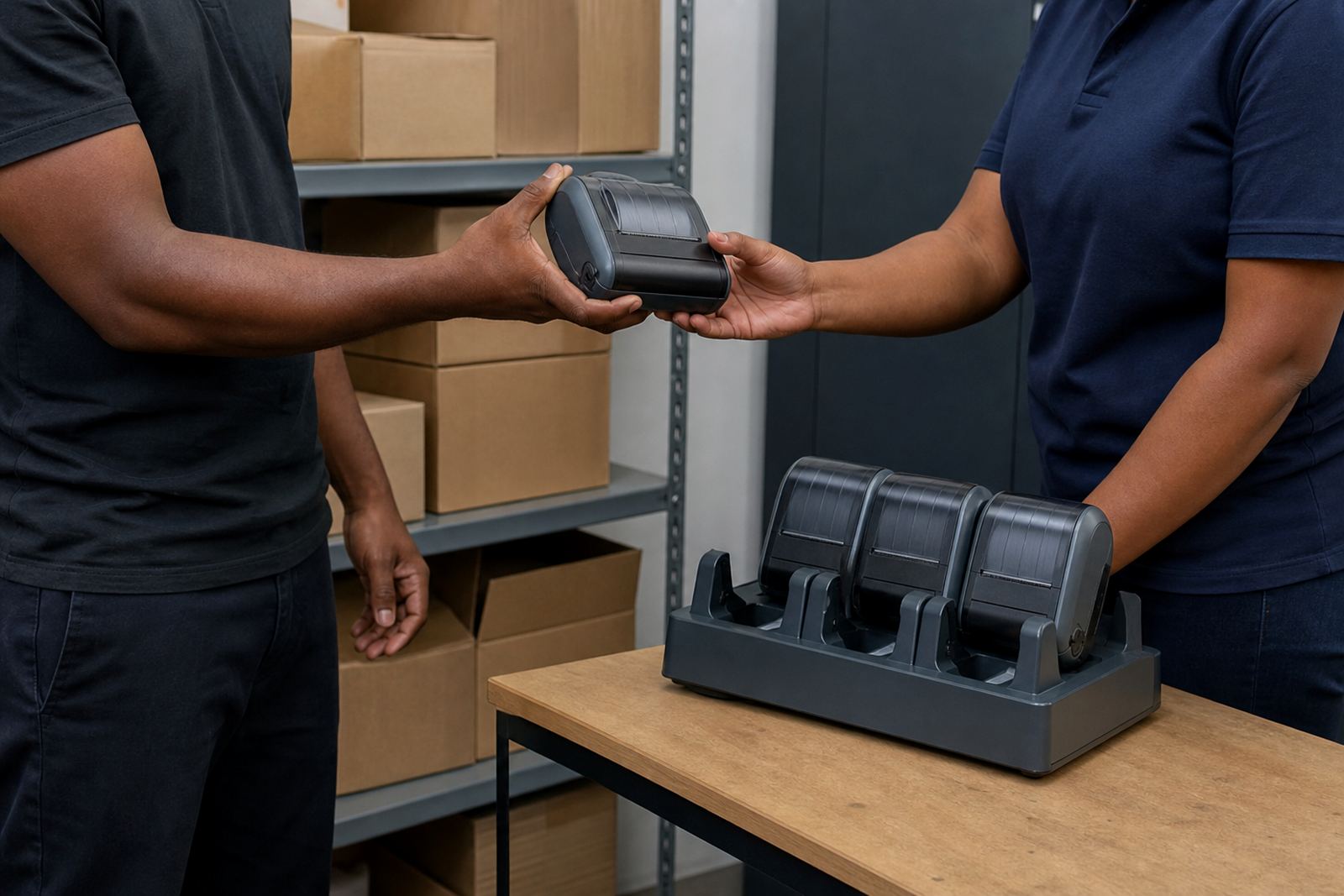
Direct thermal stock suited the short-life labels used on outbound parcels, while thermal transfer stock was better for items that needed to stay readable in storage or during repeated handling. The site also asked for a practical fix to battery wear, so we tested the units, identified the batteries that were no longer holding a full shift and replaced them where needed. Belt clip repair was handled at the same time so the mobile printers could move with the operator instead of sitting on a trolley or counter.
- Label jams cleared at the feed point
- Print darkness adjusted for barcode clarity
- Battery testing used before replacement
- Belt clips repaired for better carry use
What changed on the warehouse floor
By the end of the rollout, the George team had a more predictable print routine. Labels were sized correctly for the cartons and tote bins in use, and the crew stopped wasting roll stock on trial prints that did not line up. Barcode and QR labels scanned more cleanly at dispatch, which cut down on reprints and manual checking at the end of the shift. The printers also moved more easily through the site because the batteries and clips were sorted to suit the way the team actually worked.
The biggest practical gain was consistency. When a label prints the same way on Monday and Thursday, the stockroom does not have to keep second-guessing the settings. That made it easier for supervisors to train new staff and easier for the floor team to keep moving when the bay got busy. The site now has a clearer routine for printhead cleaning, label calibration and battery checks, which helps prevent the small faults that usually turn into bigger ones later.
Steps worth repeating on the next rollout
If we did a similar logistics deployment again, we would start with the label formats already in use and map each printer to its main task before the first roll goes in. That saves time when the team has both short-life dispatch labels and longer-life stock labels to manage. We would also keep the first round of print quality testing on the floor, not in a quiet corner, because the real pressure points show up when the packing line is moving.
For a site like George, the useful work is in the details: matching print width to label size, checking Bluetooth and Wi-Fi pairing where needed, and showing operators how to clean the printhead before quality slips. On a busy logistics floor, those small checks are what keep the labels readable and the workflow steady.