Jet Park stockrooms do not forgive mixed labels
The brief came from a warehouse team in Jet Park that was handling picking, packing, putaway, and dispatch from different zones through the same day. Their labels were no longer printing with the same darkness, and the team had more than one roll type in circulation. That meant one scanner-friendly label in the morning could turn faint by late afternoon, or the adhesive would suit one carton surface and fail on another.
They wanted a cleaner mobile labelling setup for line-side use, trolley work, and fast correction in the aisles. The ask was practical: print clear barcode and QR labels on the move, keep the printer body light enough for belt carry, and make the media consistent so operators did not waste time checking each roll by hand.
We started by looking at the label sizes in use, the scan distance needed at receiving and dispatch, and the actual surfaces in the warehouse. Corrugated cartons, shelf tags, stock totes and plastic containers all behave differently, so the media had to be chosen for the job rather than for convenience.
What the team needed from the portable printers
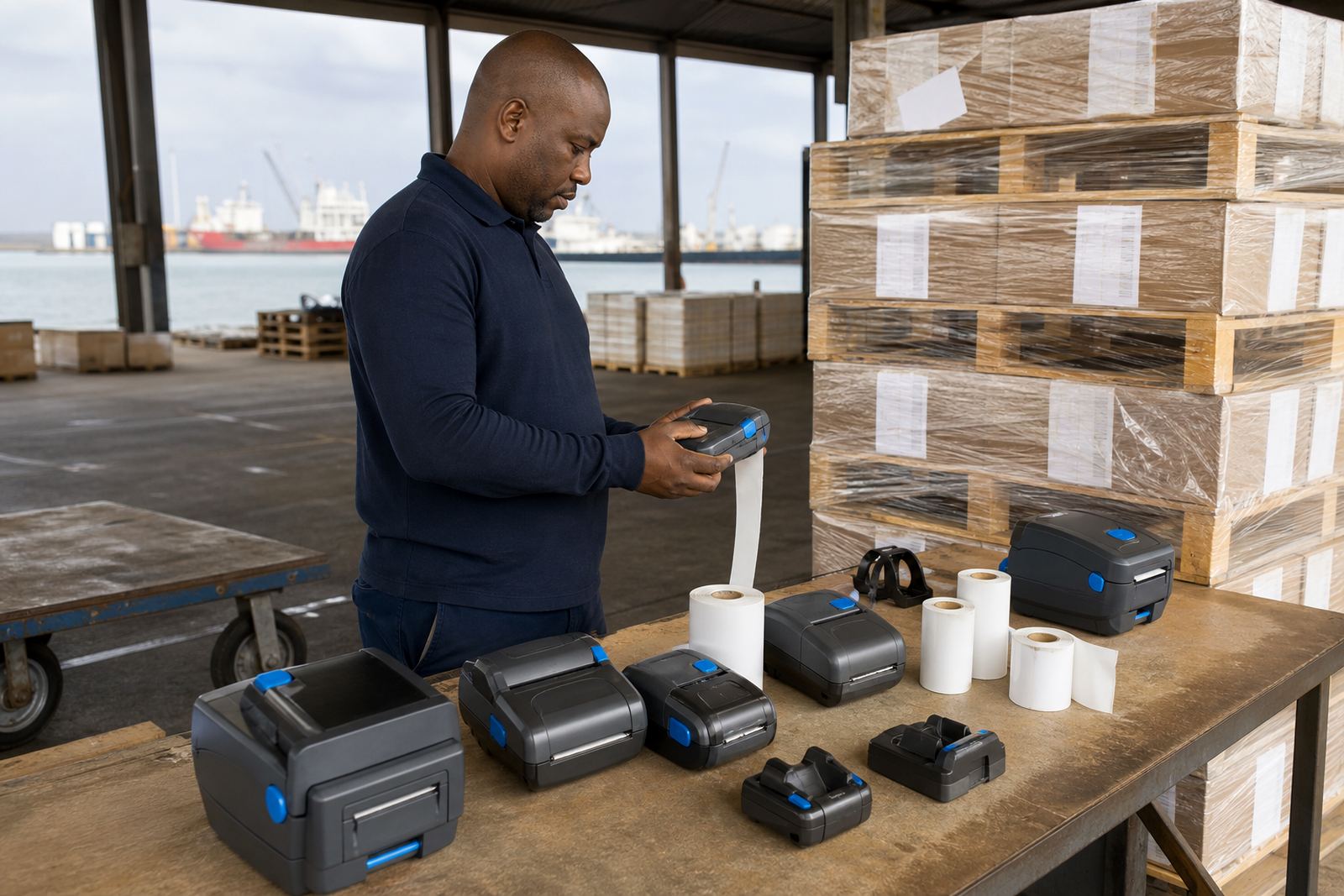
The warehouse wanted direct thermal units for short-life labels and thermal transfer units for labels that had to hold up longer on stock that moved through storage, transport, or cooler areas. That split is important in a busy warehouse because direct thermal works well for short runs and is easy to manage, while thermal transfer gives tougher print that stays readable for longer.
We matched the printers to a practical working width rather than forcing one size across every task. The chosen units covered common label widths used for item codes, location markers, carton identifiers, and barcoded dispatch labels. Battery life had to support a full shift of stop-start use and the operator also needed dependable Bluetooth pairing for mobile work and Wi-Fi setup where printers sat on a local network.
- Print width matched to common warehouse label sizes
- Bluetooth pairing for handheld and trolley use
- Wi-Fi setup for fixed points and shared access
- Barcode and QR code printing for scanning at speed
- Battery testing before issue to operators
- Belt clips checked for wear and secure carry
Standardising the roll stock, not just the machines
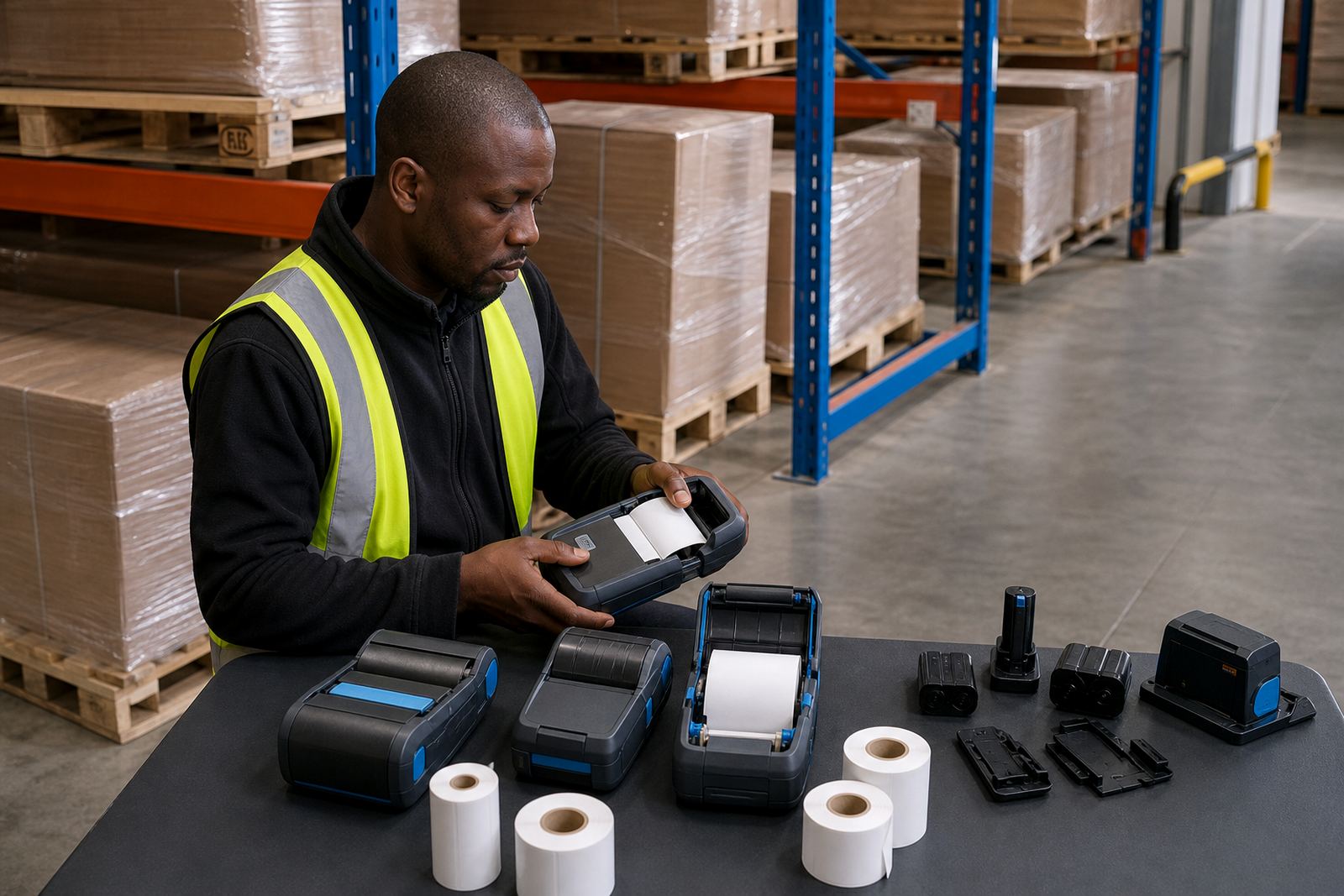
The biggest problem was not only the printer fleet. The label rolls were mixed by finish, adhesive, core size, and print method, which created avoidable errors. We separated the stock into direct thermal rolls and thermal transfer rolls, then set aside each roll type for a clear duty. That prevented the wrong media from being loaded into the wrong printer, which is where a lot of waste starts.
For the warehouse team, we also checked the label face for print darkness and surface response. Some labels looked acceptable at first glance but scanned badly once the ink density dropped or the code shrank. We corrected that by calibrating the printers, aligning the label gap sensor, and setting the print density so the barcode bars stayed crisp. In a place where labels are handled by gloved hands and moved through racks, that adjustment matters more than a glossy spec sheet.
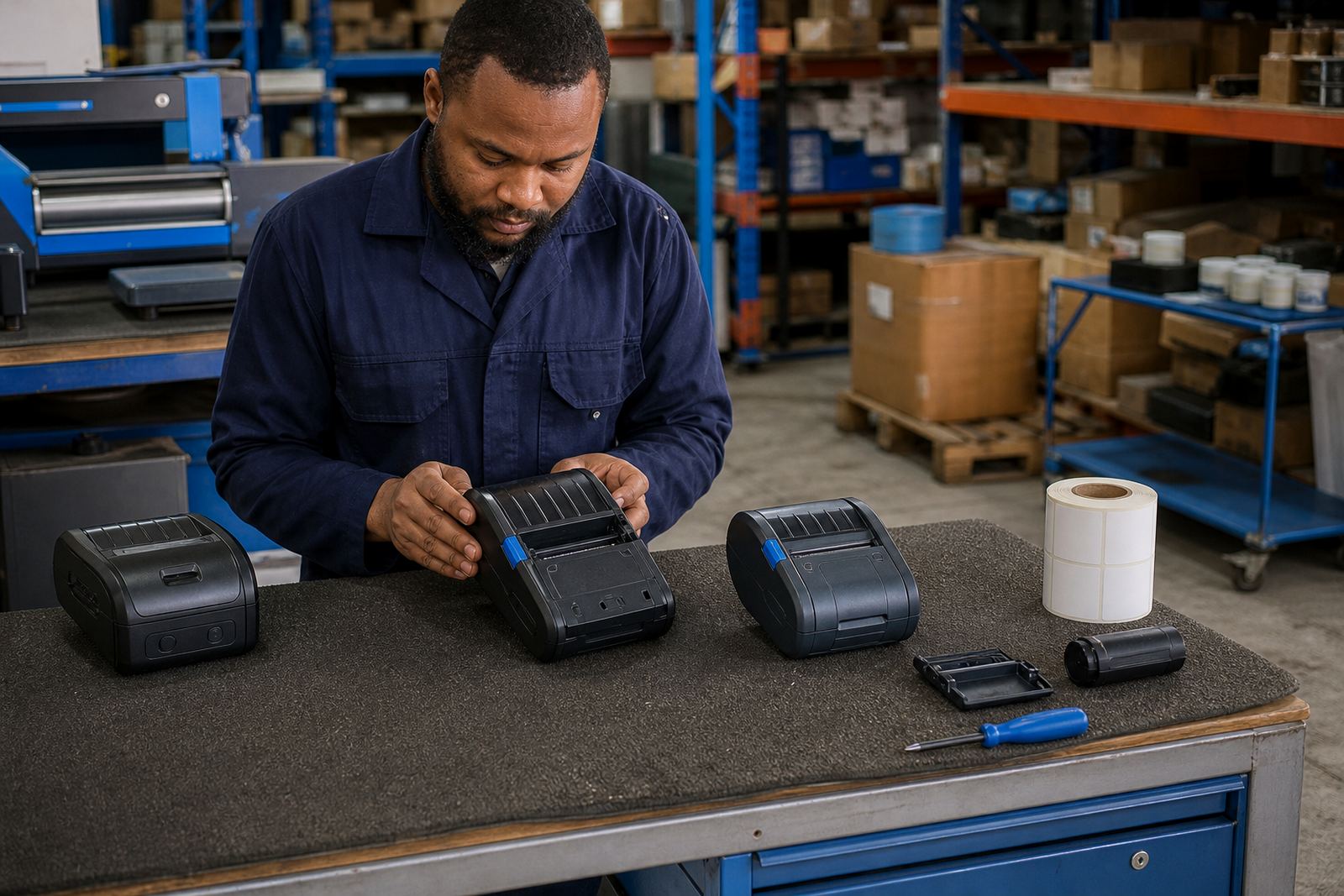
The job also included printhead cleaning and a few small repairs to keep the output steady. Dust, adhesive residue, and the paper fibre from low-cost rolls can build up fast. Once the printheads were cleaned and the feed path checked, the printers tracked the media better and the edge bleed settled down.
On-site work in Jet Park and the wider Gauteng schedule
The warehouse wanted the changeout done without turning the floor into a workshop, so the work was planned in phases over two weeks. The first phase covered stock review, printer inspection, and media sorting in Jet Park. The second phase handled setup, operator training, and the repair items that showed up during testing. Where the team needed support in other branches, we used the same standard rather than giving each site its own small variation.
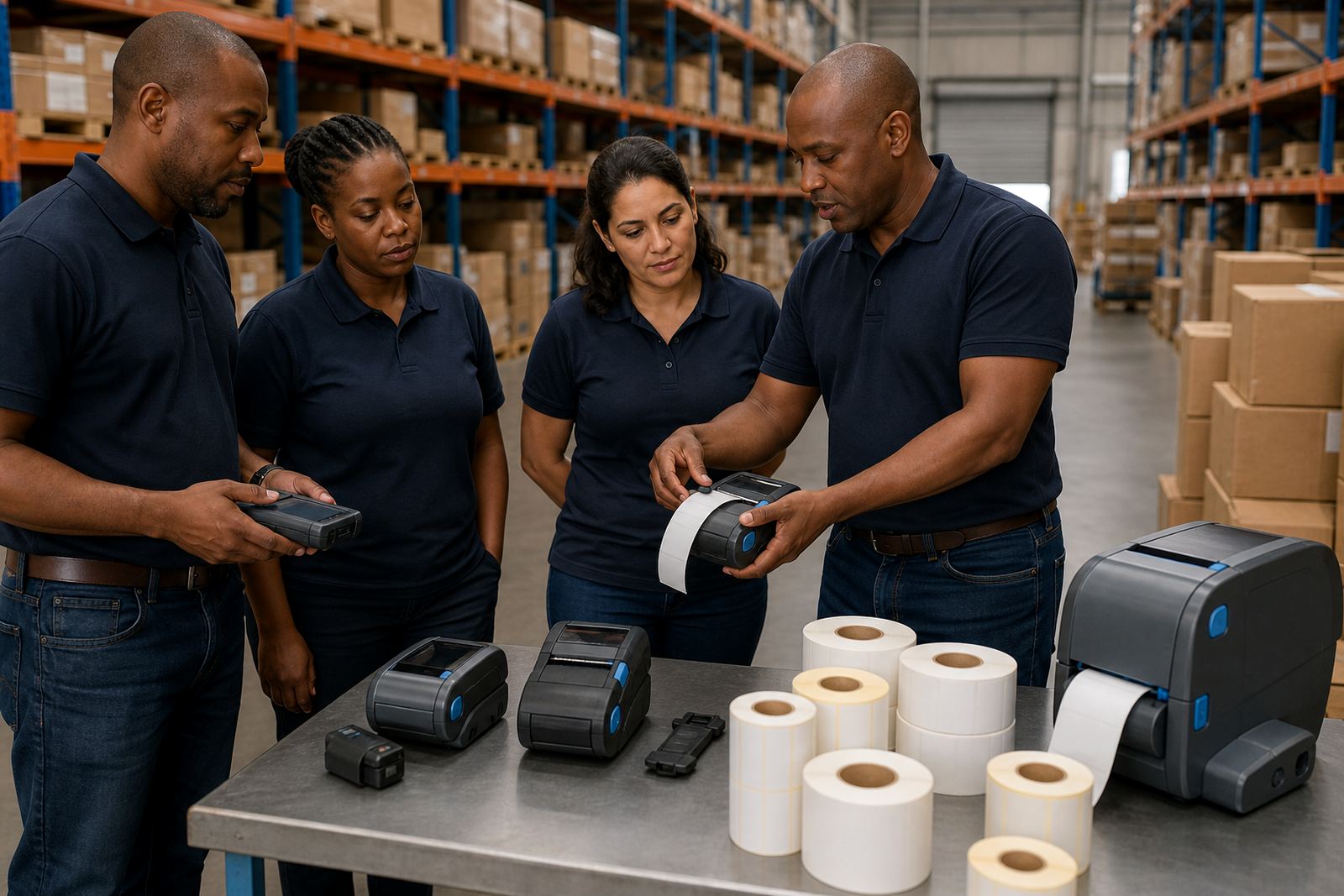
We carried out Bluetooth pairing, Wi-Fi setup, label calibration, label jam clearing, and print quality fixes. The setup was handled alongside operator training so the team knew how to load the roll correctly, spot a poor feed early, and clean the printhead before the problem spread through the shift. Belt clips were checked too, because a loose clip turns a mobile printer into a nuisance very quickly.
- Week 1: printer and media audit in Jet Park
- Week 1: label standardisation and calibration plan
- Week 2: setup, training, and repairs on site
- Week 2: print tests across common carton and tote labels
What changed once the labels matched the work
Once the printers and rolls were aligned, the warehouse had fewer label mismatches between shift handovers. Operators were no longer choosing from mixed stock on the fly, and the most common barcode labels scanned more cleanly at receiving and dispatch. The move to a defined media set also made stock reordering easier because the team could see exactly which rolls belonged to each task.
The wider benefit was practical rather than dramatic. Less reprinting, less time spent checking label darkness, and fewer pauses when a roll jammed or the battery dipped below useful level. The team could keep moving through pick, pack, and dispatch without treating the printer as a separate problem every hour.
For a warehouse like Jet Park, consistency is what saves time. The printer has to suit the hand that carries it, the label has to suit the box or tote, and the code has to scan first time at the point of use. That is what this project was built around.
What we would rework on a similar warehouse changeout
We would keep the same sequence: inspect the current fleet, split the media by job, calibrate each printer against the labels in use, and train the operators on the small faults that cost time later. A mixed printer set without media control usually creates more trouble than it solves, especially where the team depends on mobile printing through the day.
In a future changeout, we would again start with the working labels already in circulation, not with a generic bundle of supplies. That lets the setup fit the warehouse rhythm from the start, and it makes on-site support more useful because the team is working with the sizes, finishes, and adhesive levels they actually use.
Jet Park was a good example of how portable printers and label stock need to be treated as one system. When the rolls, printer settings, and carry hardware line up, the stockroom runs with fewer interruptions and the labels stop being a daily argument.
Key facts
| Project location | Jet Park, Johannesburg |
|---|---|
| Client type | Warehouse labelling team |
| Printer types | Direct thermal and thermal transfer mobile label printers |
| Label use | Cartons, totes, shelf tags, item codes and dispatch labels |
| Connectivity | Bluetooth pairing and Wi-Fi setup |
| Work completed | On-site setup, calibration, printhead cleaning, training and repairs |