Keep rolls in the carton until they are needed
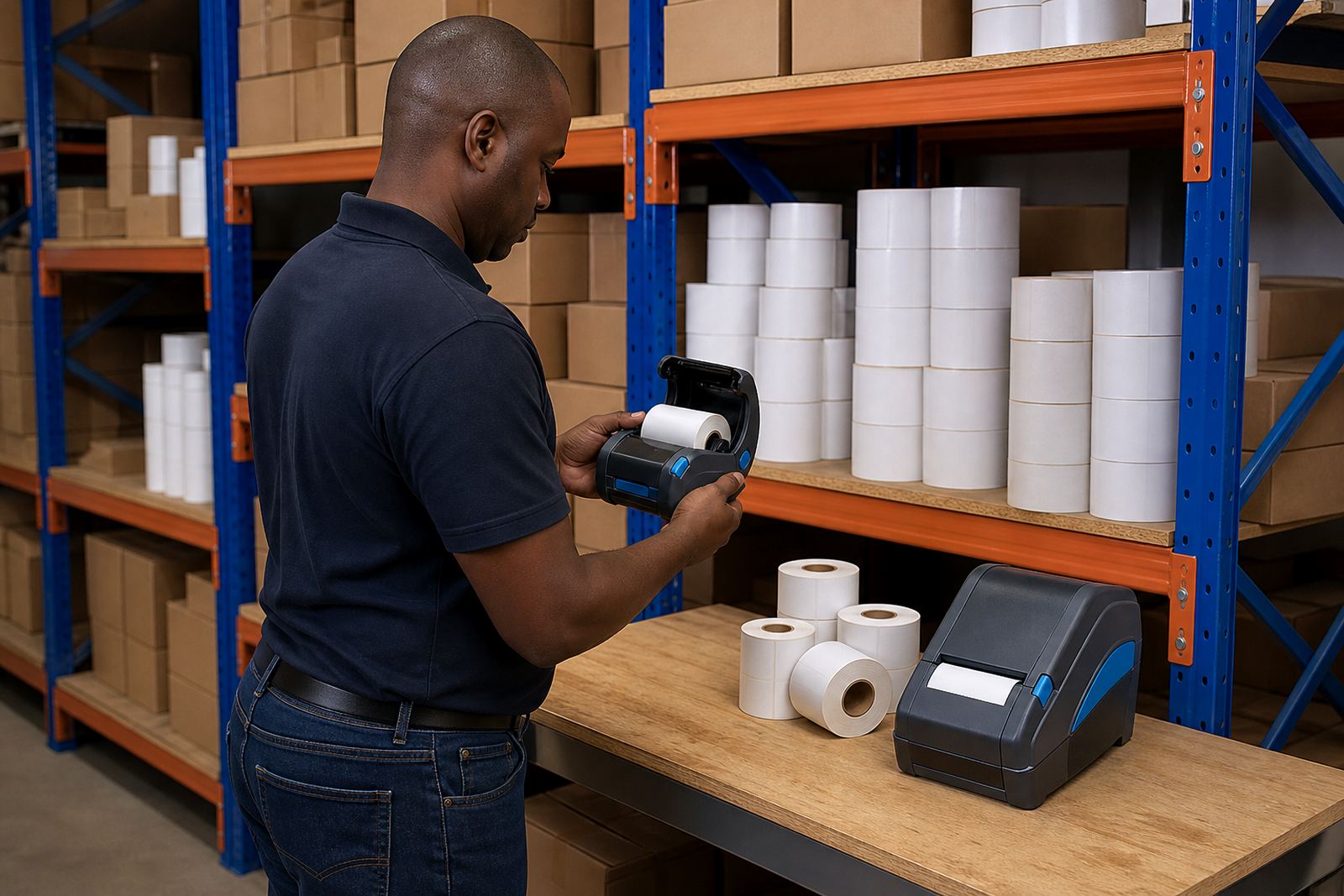
Leave unused rolls in their outer carton or a sealed box, then keep that box off the floor. Concrete floors, open shelves near doors and window ledges all invite dust, sunlight and damp air, especially in Cape Town coastal areas where humidity creeps in during the morning. A clean carton also protects the roll edges from knocks that can cause feeding faults later.
Store rolls upright only when the box is made for it. If a roll is left loose on a bench, the outer layers can pick up grit and flatten at one side, which makes the printer work harder when the roll starts running.
Separate direct thermal and thermal transfer stock
Direct thermal rolls and thermal transfer labels are not the same job, even when the outer size looks similar. Direct thermal stock is heat-sensitive and needs extra care around sun, warm delivery vans and hot plant rooms. Thermal transfer labels are less sensitive on the face stock, but the ribbon side and label finish still need a dry, tidy storage space.
- Keep direct thermal rolls away from windows, heater outlets and dashboard storage.
- Keep thermal transfer labels with their matching ribbon plan, so the stockroom does not mix finishes.
- Mark the box with size, core type and label count before it goes onto a shelf.
- Use older direct thermal stock first, especially where stock turns over slowly.
Stacking that protects the roll edge
Flat stacking works best when the boxes are level and the bottom layer can carry the weight. Too much pressure on one side crushes the roll edge and can create misfeeds in mobile printers with narrow paper paths. A roll that has been squeezed out of shape often looks fine from the outside but feeds badly once it reaches the printer.
- Keep heavier cartons at the bottom and lighter cartons on top.
- Do not lean open boxes against a wall where moisture can collect.
- Leave a small gap between stacks so air can move around the stock.
- Check for crushed corners after receiving a shipment in wet weather.
In Johannesburg or Pretoria, dust is often the bigger problem than damp. In Durban and Gqeberha, moisture control matters more, so shelves need a dry, well ventilated corner rather than a closed room with no air movement.
Handling rolls before they go into the printer
Clean hands help more than gloves that shed fluff. If a roll is touched with oily fingers, the liner can pick up marks that later show up as print issues or sensor problems. When the stockroom team opens a carton, they should lift the roll by the core or the outside wrap, not by the print surface.
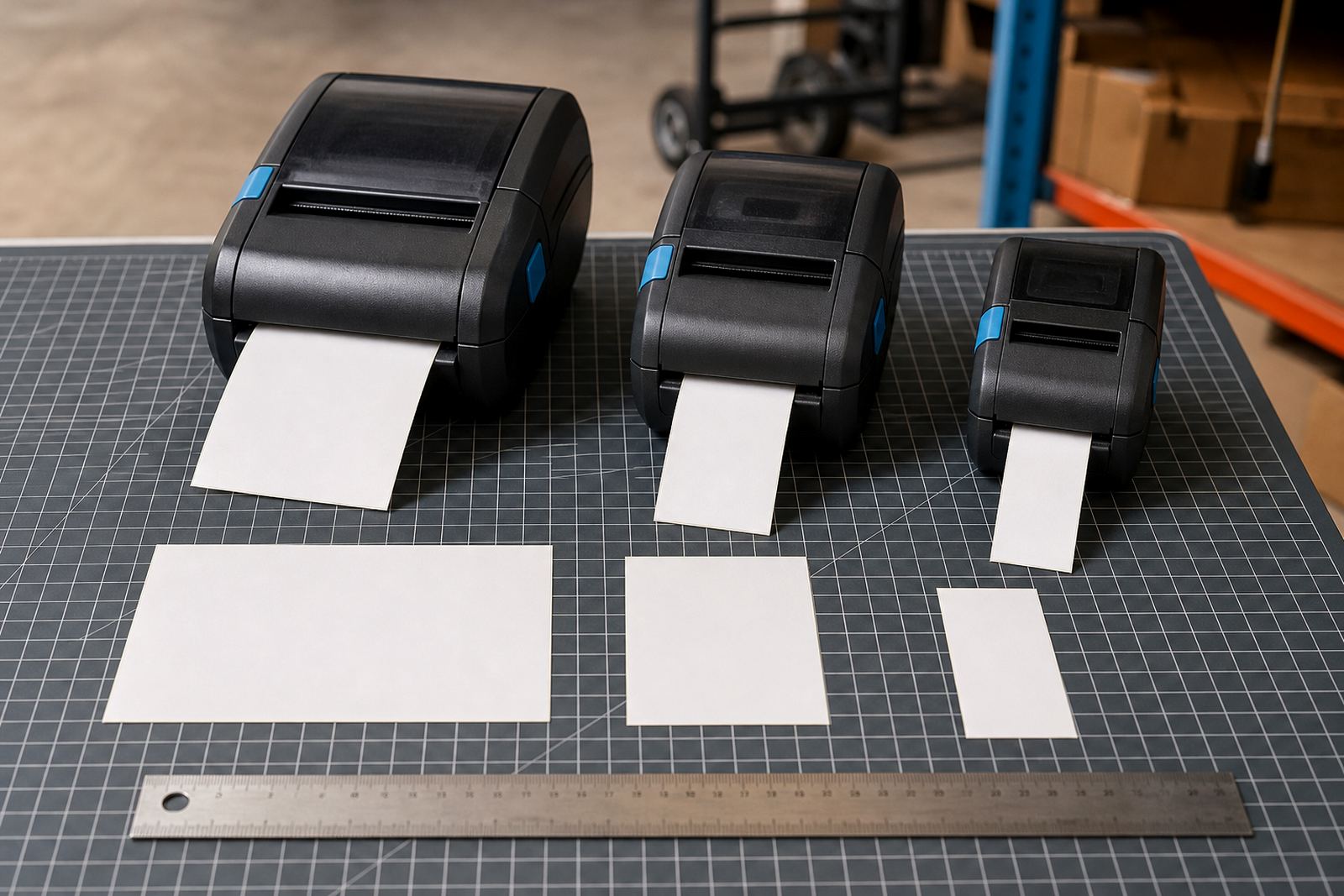
Before loading, check that the label edge is even and the roll turns freely. If the roll has a loose outer wrap or a damaged leading edge, trim only what is needed and keep the cut square. This matters for barcode and QR printing, where a clean feed helps the scanner read the label properly.
Simple checks for long shelf life
Thermal stock lasts better when the storage spot stays steady. Big changes in heat, cold and humidity can make labels curl or stick together. That is a problem in stockrooms near roller shutter doors, loading bays or office windows where conditions change through the day.
- Keep rolls in a dry room with the door closed when possible.
- Move stock away from chemical containers, cleaning fluids and cardboard waste.
- Use the oldest carton first when the label size matches the same job.
- Inspect the box seals before moving stock between branches.
If a roll has been stored badly, test a small run before loading the whole batch into a mobile printer. A short check saves time when the printer must produce shipping labels, shelf tags or intake labels without interruption.
When label rolls start causing feed faults
Curled rolls, dusty liners and crushed edges can lead to jams, poor print density and labels that stop short of the cutter or tear bar. Mobile printers also need the right calibration after a roll change, especially when the label length differs from the last batch. If the printer uses Bluetooth or Wi-Fi pairing, the device connection should be stable before a long print run starts.
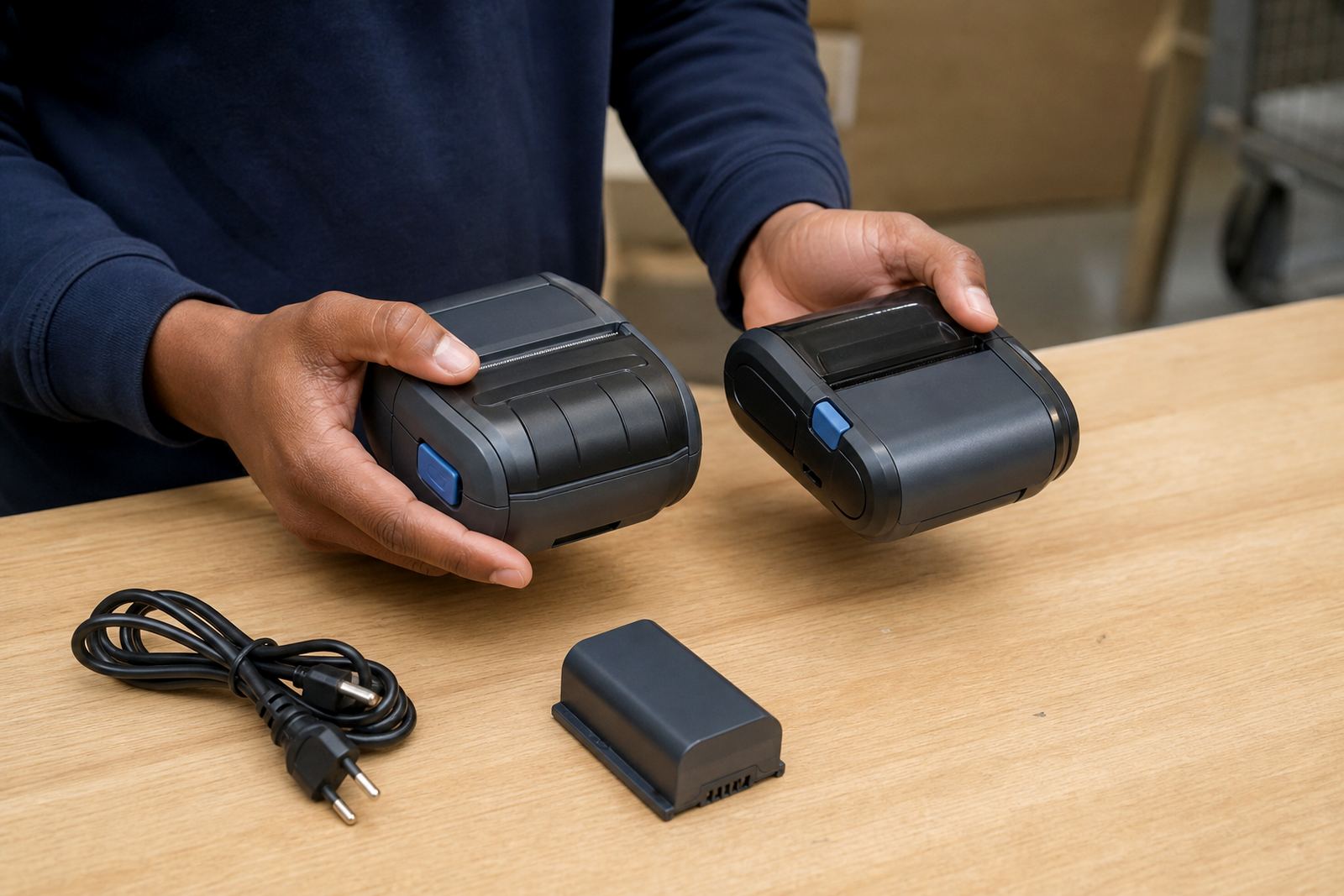
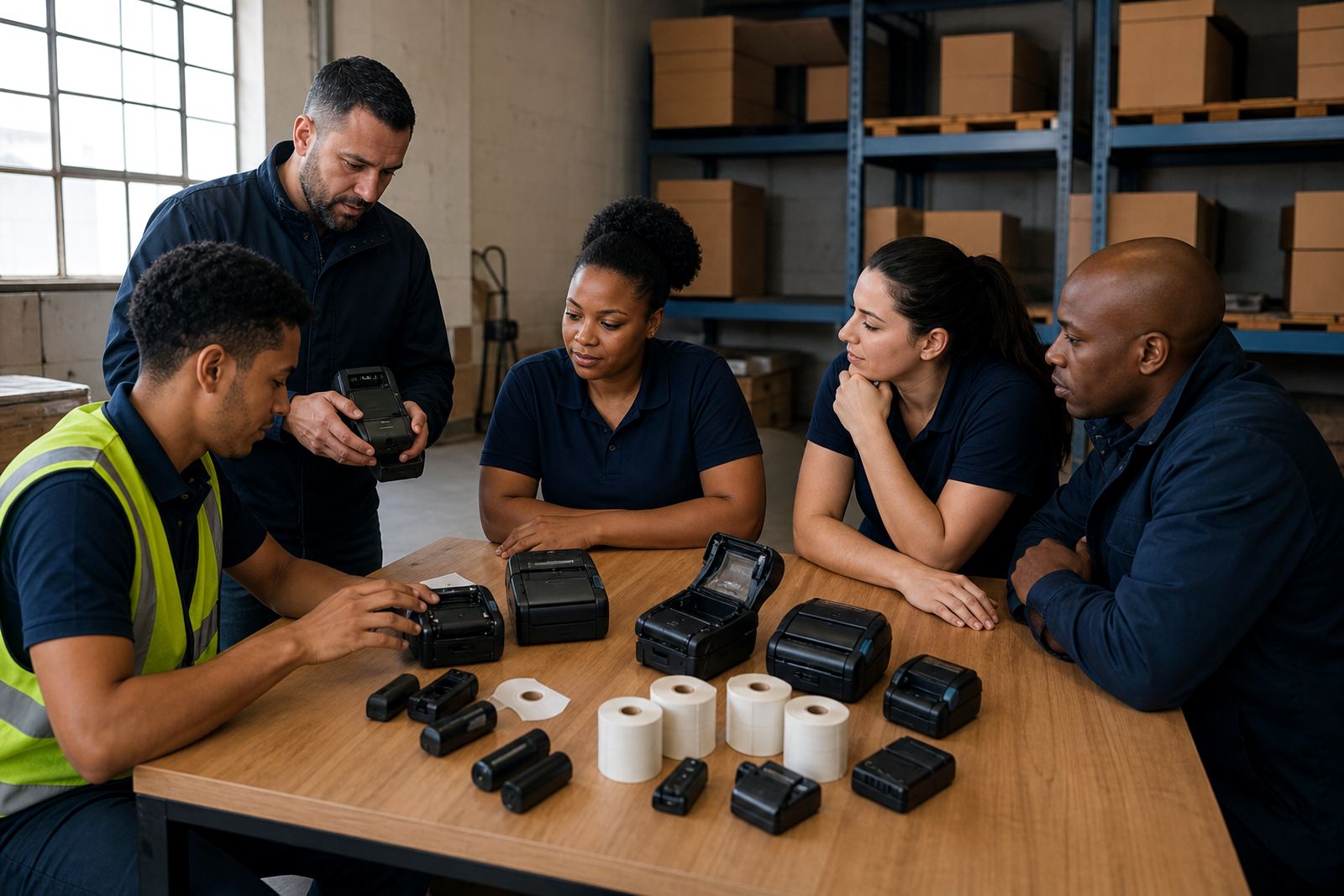
Our field team takes care of label calibration, printhead cleaning, battery testing, battery replacement and print quality repairs across Montague Gardens, Cape Town, Johannesburg, Durban, Pretoria and Gqeberha. For stockrooms that run mobile printers every day, belt clips, operator training and preventive servicing help keep the rolls feeding properly and the label path clear.
A stockroom checklist for roll care
Work through this list when a new batch arrives or when older stock moves between branches. It keeps the storage habit practical and avoids the small mistakes that lead to wasted labels later.
- Count the cartons and compare the size printed on each box.
- Check whether the stock is direct thermal or thermal transfer.
- Look for crushed corners, loose wrap or damp patches.
- Store the rolls off the floor and away from sunlight.
- Keep the oldest usable cartons closest to the front of the shelf.
- Separate open boxes from sealed cartons.
- Test one roll before a large dispatch or relabel job.
When your team needs setup help, repairs, or assistance with pairing and calibration, clients can contact us through our form on the contact page.