A charging point for the battery rotation that keeps the floor moving
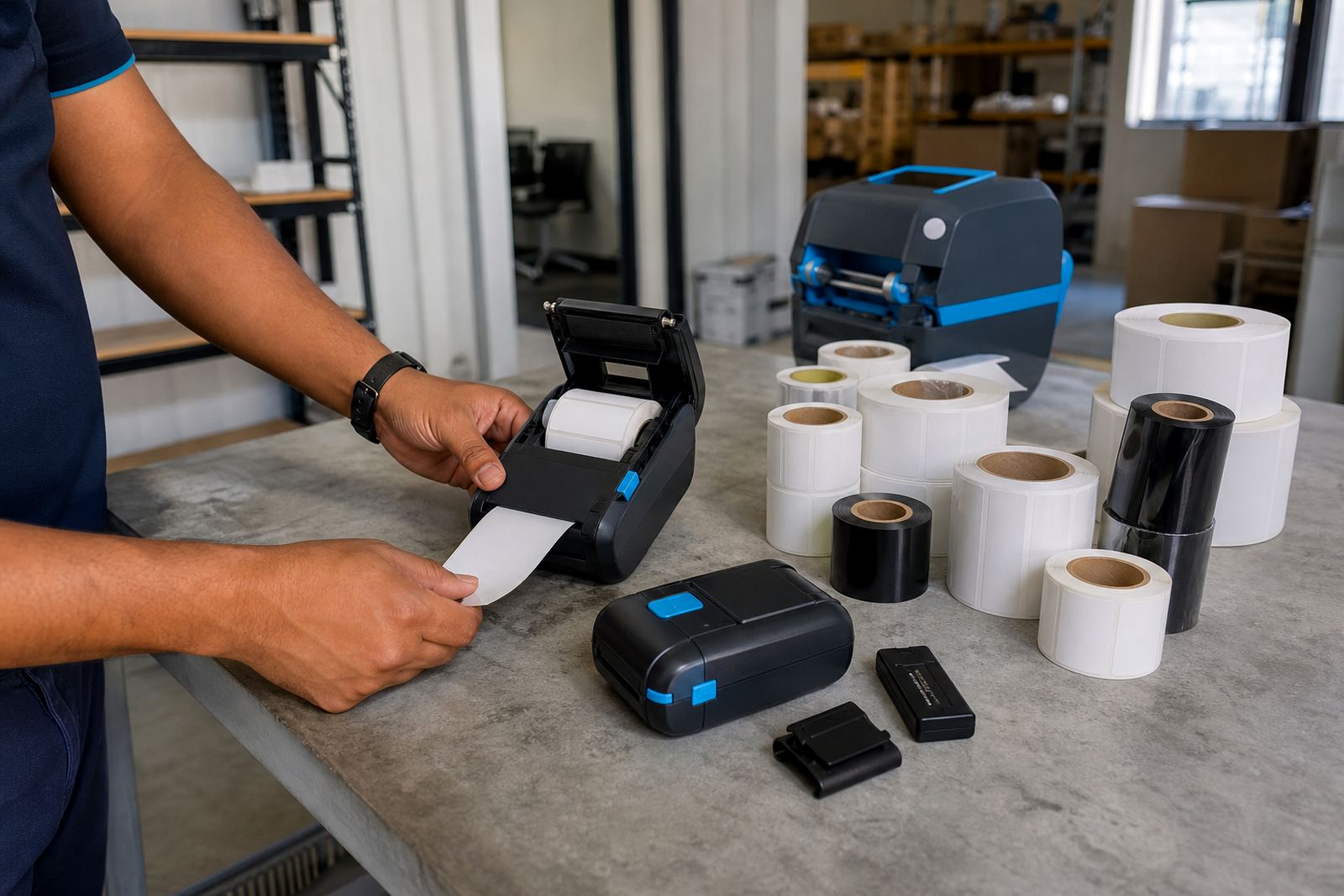
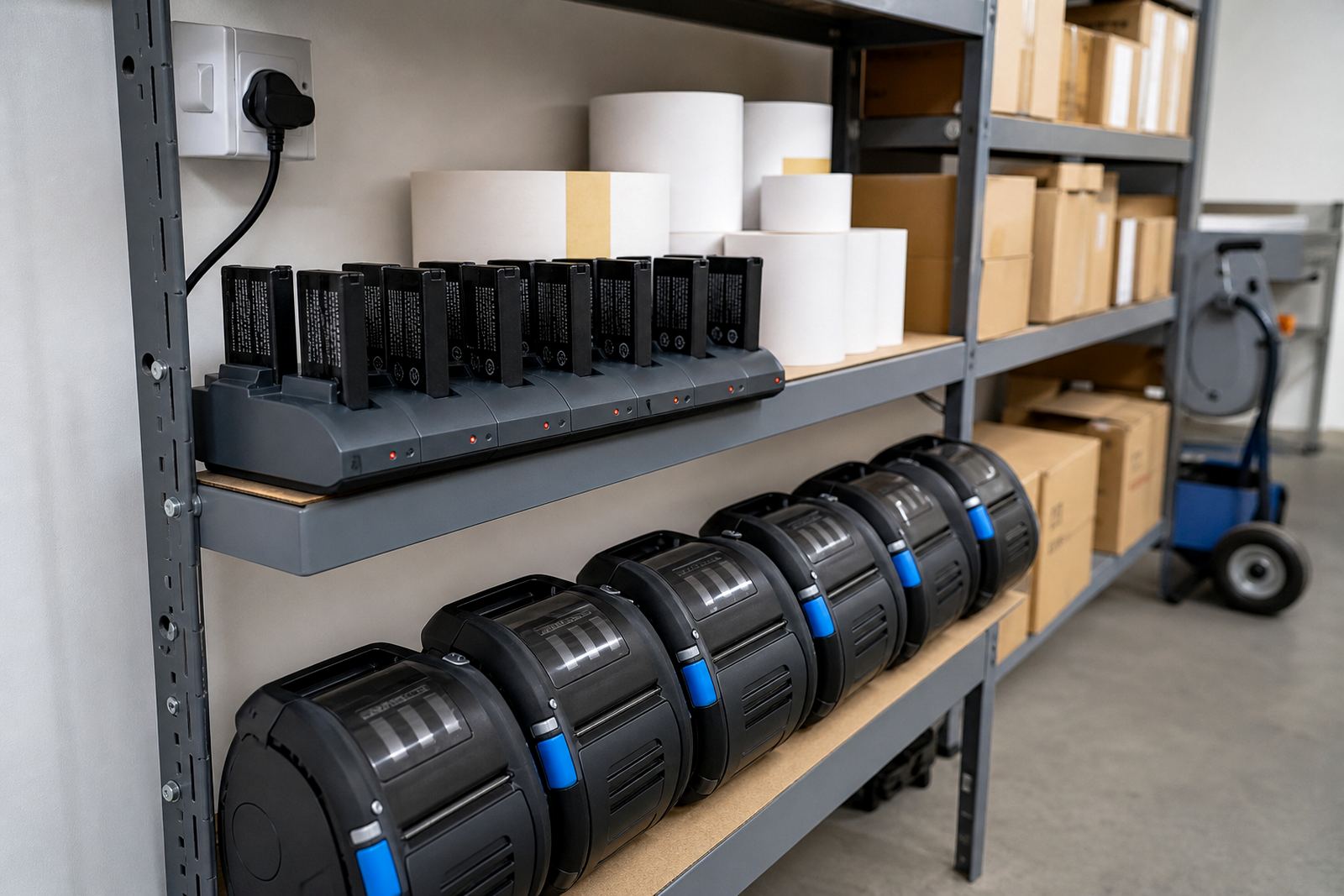
This charger is built for mobile label printer batteries used in warehouse, courier and retail stockroom work. It gives one place to charge several batteries at once, which helps when a unit is in use, another is cooling after a long run and a third is waiting for the next route or picking batch.
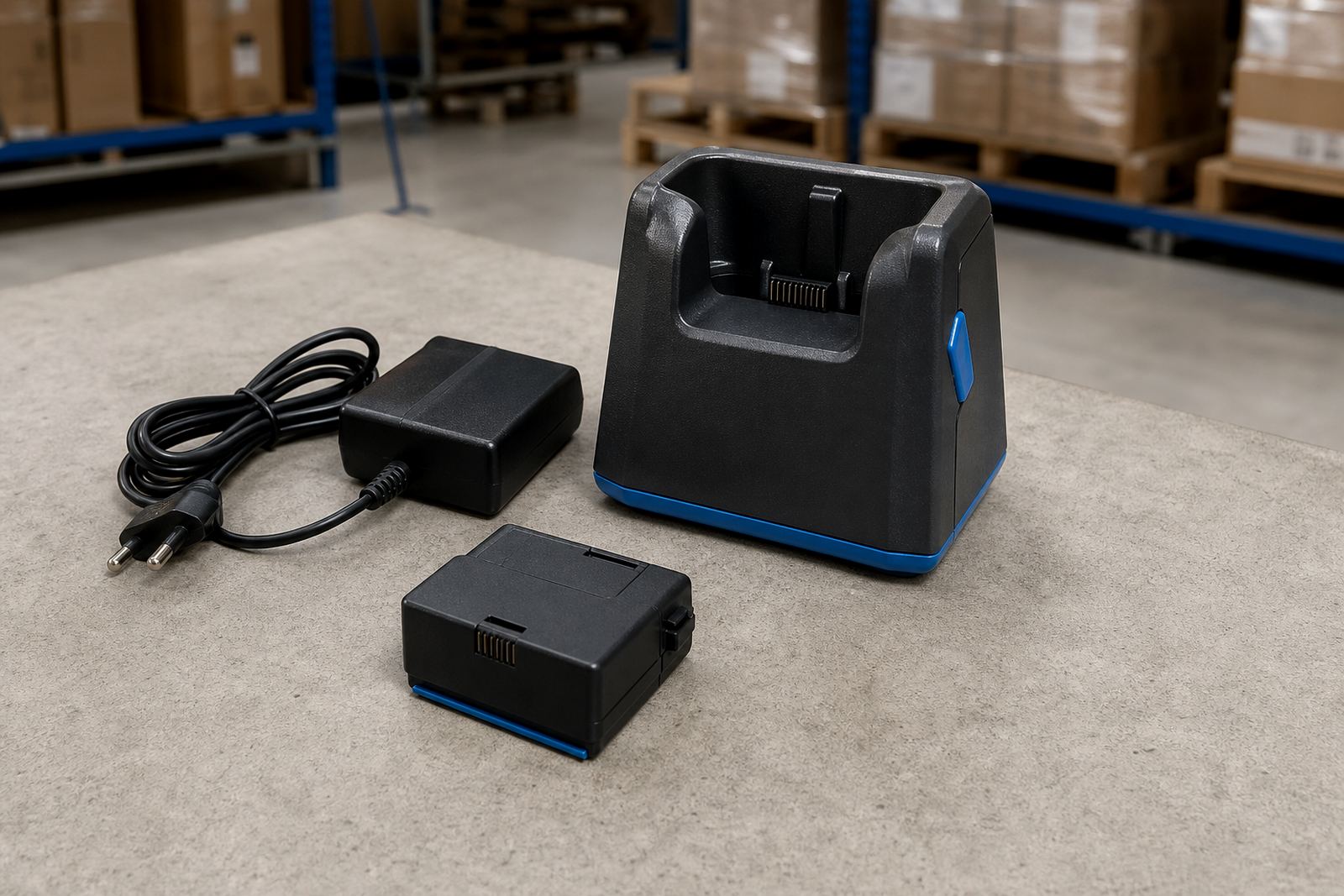
The unit is normally used with removable lithium-ion battery packs for thermal mobile label printers. A good fit matters, because the cradle has to match the battery shape, contact position and charge profile. In a busy site, that means less loose charging clutter and fewer packs going flat before a dispatch run finishes.
For teams that print barcode labels, shelf labels and parcel IDs through the day, the charger becomes part of the workflow rather than an afterthought. It works best where batteries are swapped often and kept in rotation near the printer issue point.
Sizes, bay count and the charging layout around your bench
Multi bay chargers are supplied in different bay counts, usually for two, four or more batteries at a time. The right choice depends on how many printers are in circulation, how often batteries are swapped and whether spares are kept for peak picking periods or courier cut-off times.
- 2-bay units suit small teams or a single printer pool.
- 4-bay units work well for mixed shifts and shared battery stock.
- Higher bay counts suit larger stockrooms with several handheld printers in use.
- Bench-top footprints vary, so the available counter space should be checked before fitting.
- Some units use a single mains lead and charge all bays from one body.
On a compact packing bench, a charger with a narrow footprint keeps the area open for labels, printer cleaning cloths and spare rolls. In larger operations, a wider charger can sit beside the label issue point so batteries are easy to collect and return.
Where this charger earns its place in day-to-day labelling
Warehouses use multi bay chargers where pickers, packers and stock controllers share a small fleet of mobile printers. Couriers use them where route teams return packs between loads and need fresh batteries ready for scanning, labelling and proof-of-delivery tasks. Retail stockrooms use them for back-of-house marking, shelf work and transfer labels where printers move between staff members.
Across Cape Town, Johannesburg, Durban, Pretoria and Gqeberha, the practical benefit stays the same: batteries remain in one organised place instead of ending up in drawers or loose boxes. That matters in humid coastal conditions too, because tidy storage reduces the chance of contact problems from grime and handling.
The charger is also useful where label work includes direct thermal printing for short-life parcel labels and thermal transfer work for more durable product or shelf labels. A healthy battery supply keeps the printer ready when barcode and QR labels need to be produced in bursts.
Fitting notes, power points and the setup that keeps contacts clean
These chargers generally need a stable mains connection and a suitable bench or wall-mounted position, depending on the model. The fitting should leave enough room for air flow, cable routing and easy battery access. In a working stockroom, the charger should sit away from loose tape, dust and label scraps that collect near packing stations.
- Check the battery model and connector type before fitting.
- Confirm the input voltage and plug style for the site.
- Allow enough bench depth for batteries to seat properly.
- Keep the charging area dry and free from sticky label residue.
- Use a position where staff can read indicator lights clearly.
Our on-site setup service can include battery testing, battery replacement and advice on charger placement next to the printer issue point. If the battery contacts are dirty or bent, charging can become inconsistent, so printroom staff should keep the contacts wiped clean during routine checks.
Care that keeps batteries turning through the week
A charger is only as useful as the condition of the batteries that go into it. Packs should be inspected for swelling, cracked housings or worn contacts before they are placed on charge. If a battery has been dropped, taken moisture or shows poor hold time, it should be tested before it is put back into the rotation.
Keep the charging bays free of dust and label adhesive. A soft dry cloth is usually enough for the outer body, while the contacts need a careful clean when marks show up. If batteries are stored for a while, they should not be left empty for long stretches, and they should be rotated so that one weak pack does not sit at the back of the rack for weeks.
Where printers are used on both Bluetooth and Wi-Fi linked jobs, battery life becomes easier to manage when charging is planned around the shift pattern. That is the difference between a tidy issue shelf and a drawer full of half-charged packs.
Details to confirm before the order leaves Montague Gardens
When ordering a multi bay charger, the useful details are straightforward but important. The battery type must match the charger cradle, the bay count must suit the printer pool, and the power input has to fit the site supply. If the team uses belts, clips or field bags, the charger should also suit the storage pattern used for spares and issued packs.
- Battery model and printer compatibility
- Number of bays needed
- Bench size or mounting space
- Input voltage and plug arrangement
- Indicator style for charge status
- Any spare batteries that should be charged alongside the in-use stock
For warehouse, courier and retail teams in Montague Gardens, Bellville, Midrand and other South African branches, a well matched charger keeps the mobile printer setup organised. It supports battery rotation, reduces loose handling and keeps the label work moving through the day.
Key facts
| Product type | Multi bay battery charger for mobile label printer battery packs |
|---|---|
| Bay count options | 2-bay, 4-bay and larger multi-bay layouts |
| Battery type | Rechargeable lithium-ion packs matched to the printer model |
| Power input | Mains-powered charging base with site suitable plug and voltage |
| Use environment | Warehouse, courier, retail stockroom and field dispatch benches |
| Related services | On-site setup, battery testing, battery replacement and charger fitting |