Roll stock that works with ribbon print jobs
Thermal transfer label rolls are made for printers that use a ribbon and a heated printhead to move ink onto the label face. That method gives better resistance to scuffing, handling and short bursts of heat than direct thermal stock, which is useful where cartons are moved, relabelled or shelved for longer periods.
These rolls are used for product labels, shelf labels, carton IDs, dispatch tags and asset labels where a barcode or QR code needs to stay readable after repeated handling. In a busy stockroom, the label has to survive fingers, dust and tape marks, not just the moment it leaves the printer.
- Suitable for thermal transfer mobile label printers and benchtop units
- Works with ribbon to improve print durability
- Used for text, barcodes, QR codes and small compliance labels
- Available in common core sizes and roll diameters for field or bench use
Sizes, facestock and adhesive choices that matter
Transfer rolls come in different widths, lengths and adhesive grades, and the right mix depends on the item being labelled. A narrow roll may suit small shelves or cable tags, while wider stock is better for shipping marks, box labels and asset plates. The face material can be paper or synthetic, with synthetic stock often selected where rubbing, damp air or frequent contact are part of the job.
Adhesive choice also matters. Standard permanent adhesive is common for cartons and store inventory. Stronger adhesive is often better for powder-coated surfaces, plastic tubs and slightly textured packaging. In coastal places such as Cape Town, Durban and Gqeberha, damp air can change how some labels stick when the surface is dusty or cold.
- Typical widths: 50 mm, 55 mm, 60 mm, 75 mm, 100 mm
- Typical lengths: short rolls for field printers, longer rolls for stockroom use
- Face materials: coated paper, matte paper, polypropylene and other synthetic stocks
- Adhesives: permanent, high tack and removable depending on the surface
Where these rolls earn their keep
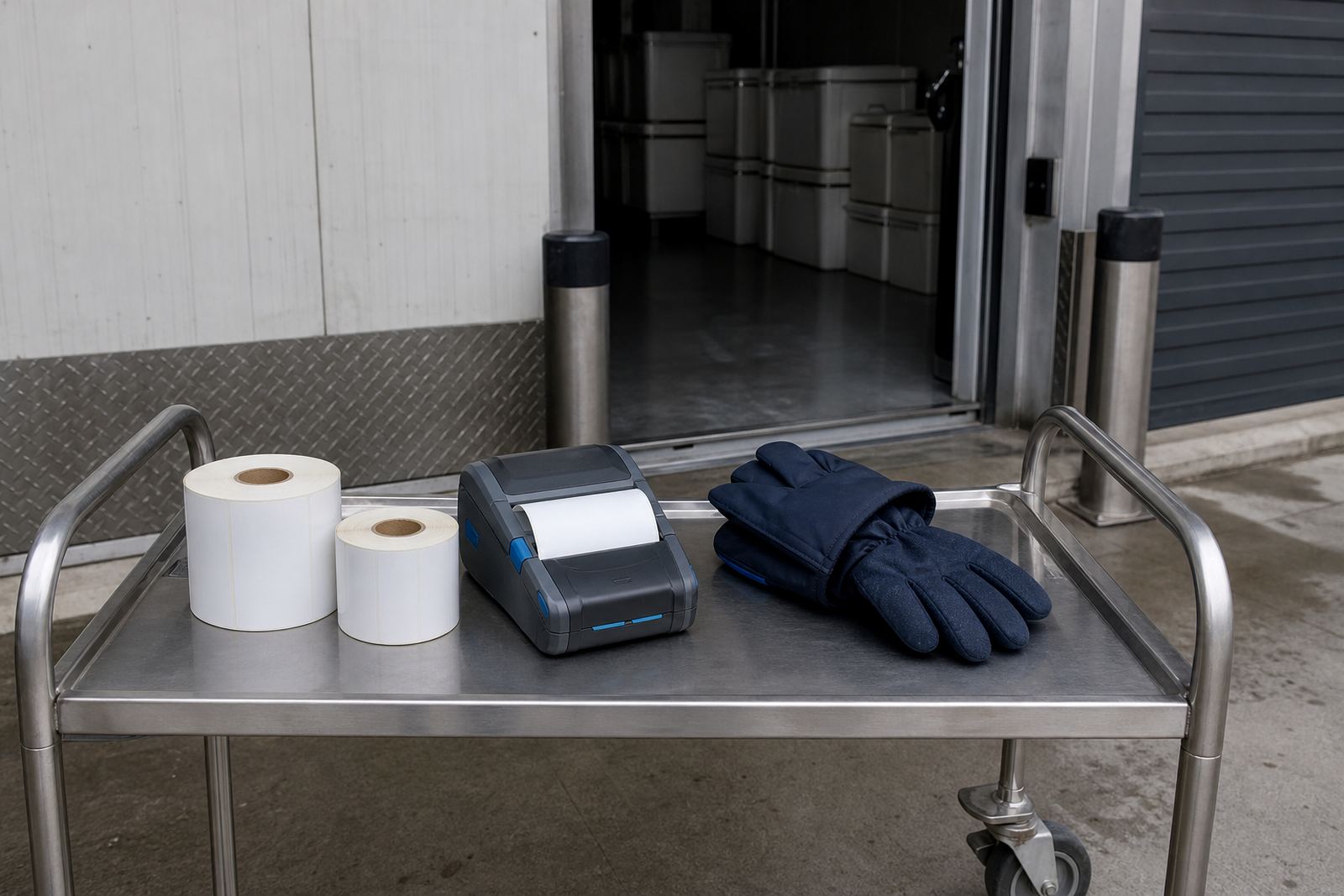
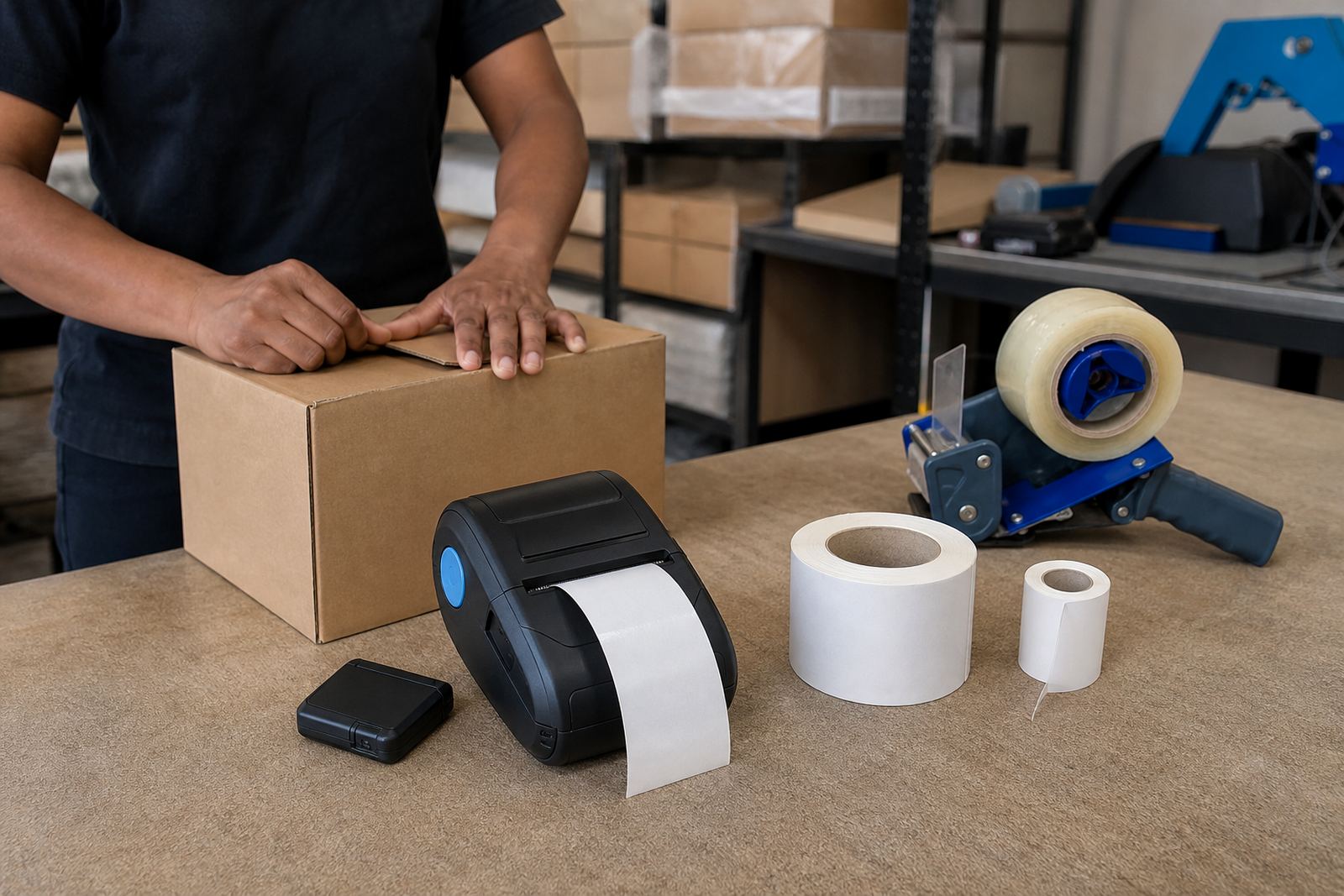
These rolls suit sites that print on the move and need labels to stay readable beyond one shift. Warehouse teams use them for rack labels, picking marks and stock IDs. Couriers rely on them for parcel information, route labels and proof-of-handing-over tags. Retail stockrooms use them for shelf edges, backroom cartons and rework labels when items are transferred between lines.
They also work well for operations that scan items more than once. A barcode that prints clearly at the start should still scan after packing, sorting and delivery handling. That is where thermal transfer stock earns its place, because the printed image stays sharper under friction than a standard direct thermal label.
- Warehouses with scanning at intake, put-away and dispatch
- Courier teams printing parcel and route labels on the move
- Retail stockrooms managing shelf, carton and receiving labels
- Light manufacturing and workshop stores with asset tagging needs
Fitting the roll into the printer correctly
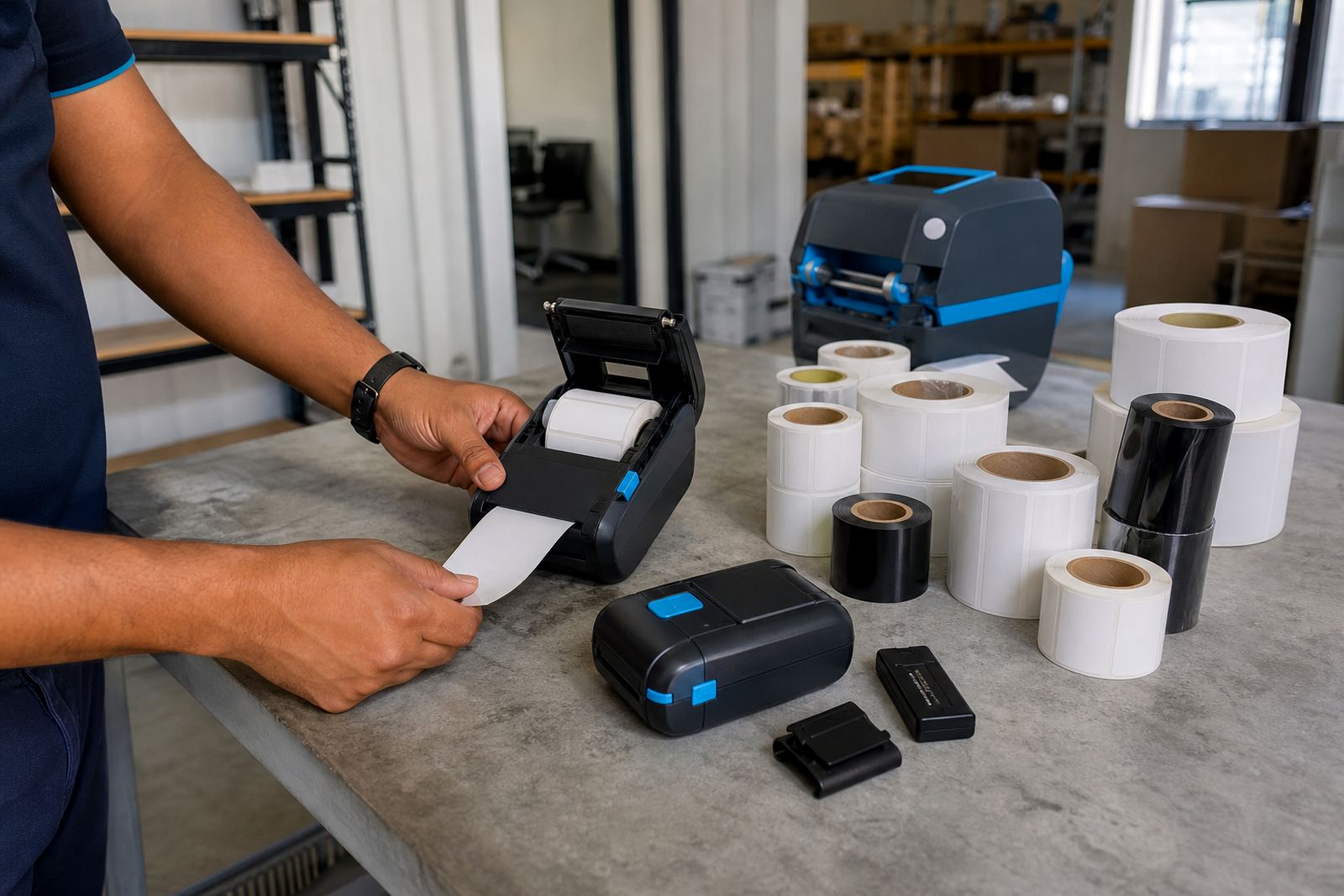
Correct fitting keeps the roll feeding straight and helps avoid wasted labels. The roll width must match the printer path, the core must fit the spindle and the ribbon size must suit the print width. If the label edge wanders, the printer may misread the gap or black mark and the print can shift off-centre.
When we handle setup, we check the label sensor position, roll orientation and print density before a job goes live. If the printer is paired by Bluetooth or Wi-Fi for mobile work, the label format and driver settings also need to match the stock. That is especially important when a team prints several label sizes from the same unit.
- Check the model of the printer, the roll width and the core size before fitting
- Check whether the media uses gaps, black marks or continuous stock
- Set label length and sensor type to suit the roll
- Test one label first so print position can be corrected early
Care that keeps ribbons, heads and labels clean
Thermal transfer stock performs best when the printer is kept clean. Dust, ribbon residue and label fluff can build up on the printhead and roller, which can leave pale bands or broken barcode lines. A light cleaning routine helps the printer hold its print quality, especially in stockrooms where cartons shed dust and labels are handled often.
Printhead cleaning should be done with the correct cleaning material and a gentle touch. We want to clear away residue without marking the print head. Roll storage also matters. Keep label rolls dry, flat and away from direct sun, because heat and damp air can affect adhesive and print finish. If a roll has been crushed or warped, feeding trouble usually starts there.
- Clean the printhead and platen roller regularly
- Store rolls in a dry area with steady temperature
- Keep adhesive faces free from dust and loose liner bits
- Use the right ribbon grade for the label face material
Details to confirm before placing the order
The right roll is easier to supply when the label format is clear. Width, length, core size, adhesive type and print face all affect whether the roll suits the printer and the job. It also helps to know whether the labels are for barcode use, QR codes, address marking or general stock identification, because the print density and size of the code may change the choice of stock.
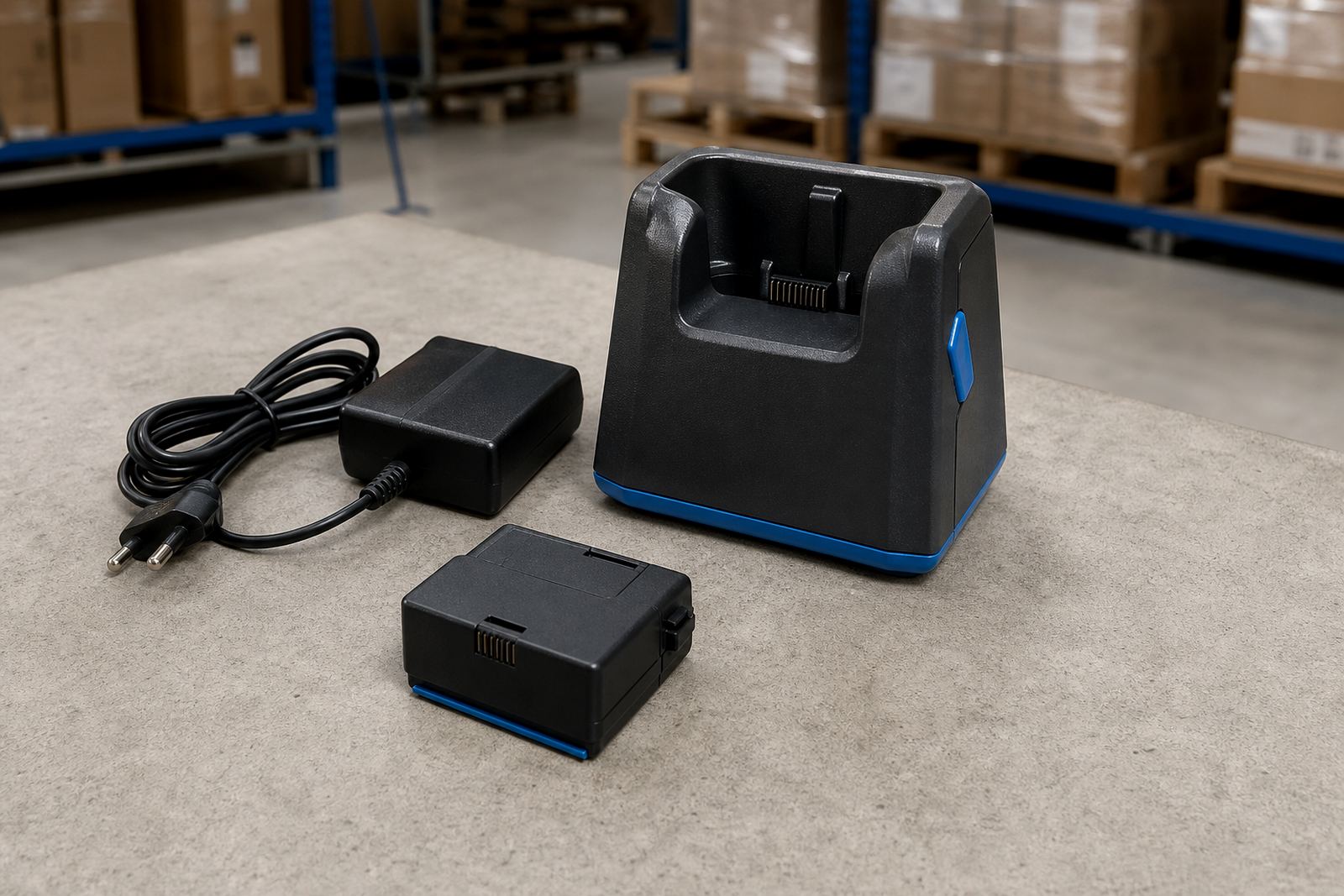
For mobile printers, battery life and carrying style also shape the setup. Some teams want a belt clip, others carry the printer in a pouch or mounted position. If the printer will move between a warehouse floor, a van and a retail backroom, the label roll should feed cleanly each time and stay readable under handling.
- Label width and label length in millimetres
- Core size and outer roll diameter needed by the printer
- Paper or synthetic face stock
- Permanent, high tack or removable adhesive
- Barcode, QR code or text-only printing
- Printer model and whether ribbon is required
Key facts
| Print method | Thermal transfer with ribbon |
|---|---|
| Common widths | 50 mm to 100 mm |
| Face stock options | Coated paper and synthetic label materials |
| Adhesive options | Permanent, high tack and removable |
| Use cases | Warehouses, couriers and retail stockrooms |
| Support services | Label calibration, printhead cleaning and setup |