A carry case built around the printer, not the other way round
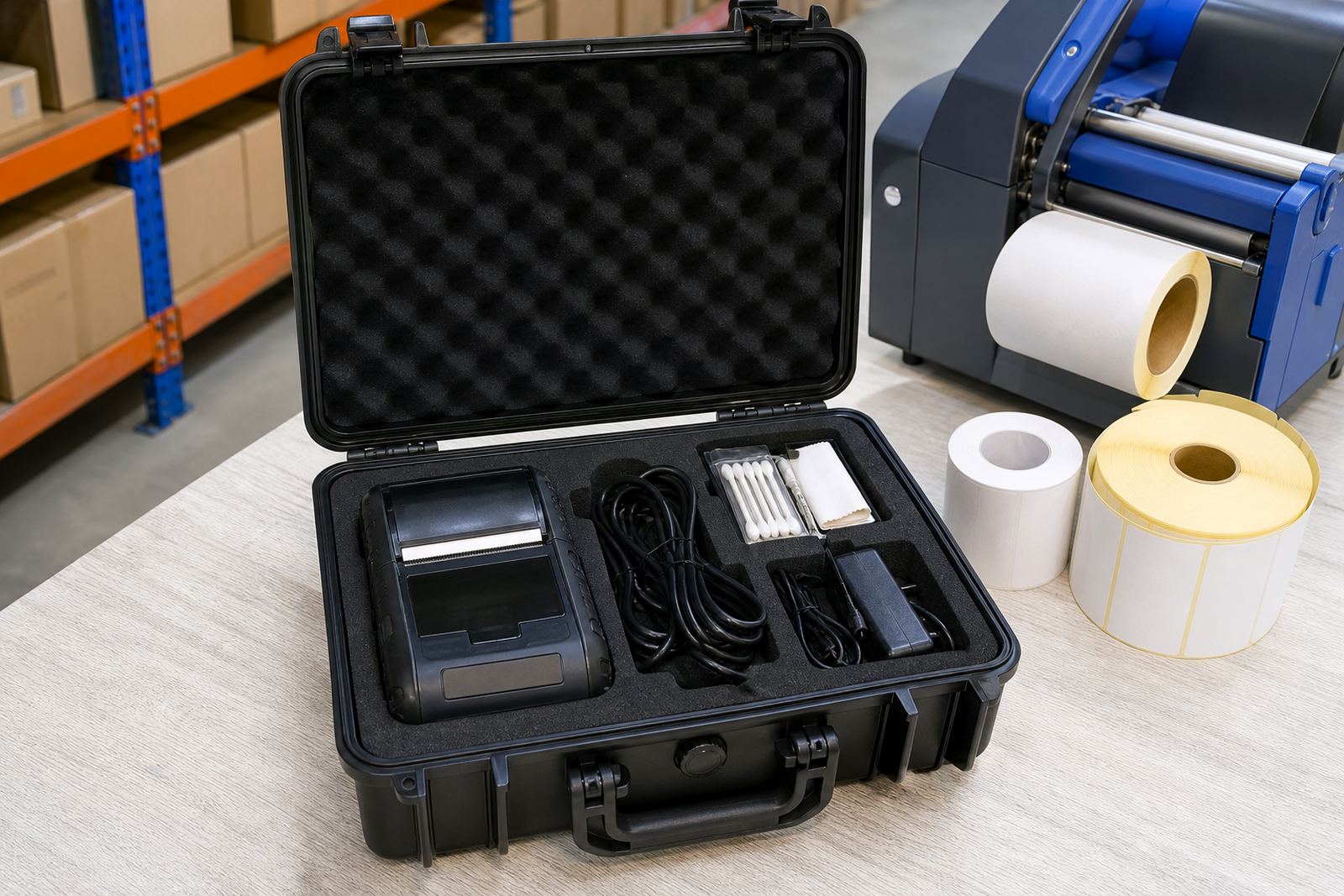
This protective carry case is sized for a handheld thermal mobile label printer, with room for a charger, battery pack, lead set and a few spare rolls. The outer shell is made for transport knocks, dusty warehouse aisles and the kind of sliding around that happens in a bakkie, courier van or trolley bag.
Inside, the layout helps keep the printer seated properly instead of letting it rattle loose. That matters when the unit is moving between a Montague Gardens stockroom, a Bellville dispatch area or a retail floor where staff need the printer ready, not scratched up and buried under loose labels.
- Padded body for everyday transport
- Space for printer, charger and label rolls
- Carry handle or shoulder strap, depending on the option
- Zip closure or buckle closure for secure storage
Sizes and carrying options that match real field work
Mobile printers vary in width and body depth, so the case has to suit the machine rather than forcing it into a loose fit. The usual checks are print width, overall length, charger shape and whether the printer sits with a battery attached or stored separately. A good fit stops the unit from shifting when the case is lifted, stacked or set on a shelf in a warehouse office.
Options often include a full-size protective shell for a printer with accessories, or a slimmer carry case for the printer alone. Some teams want an internal divider for spare rolls, while others want a top pocket for a cable, battery tester or belt clip. If the printer travels through multiple depots, a firmer outer casing is worth considering, especially where boxes get stacked tightly.
- Single-printer carry size
- Printer plus charger and rolls format
- Soft padded case or firmer shell case
- Shoulder strap or hand carry option
Where this case fits into warehouse, courier and retail routines
This product suits teams that move label printers across a site or across provinces. In a warehouse, it helps keep the unit clean between receiving, shelving and dispatch points. For couriers, it keeps the printer organised in a vehicle where parcels, scanners and paperwork all share the same space. In retail stockrooms, it gives staff a practical way to store the printer between price marking, shelf labels and transfers between branches.
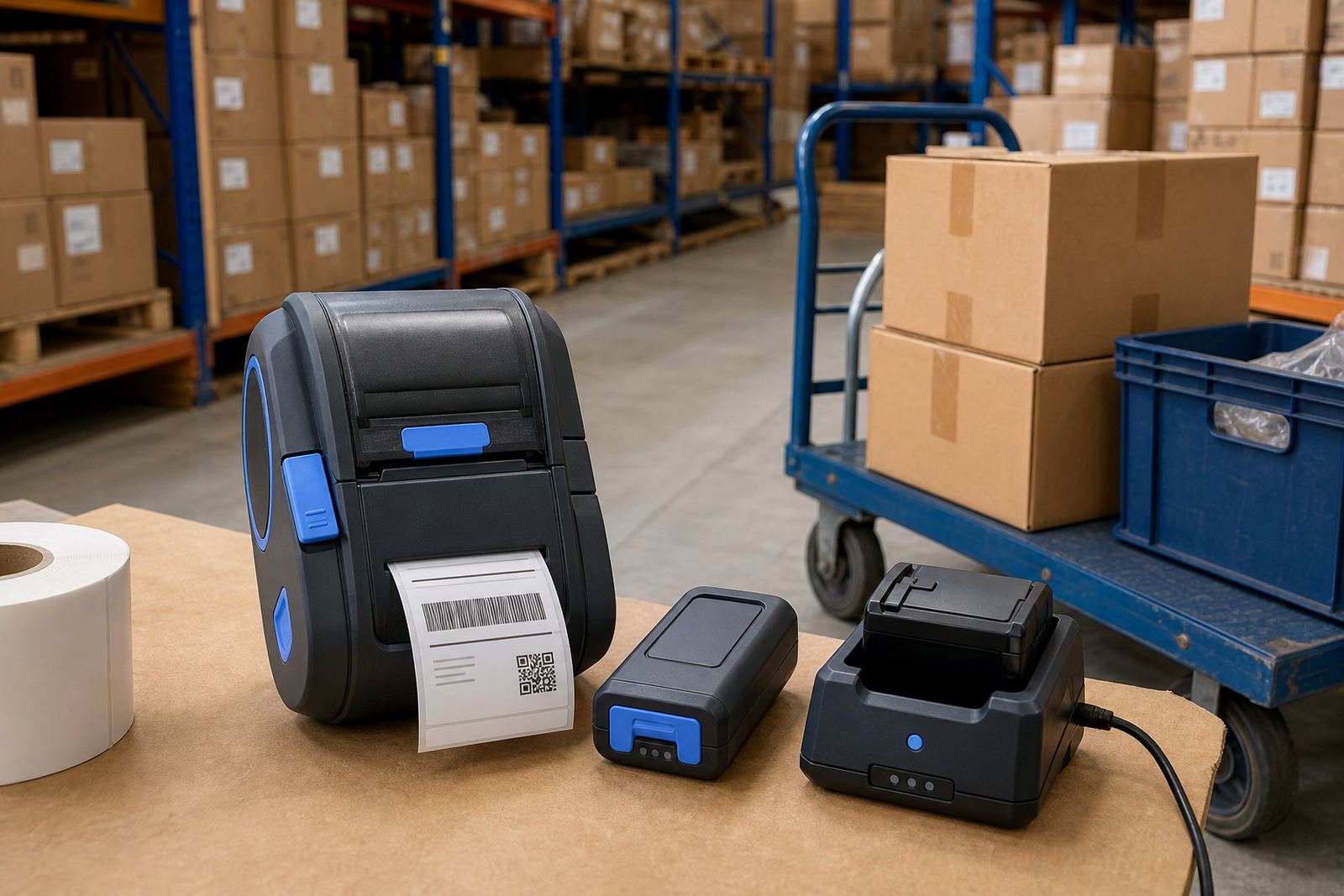
It also helps when a printer is used in several areas on the same day. A staff member can carry the printer, charger and labels together instead of hunting for parts in different cupboards. That kind of organisation matters where multiple people use the equipment and the printer has to stay ready for barcode and QR label printing.
- Warehouse receiving and despatch bays
- Courier vehicles and route work
- Retail stockrooms and back offices
- Branch transfers between busy sites
Fitting and setup points before the case goes into use
The case itself does not need installation in the strict sense, but the fit should be checked against the printer model, battery pack and charger shape. If the printer has a belt clip or side strap, confirm whether it stays attached inside the case or needs its own pocket. If the charger plug or cable has an awkward moulded end, that space should be allowed for too.
For teams that want a tidy handover, the case can be paired with on-site setup of the printer, Bluetooth pairing or Wi-Fi setup, label calibration and operator training. That keeps the printer and carry case working as one practical kit, especially where a shift team needs the same layout every day.
- Check printer length, width and height
- Confirm charger size and cable storage space
- Allow room for spare label rolls or batteries
- Match the case layout to the team that will carry it
Care, cleaning and the habits that keep the kit in shape
A carry case works best when it stays dry, clean and closed between trips. Dust from pallet areas and paper fibres from label rolls can build up in the seams, so the inside should be shaken out and wiped occasionally. If the case has a fabric finish, a soft brush removes grime without rubbing the surface too hard. For a firmer shell, a damp cloth is usually enough for the outside.
Do not drop wet rolls or a damp charger into the case after a rainy loading bay run. Let those parts dry first so moisture does not sit against the printer body or the label stock. Where print quality matters, keep the printer itself separate from loose adhesive residue, since dirt and dust can work their way into the print area and cause poor output later on.
- Wipe the inside lining when dust gathers
- Keep label rolls dry before storage
- Store the printer with the power off and the lid secure
- Check zips, stitching and strap points during regular servicing
Details to confirm when ordering this case
When ordering, the most useful details are the printer model size, whether the battery stays fitted, the number of label rolls to carry and whether you want a soft carry option or a firmer protective shell. If the unit uses a wider print width or a larger battery, that changes the internal space required. A case that suits a 50 mm printer may not suit an 80 mm unit, and that gap can be the difference between a tidy fit and a loose one.
It also helps to confirm whether the case will travel mostly by hand, in a vehicle or between departments inside one site. That affects handle style, strap choice and how much padding is sensible. If you need printer support, our contact form can be used for order details, and the team can also help with batteries, belt clips, label rolls, repairs and setup work across Cape Town, Johannesburg, Durban, Pretoria and Gqeberha.
- Printer width and body dimensions
- Battery style and charger format
- Roll count and roll size to be carried
- Preferred carry style for field or store use
Key facts
| Product type | Protective carry case for mobile label printers |
|---|---|
| Use case | Transport and storage for printer, charger and label rolls |
| Carry format | Hand carry or shoulder strap options, depending on model |
| Protection | Padded or semi-rigid exterior with internal cushioning |
| Compatible kit | Printer, battery, charger, cable and spare rolls |
| Typical users | Warehouses, couriers and retail stockrooms |