When the printer stays on the body for hours
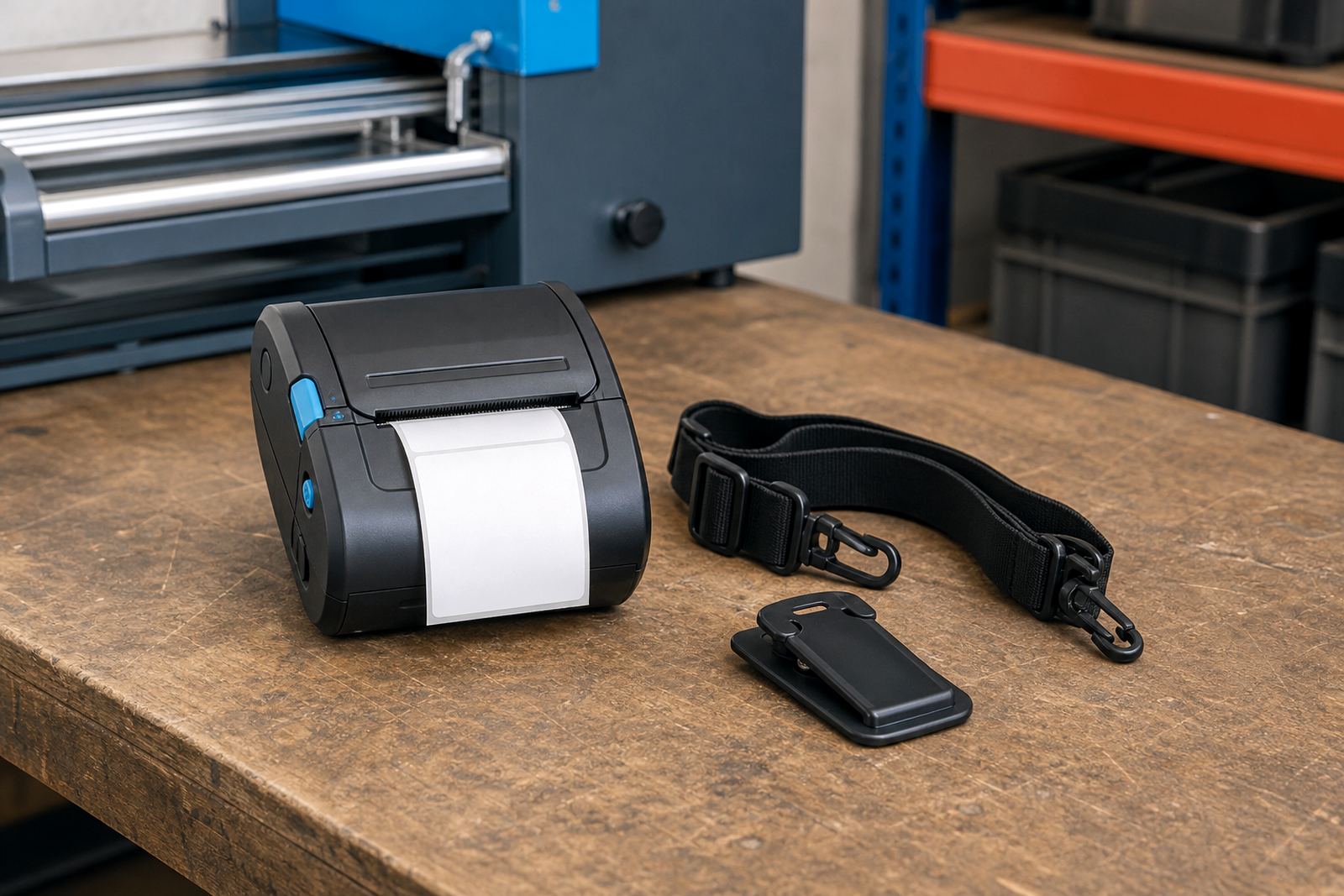
A strap spreads weight across the shoulder or across the body, which matters when a printer rides with the operator from intake to dispatch and back through pick faces. It helps when the unit is worn for long stretches, especially if the team is moving between pallets, cages, cold rooms and small packing points where hands must stay free.
For a heavier mobile printer, a strap also makes room for a battery that lasts through a busy route and for a roll that carries more labels. That extra load is easier to manage when the printer does not need to be lifted on and off a belt every few minutes. In a warehouse, that can mean less fiddling and fewer awkward bends near the floor.
Straps suit jobs where the printer is used often but not constantly, and where the operator needs both mobility and a steadier carry across a full shift.
Where a belt clip keeps movement neat
A belt clip works well when the printer is light enough to sit close to the body and the operator wants a low profile carry. It suits couriers stepping in and out of vehicles, stockroom staff moving short distances, and retail teams who print a small batch of labels at a time.
Because the printer sits tight to the waist, there is less swing when climbing stairs or moving through narrow aisles. That can help on routes with frequent stops, quick drops and repeated scanning. It also keeps the printer close when labels need to be printed, applied and then stored again without a lot of gear hanging off the shoulders.
- Best for shorter routes and lighter label volumes
- Handy when the printer is used in bursts
- Works well when the operator bends, loads and unloads often
Print width, roll size and carry weight
The carry method should match the size of the labels being used. A printer handling narrow address labels feels very different from one printing wider barcode labels or product labels for stockroom bins. A wider print width can mean a larger body and a fuller roll, so the carry point must support the extra bulk without digging into the hip or shoulder.
Direct thermal rolls are common where labels move out quickly and do not need ribbon, while thermal transfer rolls suit labels that must last longer on shelves, cartons or sealed goods. Both options can affect weight once the roll is loaded, and that matters on a route with many prints. If the printer is carrying a large roll and a full battery, a strap often feels more natural than a clip.
For teams printing barcodes and QR codes, the printer must stay steady in the hand and at the belt. If the unit swings too much, the operator notices it most during scanning, labelling and packing at speed.
Battery life and the way the shift moves
Battery life changes the whole carry decision. A printer that lasts through a long route can stay in place all day, while a unit that needs more frequent charging often gets handled more often and becomes more noticeable on the body. For courier work across Cape Town, Johannesburg or Durban, that can matter more than the look of the strap or clip.
Where the printer is used for a few labels at a time, a clip may feel lighter and easier to forget. Where the operator prints all day across receiving, despatch and stock checks, a strap can reduce pressure on the waist and stop the printer from bouncing with every step. The more movement there is, the more the carry method starts to affect comfort and accuracy.
- Long shifts usually suit a steadier carry
- Short bursts often suit a tighter waist fit
- Battery checks should happen before the route starts
Pairing, calibration and clean print output
Bluetooth pairing and Wi-Fi setup are easier to keep stable when the printer sits where it can be reached without strain. A strap gives quicker access to controls, charging points and roll changes when the operator is working on the move. A clip can be neater, though it may need more care if the user is reaching, squatting or twisting often.
Label calibration matters for both carry methods. If the media is not set correctly, the printer can waste labels, cut off barcodes or leave gaps between prints. Printhead cleaning also stays important, because dust, adhesive and paper lint build up during normal use. In humid parts of Gqeberha or coastal Cape Town, that maintenance becomes part of the routine rather than a once-off check.
When the carry method suits the job, the operator spends less time adjusting the unit and more time printing labels that scan correctly first time.
From the Montague Gardens floor out onto the delivery route
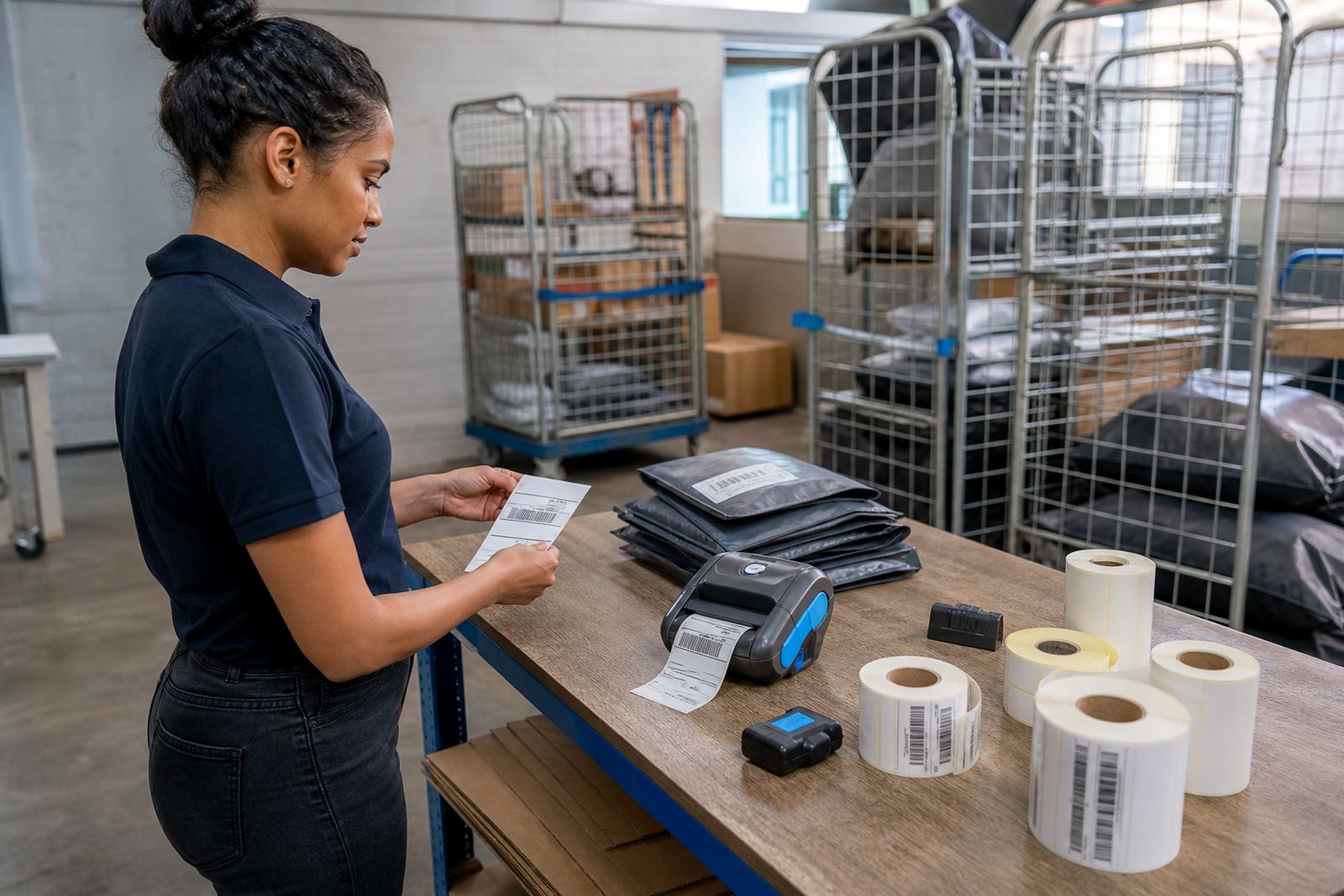
A retail stockroom in Montague Gardens may have one team member printing shelf labels, bin labels and transfer labels in short bursts. A belt clip usually keeps that unit close and tidy. A courier team leaving Bellville for city drops, then heading out again, may prefer a strap because the printer stays settled during vehicle movement and repeated handovers.
In Pretoria or Midrand, where staff often move between receiving, aisle checks and dispatch, the carry method usually depends on how much printing happens away from the packing bench. If the label volume is high and the walk between points is long, a strap can take the strain. If the printer is used in quick bursts close to the vehicle or counter, a clip may be enough.
The practical test is not what sounds best on paper. It is whether the printer stays secure, easy to reach and comfortable while the team keeps moving.