Two ways to put ink on a label, and only one uses a ribbon
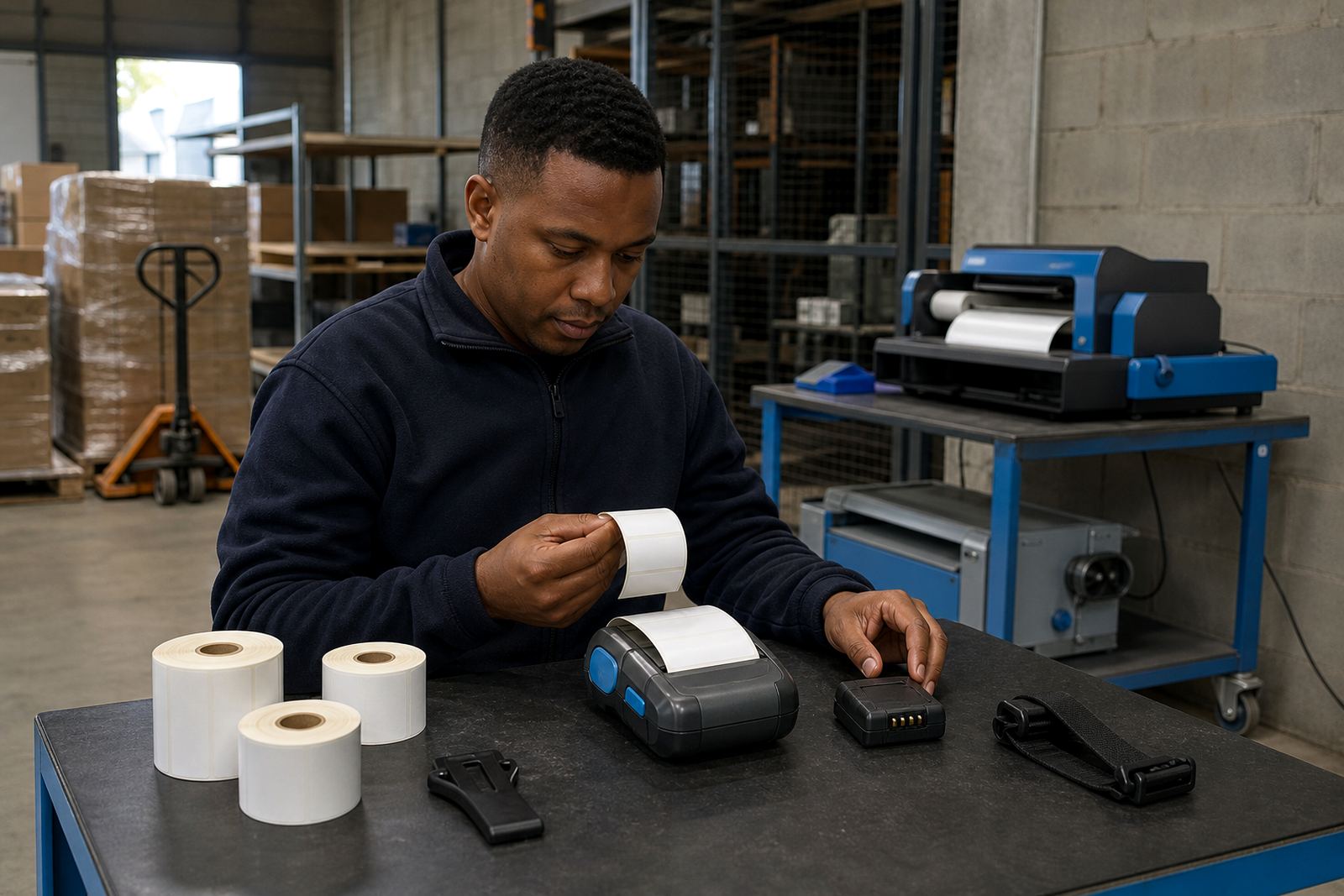
Direct thermal printing uses heat-sensitive labels. The printhead heats the coated face and the image appears without any ribbon at all. It suits short-life labels where the item moves quickly through picking, packing or dispatch. Thermal transfer printing uses a ribbon between the printhead and the label stock, so the image is transferred onto the label surface and stays readable for longer.
That difference matters more than many teams expect. A courier bag label that only needs to survive the trip across town has a different life from a stock label on a shelf in a humid storeroom. In Montague Gardens, where many warehouses handle daily despatches and returns, the wrong print method can mean smudging, fading or reprinting labels that should have stayed in place.
Where direct thermal keeps things lean
Direct thermal is often the neater option when speed and simplicity matter. There is no ribbon to load, no ribbon waste, and fewer consumables to store in a tight stockroom. It is a useful fit for short-term labels such as courier manifests, parcel tags, bin labels, visit slips and picking labels that are not meant to stay on a box for months.
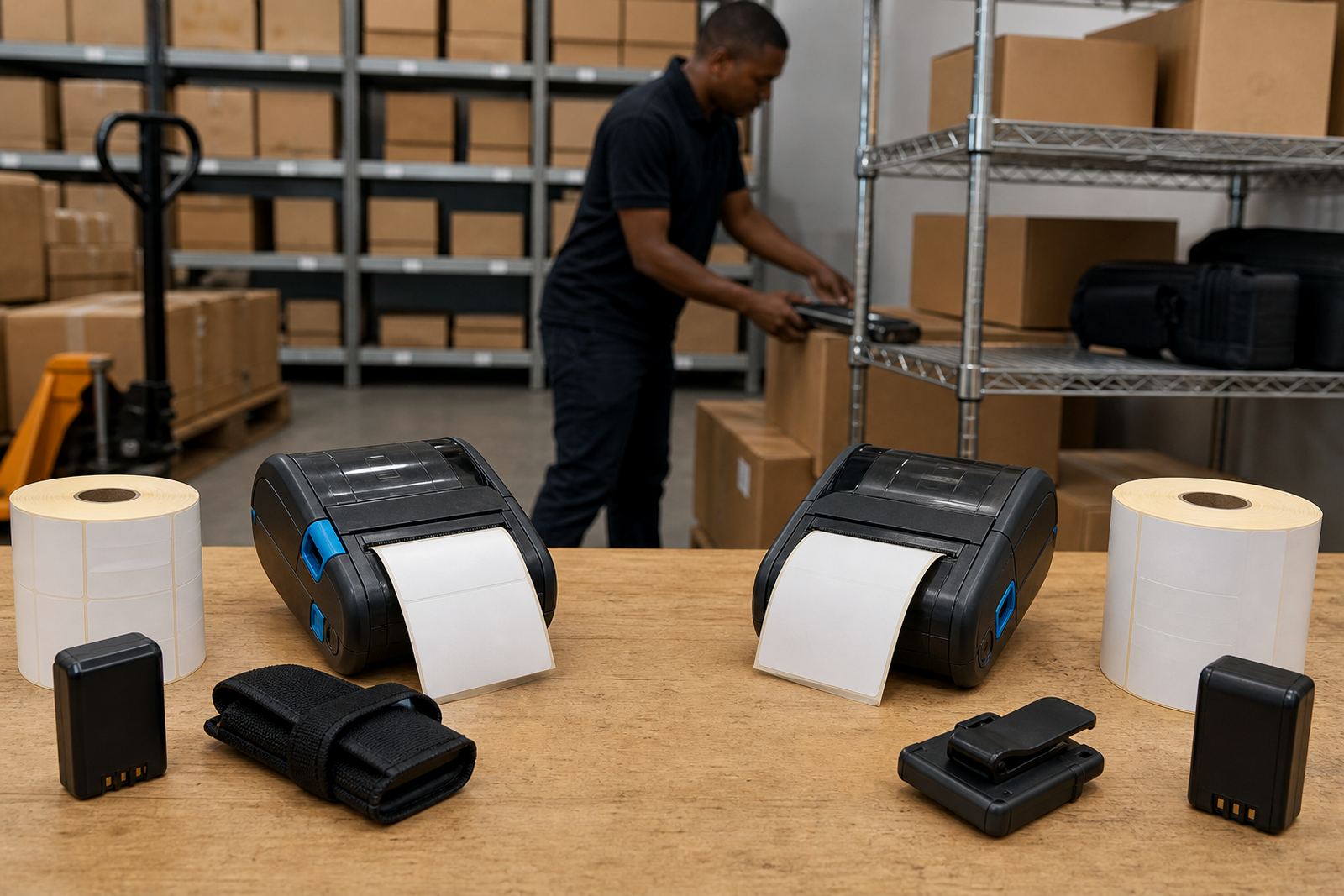
It is also easier for teams that move between bays or use mobile printers on trolleys, forklifts or hand-held workflows. The label sizes are usually narrower, and many mobile units are made for widths around 2 inches to 4 inches, which is enough for barcode fields, item descriptions and QR codes on compact formats.
- No ribbon to replace or track in stock
- Fewer moving parts for a simple daily routine
- Good for short-life dispatch and identification labels
- Works well for barcode and QR printing on smaller formats
Where thermal transfer earns its place
Thermal transfer is the stronger option when the label must last. The ribbon gives a sharper, more durable print on the right label material, which helps on products stored for weeks or months, and on shelves that sit in warm rooms or near dock doors. It is also the better choice when you need labels that can handle handling, abrasion or a bit of moisture.
Retail stockrooms often use thermal transfer for asset tags, shelf markers and compliance labels because the print remains clear after repeated touch points. A warehouse in Pretoria may want a label that still scans after storage, while a Durban team may care about humidity more than a warehouse inland. Thermal transfer gives you more material choice too, including paper and synthetic label stocks for different surfaces.
- Better for labels that need longer life
- Suitable for tougher label materials
- Useful where handling and scuffing are common
- Works well for permanent barcodes and shelf identification
Battery life, pairing and print width are not small details
With mobile label printers, the method is only part of the decision. Battery life changes how a shift runs, especially when a team is moving around a warehouse or loading bay. Bluetooth pairing is common for quick links to handheld devices, while Wi-Fi setup helps where several users need to print from the same network. If the device is not set up properly, label work turns into a stop-start job no matter which print method you use.
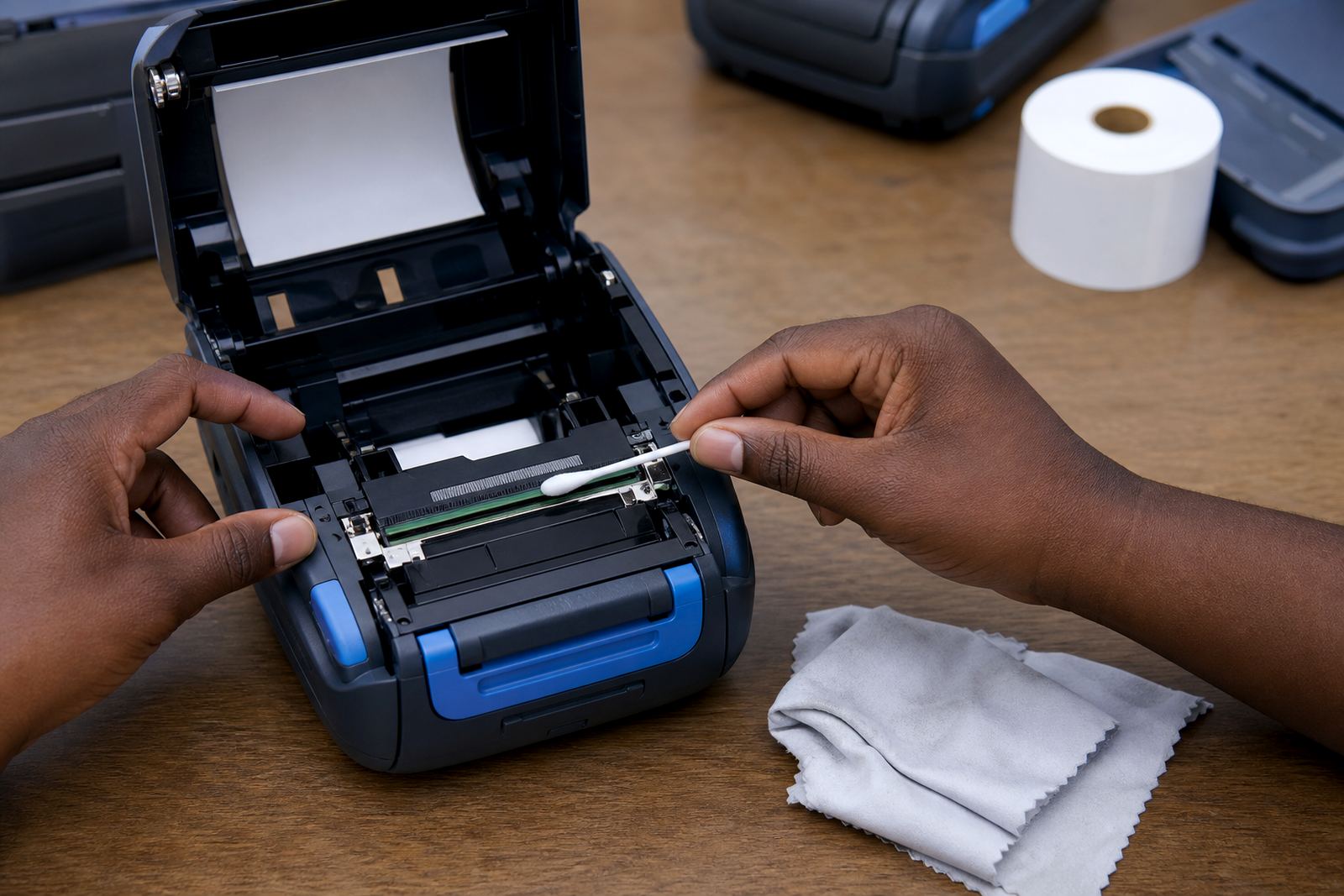
Print width also shapes the job. A 2 inch mobile printer handles smaller labels, while wider units are better for shipping labels, product tags or larger compliance fields. If the label size does not match the printer, operators trim, crop or jam media, and that leads to wasted rolls and poor print quality. Printhead cleaning matters too, because dust, adhesive build-up and paper fibres can leave streaks or broken barcode lines.
A Cape Town example from a busy dispatch floor
A Montague Gardens team packing mixed stock for Johannesburg and Gqeberha may use direct thermal for despatch labels and thermal transfer for internal shelf labels. The dispatch side wants fast loading, clear barcodes and easy roll changes. The stock side may need labels that stay readable through sorting, returns and repeated handling.
That split is usually sensible in South African operations where one label lives for a day and another must survive for months. If a courier label is printed with the wrong material, it can fade before handover. If a storage label is printed too lightly, the barcode scanner reads one line and misses the next, which slows down the whole bay.
On-site setup helps with Bluetooth pairing, Wi-Fi setup, label calibration and operator training, because most issues start with alignment or the wrong label stock. A clean printhead and the right settings often fix more problems than people expect.
The decision usually comes down to label life, not fashion
Direct thermal makes sense when the label has a short working life, the printing is frequent, and the team wants fewer consumables. Thermal transfer makes sense when the label must survive storage, handling or tougher conditions. Both methods can print clear barcodes and QR codes if the media, width and calibration are matched to the job.
For warehouses, couriers and retail stockrooms, the right choice is usually the one that suits the label’s actual route. If the label is leaving the building today, direct thermal may be enough. If the label must stay readable on a shelf, a tote or a product for longer, thermal transfer is usually the safer option.
- Direct thermal suits short-life dispatch and tracking labels
- Thermal transfer suits longer-life storage and asset labels
- Bluetooth and Wi-Fi setup affect daily use
- Calibration and cleaning protect print quality
- Label size and printer width must match the task
Setup and servicing keep both methods usable
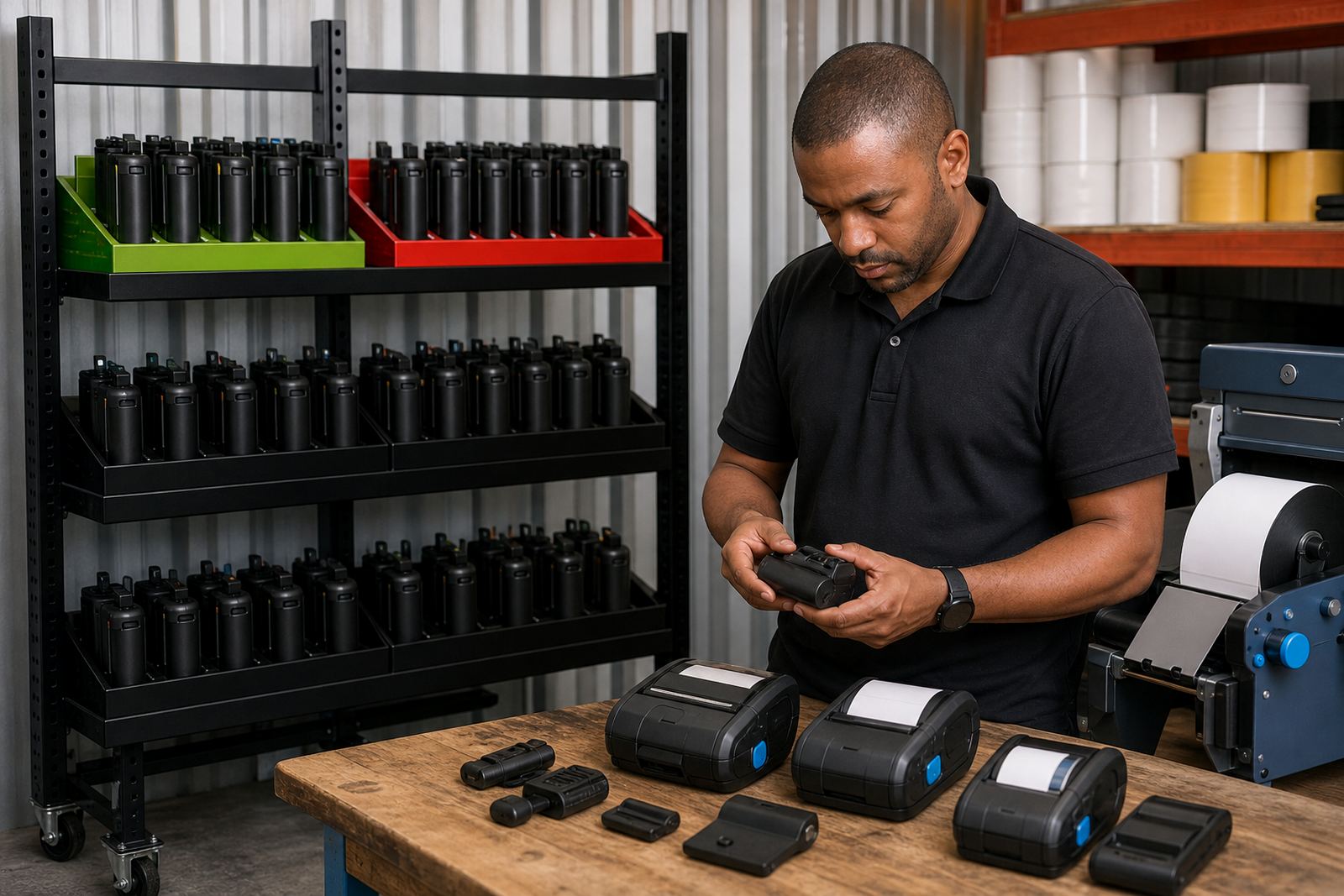
Even a good printer will struggle if the roll is loaded badly or the settings do not match the label. Battery testing, battery replacement, belt clip repair, print quality fixes and label jam clearing all sit close to the daily realities of mobile printing. A small fault can grow into a slow floor if it is left alone for too long.
Our work in Cape Town and across South Africa includes setup, repairs and operator training for teams that need their label printers to stay useful in the real flow of the day. In Bellville, Midrand, Durban or Pretoria, the same basics still apply: clean the printhead, match the label to the job, and keep the printer calibrated for the size it is feeding.
Local note for teams comparing the two methods
If you are weighing direct thermal against thermal transfer, start with the label's lifespan. Then look at the surface it will stick to, the route it will travel, and the scanner that must read it later. That order usually gives a better answer than chasing the cheapest roll or the quickest setup.
For a short dispatch label in a busy Cape Town stockroom, direct thermal is often practical. For a retail shelf tag or a warehouse label that must stay visible through handling, thermal transfer usually carries more of the load. The right method makes the day smoother, and the wrong one shows up in faded print, jammed media and wasted time.