Built for movement, knocks and long shifts
A rugged mobile printer is a handheld or belt carried label printer designed for work that does not stay at one counter. It is carried from shelf to shelf, used at receiving, and taken to stock that still needs identifying before it moves into racking or dispatch. The casing is usually more solid than a light office unit, with a firmer latch, protected ports and a battery that supports repeated label runs during a shift.
Most units in this class print direct thermal labels, which means the label material reacts to heat from the printhead. That suits courier labels, picking labels, bin labels and short life shelf labels. Some versions also handle thermal transfer, where a ribbon is used for labels that must hold up better to abrasion, handling and some moisture. The best choice depends on how long the label must remain readable and where it will be used.
In Montague Gardens and across Cape Town, these printers are common in stockrooms where labels are printed close to the goods. They also suit teams in Johannesburg, Durban, Pretoria and Gqeberha that need a portable unit for fast corrections on the floor.
Print width, battery life and the label sizes that fit the job
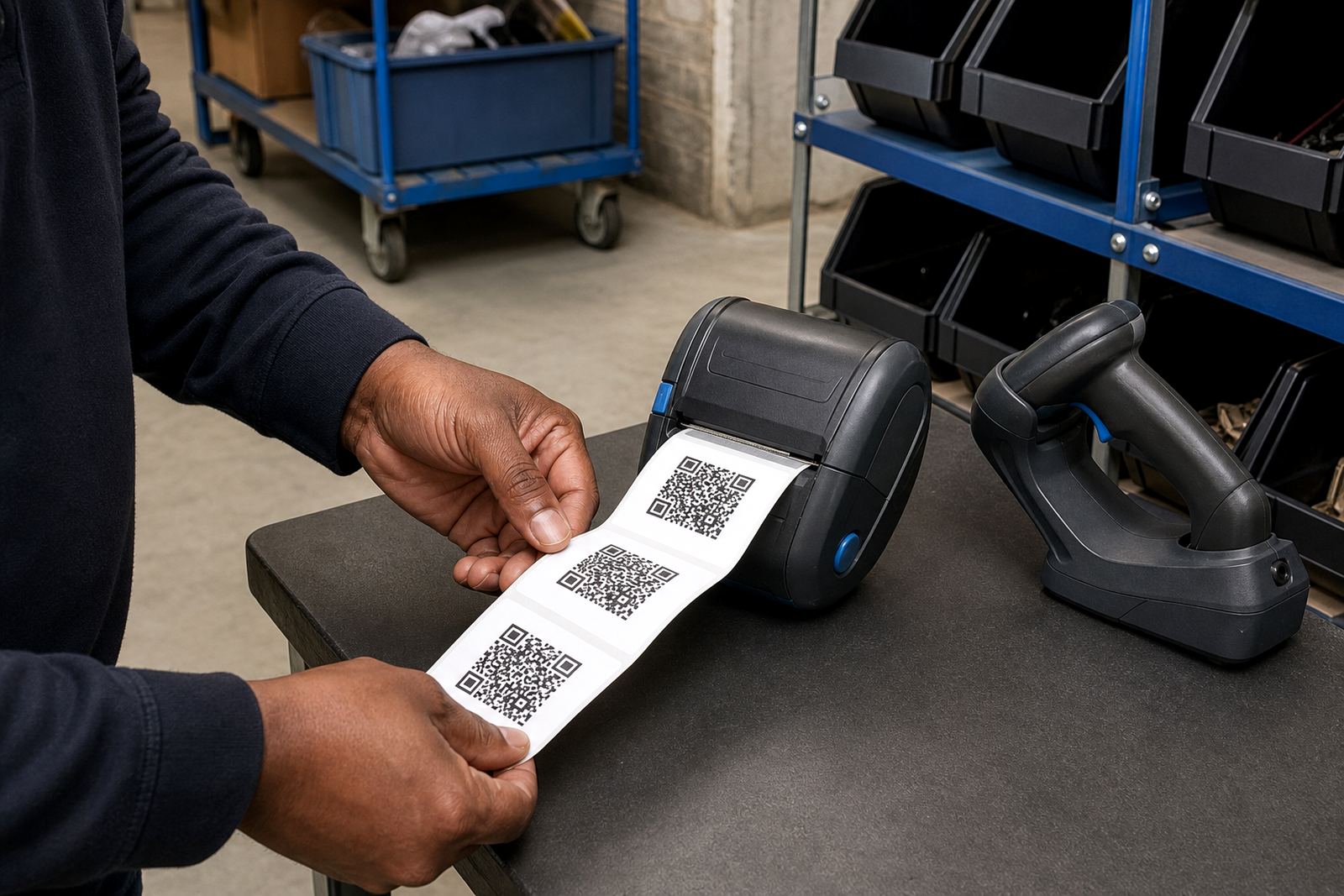
Rugged mobile printers are usually chosen by print width first. A 2 inch unit suits compact shelf tags and small asset labels, while 3 inch and 4 inch models are used for courier consignment labels, larger carton markers and more visible barcode labels. If the team prints QR codes as well as text, the label face needs enough width and height for the code to scan cleanly without crowding the human readable line.
Battery capacity matters just as much as size. In a warehouse or retail stockroom, the printer may move with one person through a whole batch of relabelling, so the battery needs to carry a useful run without constant charging. We also look at the charging method, spare battery options and whether the unit has a battery status readout that is easy to check during busy work.
- 2 inch, 3 inch and 4 inch print width options
- Direct thermal suits labels with a short lifespan, while thermal transfer suits more durable labels
- Battery packs suited to portable use in stockrooms and dispatch areas
- Label widths for shelf tags, carton labels, barcodes and QR codes
- Bluetooth and Wi-Fi pairing for mobile devices or fixed networks
Pairing, calibration and the first setup on site
These printers are often fitted to a real workflow rather than a neat office corner. Bluetooth pairing is useful when the operator prints from a tablet or mobile device while moving through aisles. Wi-Fi setup suits teams that want the printer tied into a wider label system or shared across a site. The setup needs the correct network details, printing app or driver settings, and label calibration so the printer reads the gap, black mark or notch on the roll properly.
Label calibration is not a small extra. If the roll is loaded off centre or the media sensor is not set correctly, the printer can waste labels, miss the top edge, or throw barcodes out of position. On site fitting often includes test prints, width checks and a check that the label stock matches the printer type. For a warehouse team, that saves time later when orders are moving and the label roll must feed cleanly first time.
Our on-site setup service covers Cape Town and other major centres, with support for Bluetooth pairing, Wi-Fi setup, label calibration and operator training. Where a unit is mounted in a vehicle bag, hand cart or belt clip holder, we also check that the fit is secure and practical for the route the operator follows.
Where rugged mobile printing earns its keep
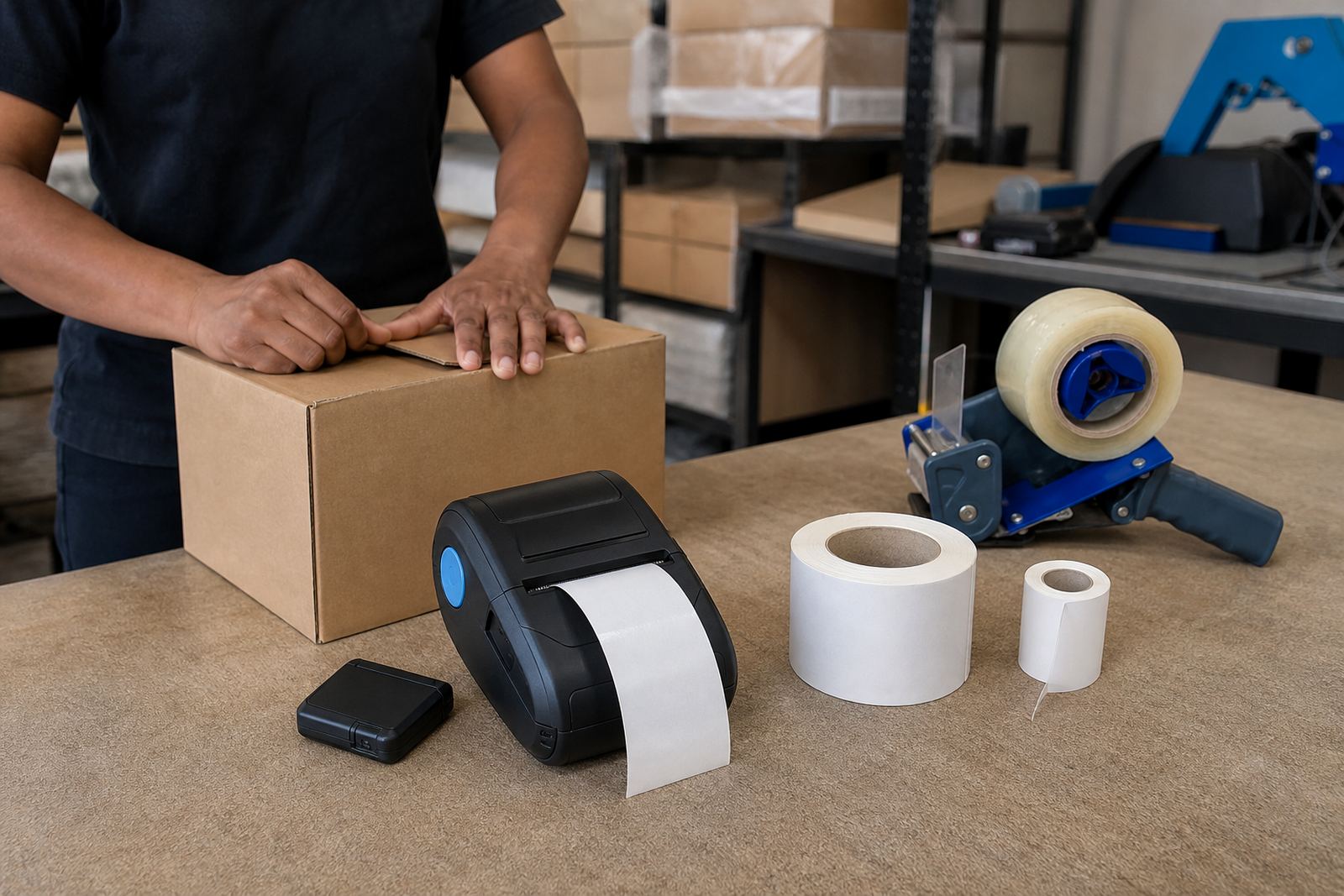
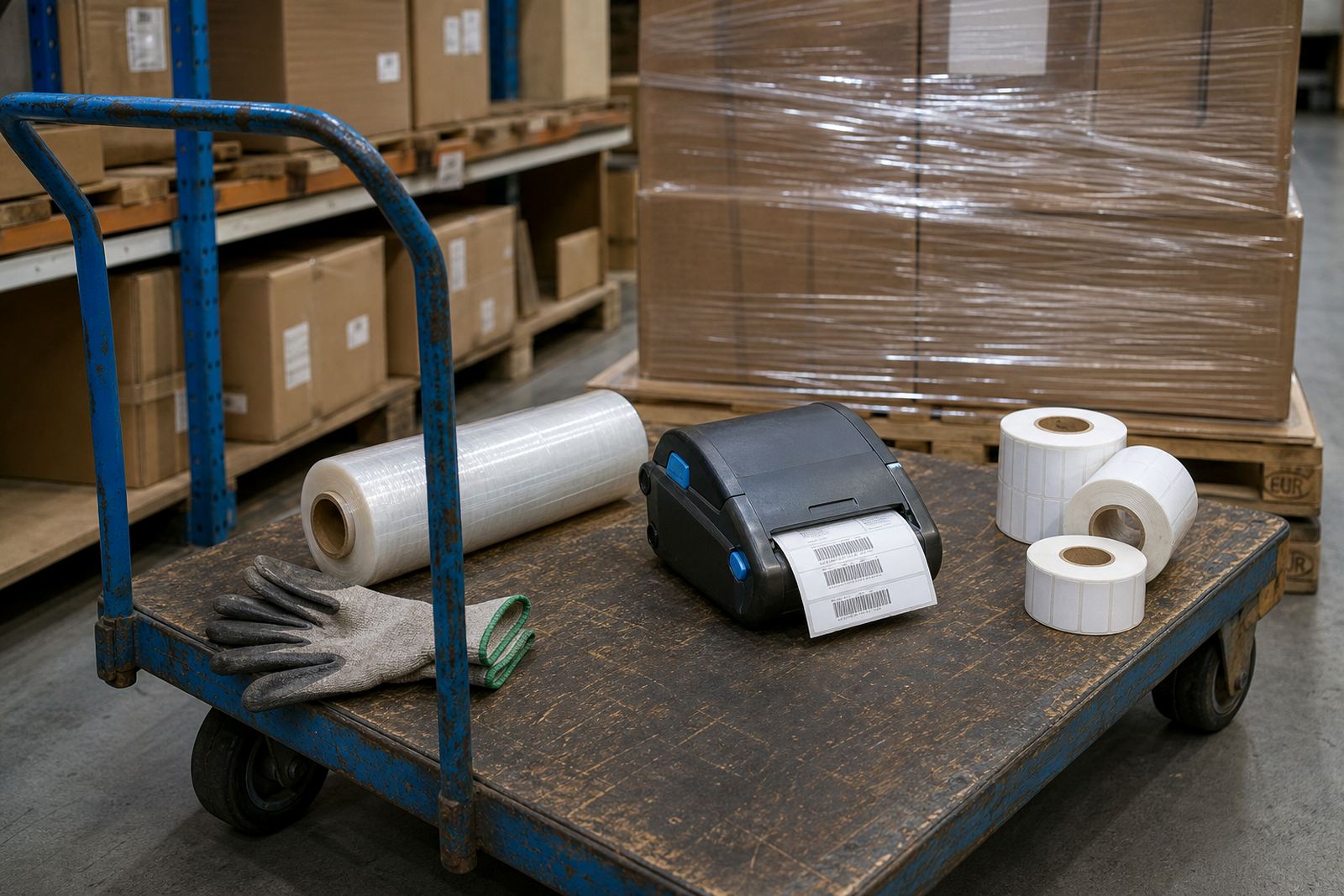
This product suits places where labels are printed near the stock instead of at a fixed station. It is common in courier depots, receiving bays, stockrooms, pick faces and retail back areas where cartons, totes and loose items need fast identification. A rugged body helps when the printer is clipped on, placed in a bag, or carried between racks and work tables.
It also works well where the label needs to be corrected on the spot. If a shelf code is wrong, a barcode is not reading cleanly, or a new pallet needs a fresh marker, the operator can print there and then. That keeps movement steady and limits the need to walk back and forth to a fixed label station.
- Warehouse receiving and put-away
- Courier dispatch and route sorting
- Retail stockrooms and back of house relabelling
- Inventory checks, bin labels and shelf labels
- Barcode and QR label creation on the move
Care, cleaning and repair work that keeps it printing
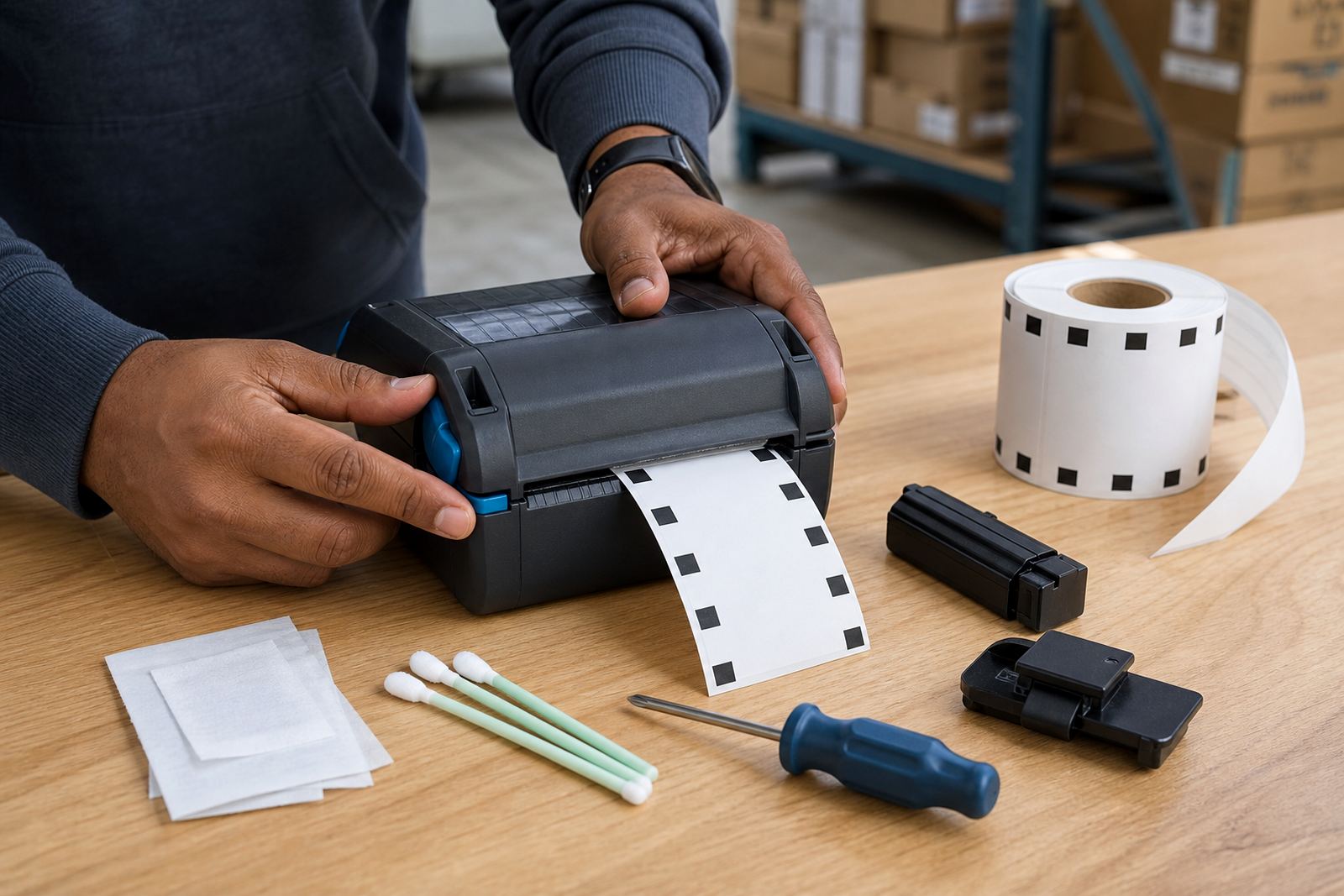
Mobile printers collect dust from shelves, packing tape fragments and fine cardboard residue. A printhead that is not cleaned will start to fade in patches, and the label feed can pick up marks from grit in the path. Regular printhead cleaning is part of good care, along with checking the platen roller, keeping the label path clear and making sure the battery contacts are clean.
If labels begin to skew, smear or lift at the edge, the issue may be the roll, the calibration or the printhead rather than the printer body itself. Battery testing and battery replacement are also part of practical support for this product. Belt clip repair matters too, because a loose clip turns a handy portable unit into a nuisance on the floor.
Our repair work covers label jams, print quality fixes, battery testing, battery replacement, belt clip repair and preventive servicing. For sites in Bellville, Midrand and the larger metro areas, we also help with field checks where a unit has been dropped, stored poorly or used with the wrong roll width.
Details to confirm before the order goes through
Ordering the right rugged mobile printer means matching the unit to the labels, the site and the printing task. The first detail is the print width. The second is whether the labels will be direct thermal or thermal transfer. After that, roll width, core style, battery needs and the connection method must all fit the way the team operates.
It also helps to confirm whether the printer must print only text and barcodes, or whether QR codes, logo blocks and serial numbers are part of the label. If the labels need to hold up under frequent handling, sunlight, or exposure in a busy stockroom, the ribbon choice and label face material become important too. We can set up the device, train operators and check the output before it goes into regular use.
- Required print width and label size
- Direct thermal or thermal transfer media
- Bluetooth or Wi-Fi connection method
- Battery expectation and charging method
- Barcode, QR code and text layout needs
- Clip, pouch or carry method for the operator
Go-Printer operates from Montague Gardens, Cape Town and assists clients across South Africa through our contact form on the contact page.
Key facts
| Product type | Rugged mobile label printer |
|---|---|
| Print methods | Direct thermal or thermal transfer |
| Print width options | 2 inch, 3 inch or 4 inch models |
| Connectivity | Bluetooth and Wi-Fi pairing |
| Common outputs | Text, barcodes and QR codes |
| Support services | Setup, calibration, cleaning and repairs |